
Vintage Kitchen Design Ideas
By Thanos KazakisMagic Room founderUpdated
A vintage kitchen applies period character to the most functional room in a home by selecting fittings and materials that reference a specific era — painted Shaker-style cabinetry, a Belfast sink, a large freestanding range cooker, and Edwardian-patterned floor tiles — within a layout that meets contemporary expectations for workflow and storage.
See the transformation
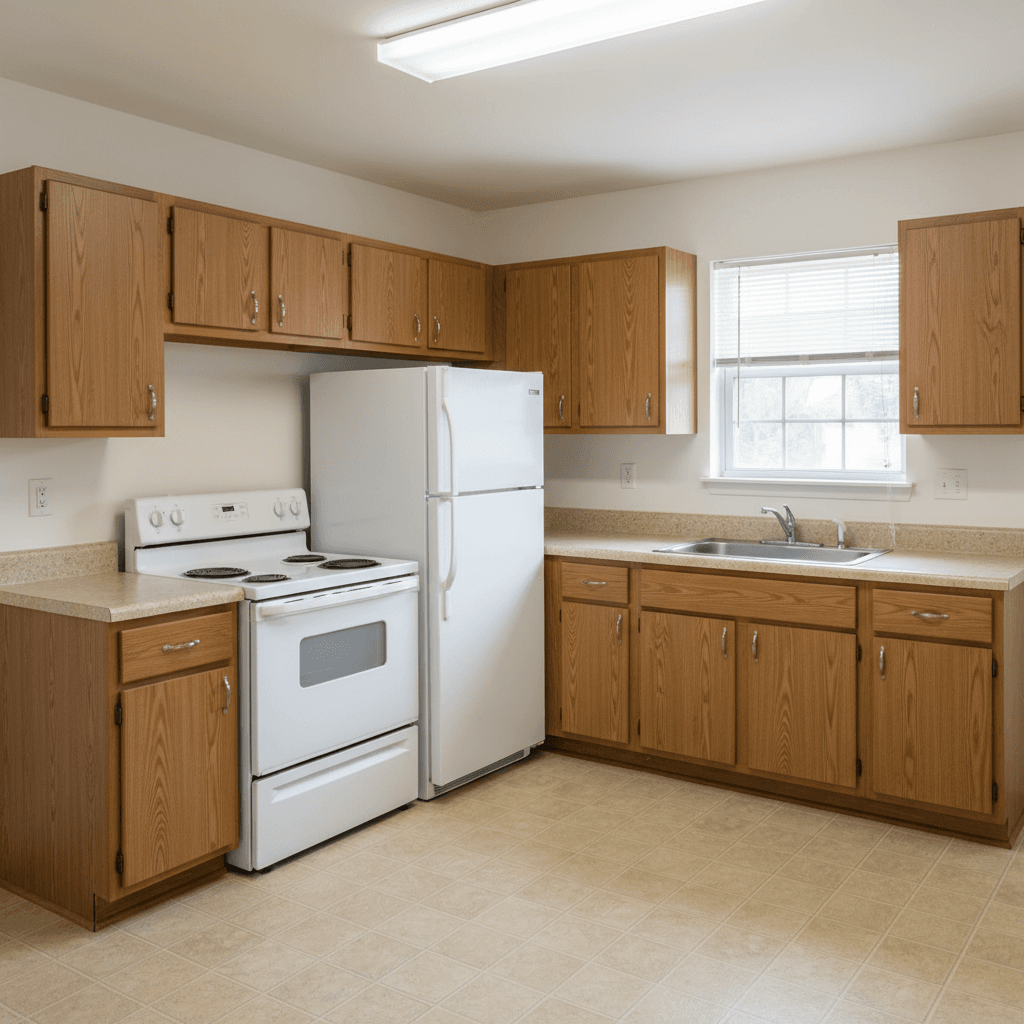
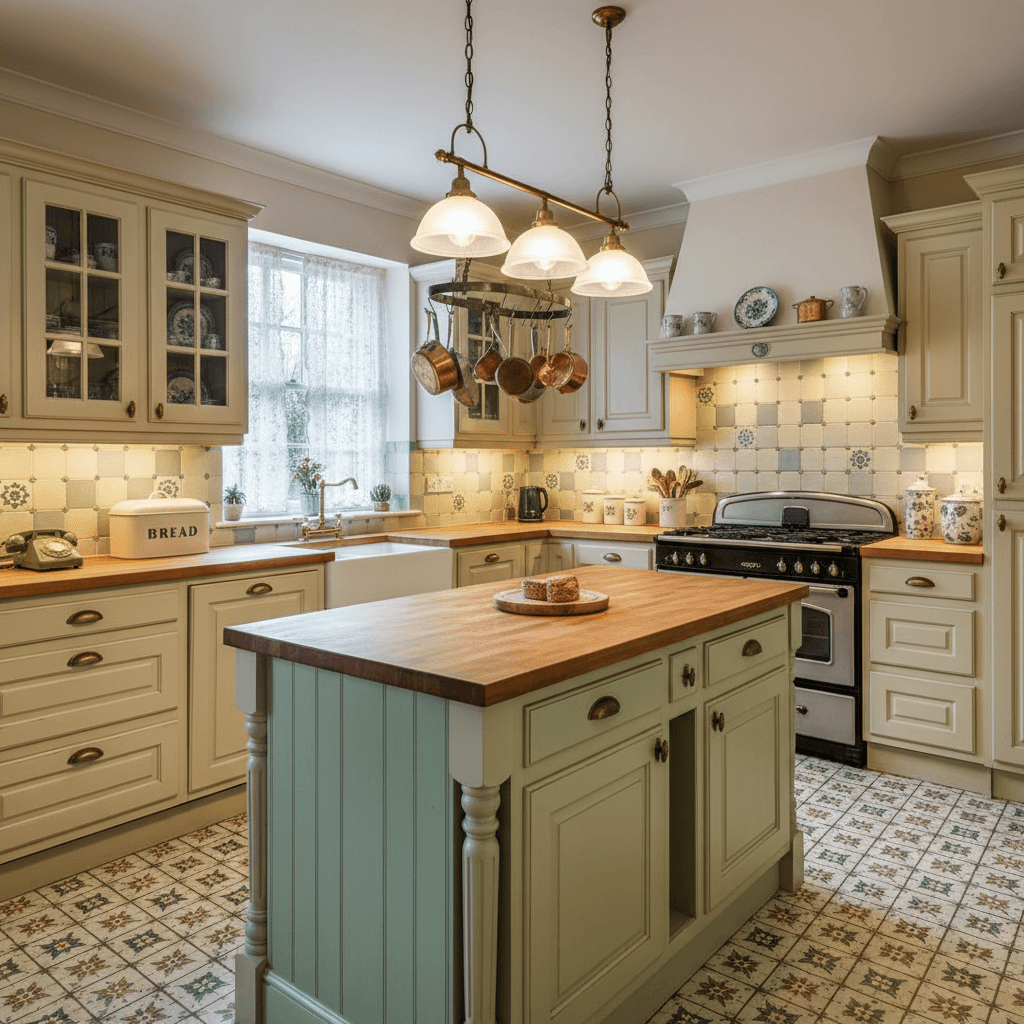
AI-generated vintage kitchen redesign from a single photo
How to get Vintage Kitchen designs
1. Upload your photo
Take a photo of your room in good daylight and upload it directly from your phone or computer. No account required to try.
2. Select style and room type
Choose your design theme and confirm the room type. Add any specific details or requirements in the optional text field.
3. Download your designs
The AI generates your redesigned room in 30 to 60 seconds. Review the result, and download or share as needed.
Vintage design principles
Vintage design does not recreate a specific historical period faithfully — that is the territory of period restoration. Instead it draws selectively from the past, mixing mid-century furniture with art deco lighting or Victorian ironwork with 1970s ceramics, to create rooms that feel richly layered rather than museum-like.
Anchor the room with one strong period piece
Rather than filling a room with many small vintage items, choose one dominant piece from a particular era — a 1950s credenza, a 1930s club sofa, or a set of genuine Victorian dining chairs — and build the rest of the room around it. This approach creates coherence without requiring everything to match.
Mix vintage with new deliberately
A room furnished entirely with antiques can feel heavy and inaccessible. Pairing a period piece with contemporary lighting, a modern paint colour, or new upholstery fabric keeps the space from feeling frozen in time. The contrast makes both the old and the new feel more intentional.
Restore rather than disguise patina
The marks that age leaves on furniture — worn leather, faded gilding, paint layers showing through — are the qualities that make vintage pieces valuable. Cleaning and stabilising is appropriate; painting everything white or reupholstering in trendy fabric often destroys what made the piece interesting.
Source from estate sales and specialist dealers
Charity shops and general second-hand markets yield occasional finds, but estate sales of properties from specific decades and dealers who specialise in particular periods offer far better access to quality pieces. The extra effort in sourcing shows in the finished room.
Kitchen design considerations
The kitchen is the most technically complex room in a home to design well, because it must solve a functional workflow problem — food preparation, cooking, cleaning, and storage — while also meeting the aesthetic expectations of one of the most-used and most-photographed spaces in any home.
The work triangle and workflow efficiency
Kitchen designers use the concept of the work triangle — the relationship between sink, hob, and refrigerator — as a starting framework for layout. The combined distances between these three points should ideally total between 4 and 8 metres. But in modern open-plan kitchens, workflow zones (prep, cooking, cleaning, storage) are often a more useful organising principle than the triangle.
Ventilation as a structural priority
Effective extraction above a cooking surface is not an optional upgrade — it affects air quality, surface maintenance, and the longevity of cabinetry and finishes throughout the room. The extraction rate (measured in cubic metres per hour) should be sized to the volume of the kitchen, not the size of the hob.
Countertop material selection and maintenance
Kitchen worktop materials vary enormously in their maintenance requirements, heat resistance, stain resistance, and durability. Marble is visually exceptional but requires sealing and accepts surface marks. Quartz composites resist most damage but can be damaged by extreme heat. Solid hardwood develops character but needs oiling. Choose based on how you actually cook, not on how the surface photographs.
Frequently asked questions
Vintage Kitchen guides worth reading
Practical write-ups that go deeper than a single kitchen page — how to photograph the room, how to pick a style, and what AI redesign actually changes.
Industrial Kitchen Design: 15 Ideas That Actually Work
The industrial kitchen references commercial cooking infrastructure — steel, open shelving, exposed utilities — and translates it
Virtual Staging for Real Estate: Worth It in 2026?
Traditional staging costs between £1,500 and £5,000 for a mid-size property. AI virtual staging has reduced that cost to a fractio
Modern vs Minimalist Design: 5 Real Differences (2026)
Modern and minimalist are often used interchangeably, but they have different origins, different values, and different practical i
Redesign Your Living Room with AI: 7 Steps (2026 Guide)
AI room design tools have made it practical to visualise a completely different living room before spending anything on furniture
Before you pick an AI interior design tool
Magic Room is not the only way to generate these designs. Here is how it compares to the tools most people evaluate alongside it.
best RoomGPT alternatives for AI interior design
All four tools compared on AI model, photo retention, pricing model and output quality.
DecorAI alternative
Why people switch from DecorAI, and what changes when they do.
Reimagine Home alternative
Why people switch from Reimagine Home, and what changes when they do.
Magic Room vs DecorAI
Side-by-side on AI model, photo privacy, pricing and output quality.