
Scandinavian Mudroom Design Ideas
By Thanos KazakisMagic Room founderUpdated
Generate scandinavian mudroom design ideas instantly with AI.
See the transformation
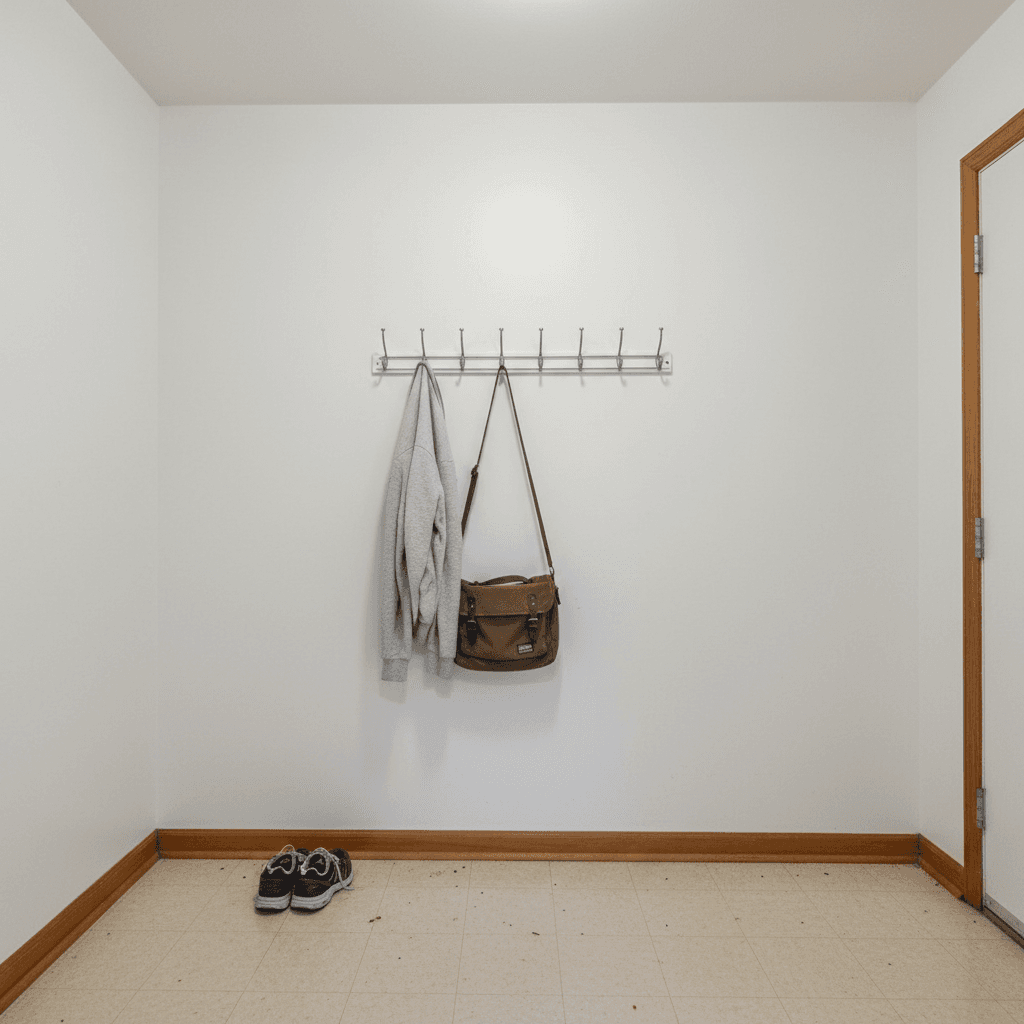
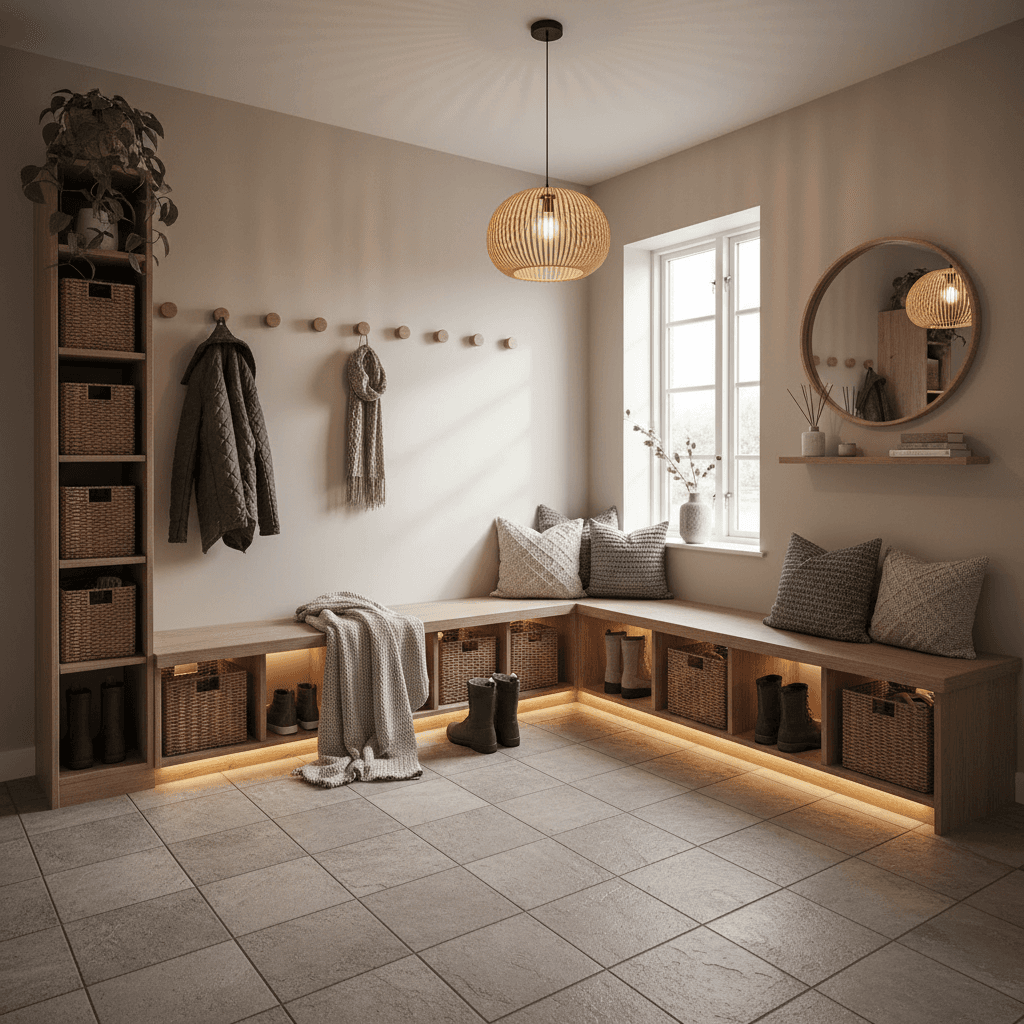
AI-generated scandinavian mudroom redesign from a single photo
How to get Scandinavian Mudroom designs
1. Upload your photo
Take a photo of your room in good daylight and upload it directly from your phone or computer. No account required to try.
2. Select style and room type
Choose your design theme and confirm the room type. Add any specific details or requirements in the optional text field.
3. Download your designs
The AI generates your redesigned room in 30 to 60 seconds. Review the result, and download or share as needed.
Scandinavian design principles
Scandinavian design emerged from a climate where winters are long and daylight is scarce, so rooms were engineered to maximise warmth and comfort without sacrificing practicality. Light woods, wool textiles, candlelight, and handcrafted objects give the style a human quality that purely minimal approaches can lack.
Layer light sources strategically
Scandinavian interiors rarely rely on a single overhead fixture. Floor lamps, table lamps, candles, and under-cabinet strips create pools of warm light at different heights. This layered approach makes rooms feel cocooning in the evenings without the harshness of central lighting alone.
Choose light woods over dark ones
Pine, birch, and oak in lighter finishes reflect more of the available natural light and prevent the heavy quality that characterises other traditional styles. When in doubt, go lighter — you can always add a darker piece as a contrast accent later.
Introduce the concept of hygge through textiles
The Danish concept of hygge — a feeling of cosy contentment — is achieved largely through textiles. Chunky knit throws, sheepskin rugs, linen curtains, and wool cushions make a room feel safe and inhabited rather than styled. Layer multiple textures rather than relying on a single statement piece.
Keep decoration functional
Scandinavian homes decorate with objects that do something — a ceramic mug on a shelf, a wooden tray holding candles, a stack of books used rather than arranged. This prevents the over-styled look that makes rooms feel like showrooms rather than places people actually live.
Mudroom design considerations
The mudroom is the first line of defence between outdoor disorder and interior calm. A well-designed mudroom contains the transition from outside to inside — boots, coats, bags, and the general accumulation of daily life — so that none of it spreads into the main living areas. It is a working room whose design is almost entirely driven by what it must contain and how efficiently it must function for every member of the household.
Allocate dedicated storage per person
The most organised mudrooms give each household member their own storage zone rather than shared hooks and cubbies that accumulate confusion. Assign each person a coat hook at the right height, a cubby or basket for shoes, and a shelf or hook for bags. In a family with children, hooks at child height alongside adult-height hooks are a functional necessity rather than a design choice. Labelling zones, at least temporarily until habits form, reduces significantly the likelihood that items migrate into the wrong place.
Choose surfaces that tolerate wet, mud, and heavy use
A mudroom is subjected to more abuse than almost any other interior space — wet boots, muddy dogs, dripping outdoor gear, and heavy bag dropping. The floor should be a hard, impermeable surface that can be mopped without damage: large-format porcelain tile, slate, or poured concrete are all excellent choices. Wall surfaces behind hooks and cubbies should be cleanable; painted board-and-batten or a full-height boot room panel are more durable than plasterboard alone.
Include a bench for putting on and removing footwear
The absence of a sitting surface in a mudroom creates the single greatest friction point in its daily use: people take shoes off at the door then carry them further inside rather than organising them properly because there is nowhere to sit. A bench — even a simple, narrow one — anchors the shoe removal process at the entry point. Under-bench storage for spare boots or seasonal footwear makes the bench more useful still.
Other styles for your Mudroom
Scandinavian Mudroom guides worth reading
Practical write-ups that go deeper than a single mudroom page — how to photograph the room, how to pick a style, and what AI redesign actually changes.
Scandinavian Design: 12 Ideas for Small Spaces (2026)
Scandinavian design was developed in countries where domestic spaces are relatively small and daylight is seasonal. Its principles
Virtual Staging for Real Estate: Worth It in 2026?
Traditional staging costs between £1,500 and £5,000 for a mid-size property. AI virtual staging has reduced that cost to a fractio
Modern vs Minimalist Design: 5 Real Differences (2026)
Modern and minimalist are often used interchangeably, but they have different origins, different values, and different practical i
Redesign Your Living Room with AI: 7 Steps (2026 Guide)
AI room design tools have made it practical to visualise a completely different living room before spending anything on furniture
Before you pick an AI interior design tool
Magic Room is not the only way to generate these designs. Here is how it compares to the tools most people evaluate alongside it.
best RoomGPT alternatives for AI interior design
All four tools compared on AI model, photo retention, pricing model and output quality.
DecorAI alternative
Why people switch from DecorAI, and what changes when they do.
Reimagine Home alternative
Why people switch from Reimagine Home, and what changes when they do.
Magic Room vs DecorAI
Side-by-side on AI model, photo privacy, pricing and output quality.