
Japandi Mudroom Design Ideas
By Thanos KazakisMagic Room founderUpdated
A Japandi mudroom applies the style's discipline of curated materiality to the most mess-prone room in the house, with quietly transformative results. Floor-to-ceiling oak veneer storage with handle-free push-to-open doors, a low timber bench with a single linen cushion, a row of brass or blackened-steel coat hooks, and slate or large-format porcelain tile underfoot create a room that absorbs the disorder of arrival without becoming part of it. Built-in shoe storage that conceals the volume of a household's footwear is the practical core of a successful execution.
See the transformation
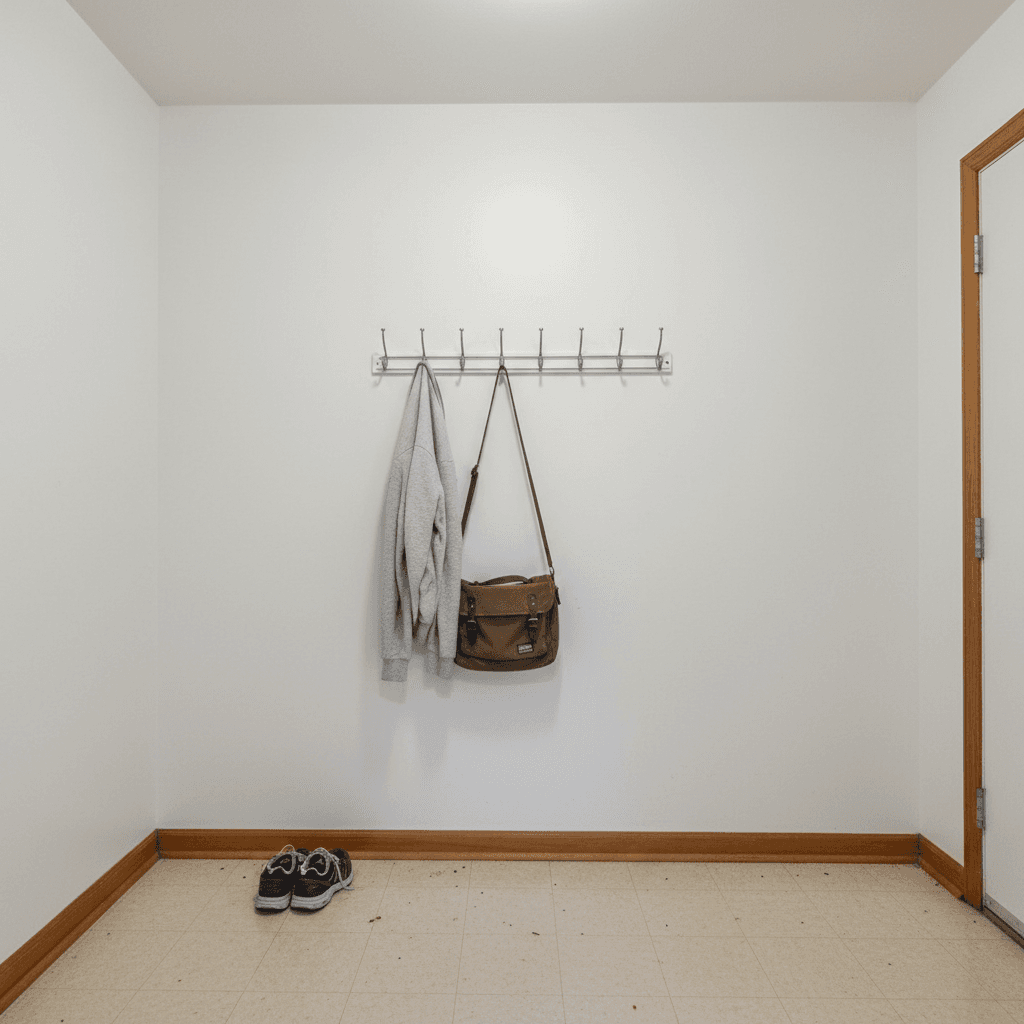
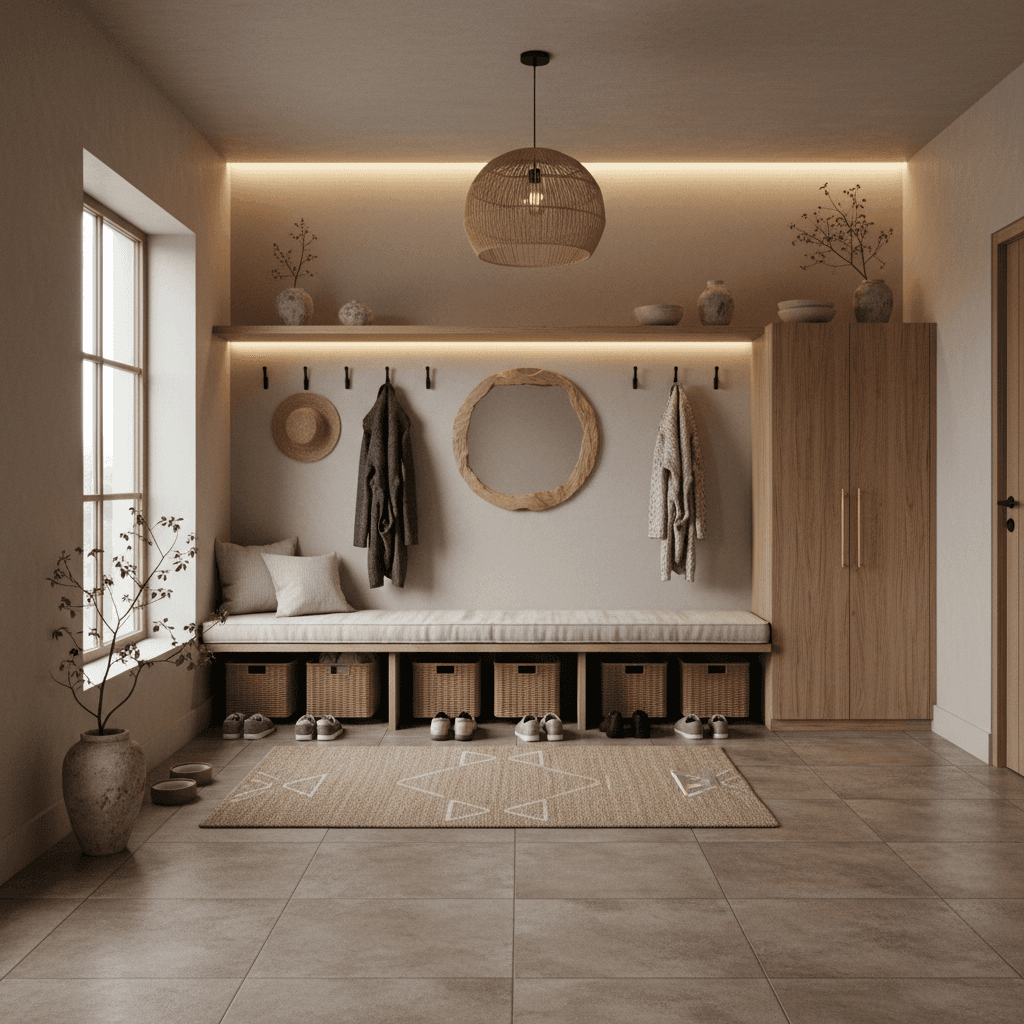
AI-generated japandi mudroom redesign from a single photo
How to get Japandi Mudroom designs
1. Upload your photo
Take a photo of your room in good daylight and upload it directly from your phone or computer. No account required to try.
2. Select style and room type
Choose your design theme and confirm the room type. Add any specific details or requirements in the optional text field.
3. Download your designs
The AI generates your redesigned room in 30 to 60 seconds. Review the result, and download or share as needed.
Japandi design principles
Japandi fuses Japanese wabi-sabi philosophy with Scandinavian hygge sensibility, producing spaces that celebrate natural imperfection, restrained craftsmanship, and deliberate calm. Unlike either parent style alone, Japandi rooms feel simultaneously minimal and warm, with natural materials — pale wood, rattan, linen — playing against muted earthy tones and carefully edited objects.
Embrace asymmetry and natural imperfection
Japandi interiors reject the pursuit of flawless symmetry. A handmade ceramic bowl with an uneven rim, a branch arranged in a vase, or a linen throw with a visible weave all carry more character than manufactured equivalents. Selecting objects with visible signs of making or natural irregularity is one of the most direct ways to achieve the wabi-sabi quality the style depends on.
Keep the palette muted and drawn from nature
Japandi colour ranges from warm off-white and undyed linen through clay, moss, and charcoal. Saturated colour rarely appears. When choosing paint or fabric, hold samples against natural materials in real daylight — the goal is a palette that makes the room feel neither stark nor busy, but quietly grounded.
Choose furniture with honest joinery
The furniture that fits Japandi best shows how it is made — visible mortise-and-tenon joints, hand-rubbed oil finishes, and simple forms with no applied decoration. Scandinavian-influenced pieces with lower profiles and Japanese-influenced pieces with fine, precise detailing both work well in the same room because they share an underlying commitment to craft over ornamentation.
Limit objects to those with clear purpose or beauty
Both Japanese and Scandinavian design traditions hold that objects on display should either serve a function or be genuinely beautiful — ideally both. Before placing anything on a surface, apply this test. Clearing surfaces to a curated few pieces and leaving the rest of the shelf or table empty is not incompleteness — it is the point.
Mudroom design considerations
The mudroom is the first line of defence between outdoor disorder and interior calm. A well-designed mudroom contains the transition from outside to inside — boots, coats, bags, and the general accumulation of daily life — so that none of it spreads into the main living areas. It is a working room whose design is almost entirely driven by what it must contain and how efficiently it must function for every member of the household.
Allocate dedicated storage per person
The most organised mudrooms give each household member their own storage zone rather than shared hooks and cubbies that accumulate confusion. Assign each person a coat hook at the right height, a cubby or basket for shoes, and a shelf or hook for bags. In a family with children, hooks at child height alongside adult-height hooks are a functional necessity rather than a design choice. Labelling zones, at least temporarily until habits form, reduces significantly the likelihood that items migrate into the wrong place.
Choose surfaces that tolerate wet, mud, and heavy use
A mudroom is subjected to more abuse than almost any other interior space — wet boots, muddy dogs, dripping outdoor gear, and heavy bag dropping. The floor should be a hard, impermeable surface that can be mopped without damage: large-format porcelain tile, slate, or poured concrete are all excellent choices. Wall surfaces behind hooks and cubbies should be cleanable; painted board-and-batten or a full-height boot room panel are more durable than plasterboard alone.
Include a bench for putting on and removing footwear
The absence of a sitting surface in a mudroom creates the single greatest friction point in its daily use: people take shoes off at the door then carry them further inside rather than organising them properly because there is nowhere to sit. A bench — even a simple, narrow one — anchors the shoe removal process at the entry point. Under-bench storage for spare boots or seasonal footwear makes the bench more useful still.
Frequently asked questions
Japandi Mudroom guides worth reading
Practical write-ups that go deeper than a single mudroom page — how to photograph the room, how to pick a style, and what AI redesign actually changes.
Interior Design on a Budget: 9 AI Hacks for 2026
The most expensive design mistake is buying things in the wrong order. AI visualisation changes the sequence of decision-making in
Best AI Interior Design Tools 2026: Privacy & Price Compared
There are now dozens of AI tools that claim to redesign rooms from a single photo. They vary significantly in the AI model used, p
AI Home Staging Before Selling: What Works (and Fails)
Traditional home staging is expensive and logistically complex. AI home staging is inexpensive and immediate. Understanding what e
Virtual Staging for Real Estate: Worth It in 2026?
Traditional staging costs between £1,500 and £5,000 for a mid-size property. AI virtual staging has reduced that cost to a fractio
Before you pick an AI interior design tool
Magic Room is not the only way to generate these designs. Here is how it compares to the tools most people evaluate alongside it.
best RoomGPT alternatives for AI interior design
All four tools compared on AI model, photo retention, pricing model and output quality.
Interior AI alternative
Why people switch from Interior AI, and what changes when they do.
RoomGPT alternative
Why people switch from RoomGPT, and what changes when they do.
Magic Room vs Interior AI
Side-by-side on AI model, photo privacy, pricing and output quality.