
Japandi Dining Room Design Ideas
By Thanos KazakisMagic Room founderUpdated
Generate japandi dining room design ideas instantly with AI.
See the transformation
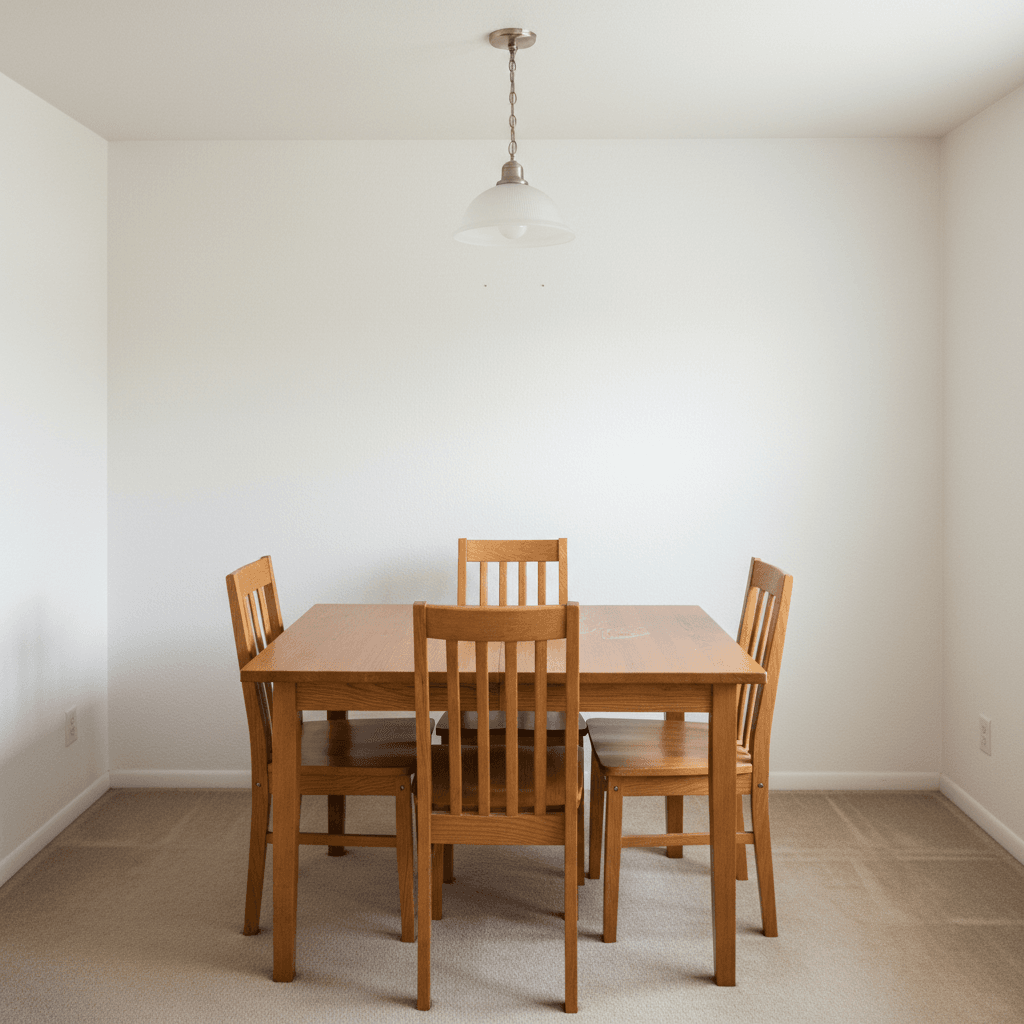
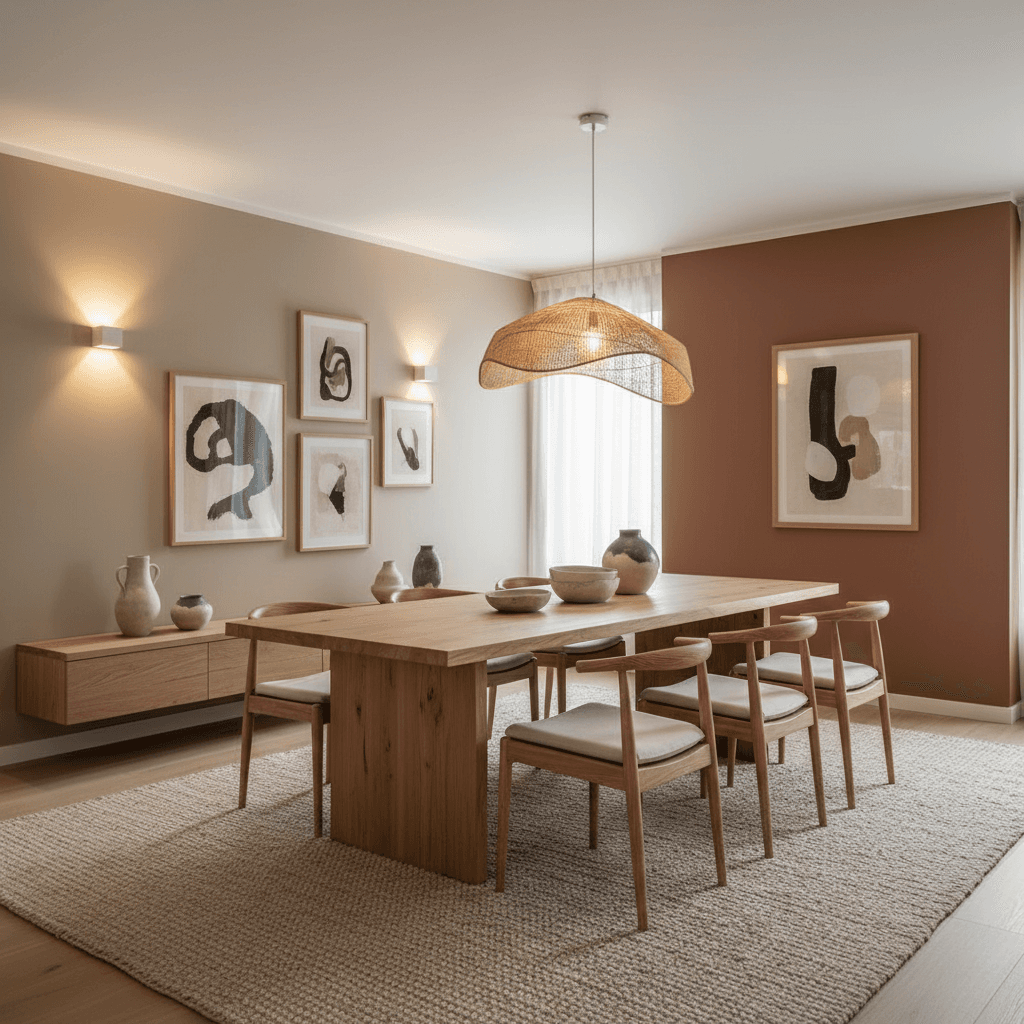
AI-generated japandi dining room redesign from a single photo
How to get Japandi Dining Room designs
1. Upload your photo
Take a photo of your room in good daylight and upload it directly from your phone or computer. No account required to try.
2. Select style and room type
Choose your design theme and confirm the room type. Add any specific details or requirements in the optional text field.
3. Download your designs
The AI generates your redesigned room in 30 to 60 seconds. Review the result, and download or share as needed.
Japandi design principles
Japandi fuses Japanese wabi-sabi philosophy with Scandinavian hygge sensibility, producing spaces that celebrate natural imperfection, restrained craftsmanship, and deliberate calm. Unlike either parent style alone, Japandi rooms feel simultaneously minimal and warm, with natural materials — pale wood, rattan, linen — playing against muted earthy tones and carefully edited objects.
Embrace asymmetry and natural imperfection
Japandi interiors reject the pursuit of flawless symmetry. A handmade ceramic bowl with an uneven rim, a branch arranged in a vase, or a linen throw with a visible weave all carry more character than manufactured equivalents. Selecting objects with visible signs of making or natural irregularity is one of the most direct ways to achieve the wabi-sabi quality the style depends on.
Keep the palette muted and drawn from nature
Japandi colour ranges from warm off-white and undyed linen through clay, moss, and charcoal. Saturated colour rarely appears. When choosing paint or fabric, hold samples against natural materials in real daylight — the goal is a palette that makes the room feel neither stark nor busy, but quietly grounded.
Choose furniture with honest joinery
The furniture that fits Japandi best shows how it is made — visible mortise-and-tenon joints, hand-rubbed oil finishes, and simple forms with no applied decoration. Scandinavian-influenced pieces with lower profiles and Japanese-influenced pieces with fine, precise detailing both work well in the same room because they share an underlying commitment to craft over ornamentation.
Limit objects to those with clear purpose or beauty
Both Japanese and Scandinavian design traditions hold that objects on display should either serve a function or be genuinely beautiful — ideally both. Before placing anything on a surface, apply this test. Clearing surfaces to a curated few pieces and leaving the rest of the shelf or table empty is not incompleteness — it is the point.
Dining Room design considerations
The dining room — or dining zone in an open-plan layout — needs to work for both the intimacy of daily family meals and the occasion of entertaining guests, which demands flexibility in lighting, furniture arrangement, and acoustic separation from adjacent spaces.
Table size and seating clearance
A dining table needs at least 90cm of clear space on all sides to allow chairs to be pulled out fully and people to move around occupied seating. Many dining rooms are furnished with tables that are too large for comfortable circulation, which makes the room feel cramped regardless of how it is decorated. Measure first; choose the table second.
Pendant lighting positioned precisely over the table
The pendant or chandelier over a dining table is one of the few interior design elements where precise positioning matters as much as appearance. The bottom of a pendant should hang roughly 75-85cm above the table surface — low enough to create intimacy, high enough not to obstruct sightlines across the table. A fitting that is off-centre relative to the table is immediately noticeable and difficult to adjust without electrical work.
Storage for tableware near the table
A sideboard, dresser, or fitted storage unit in a dining room does double duty — it stores the items needed for the table (glasses, serving dishes, tablecloths, candles) and provides a surface for serving dishes and a display area for decorative objects. A dining room without storage tends to feel unfinished and creates practical inconvenience at every meal.
Japandi Dining Room guides worth reading
Practical write-ups that go deeper than a single dining room page — how to photograph the room, how to pick a style, and what AI redesign actually changes.
Modern vs Minimalist Design: 5 Real Differences (2026)
Modern and minimalist are often used interchangeably, but they have different origins, different values, and different practical i
Redesign Your Living Room with AI: 7 Steps (2026 Guide)
AI room design tools have made it practical to visualise a completely different living room before spending anything on furniture
Redesign Your Bedroom with AI: 8 Styles to Try in 2026
Bedrooms are intensely personal spaces where the result needs to be functional, not just visually appealing. Here is how to approa
AI Home Office Design: 10 Ideas for 2026 Workspaces
Home offices need to function well for focused work and appear professional in video calls. AI design tools can help you see possi
Before you pick an AI interior design tool
Magic Room is not the only way to generate these designs. Here is how it compares to the tools most people evaluate alongside it.
best RoomGPT alternatives for AI interior design
All four tools compared on AI model, photo retention, pricing model and output quality.
Interior AI alternative
Why people switch from Interior AI, and what changes when they do.
RoomGPT alternative
Why people switch from RoomGPT, and what changes when they do.
Magic Room vs Interior AI
Side-by-side on AI model, photo privacy, pricing and output quality.