
Coastal Mudroom Design Ideas
By Thanos KazakisMagic Room founderUpdated
Generate coastal mudroom design ideas instantly with AI.
See the transformation
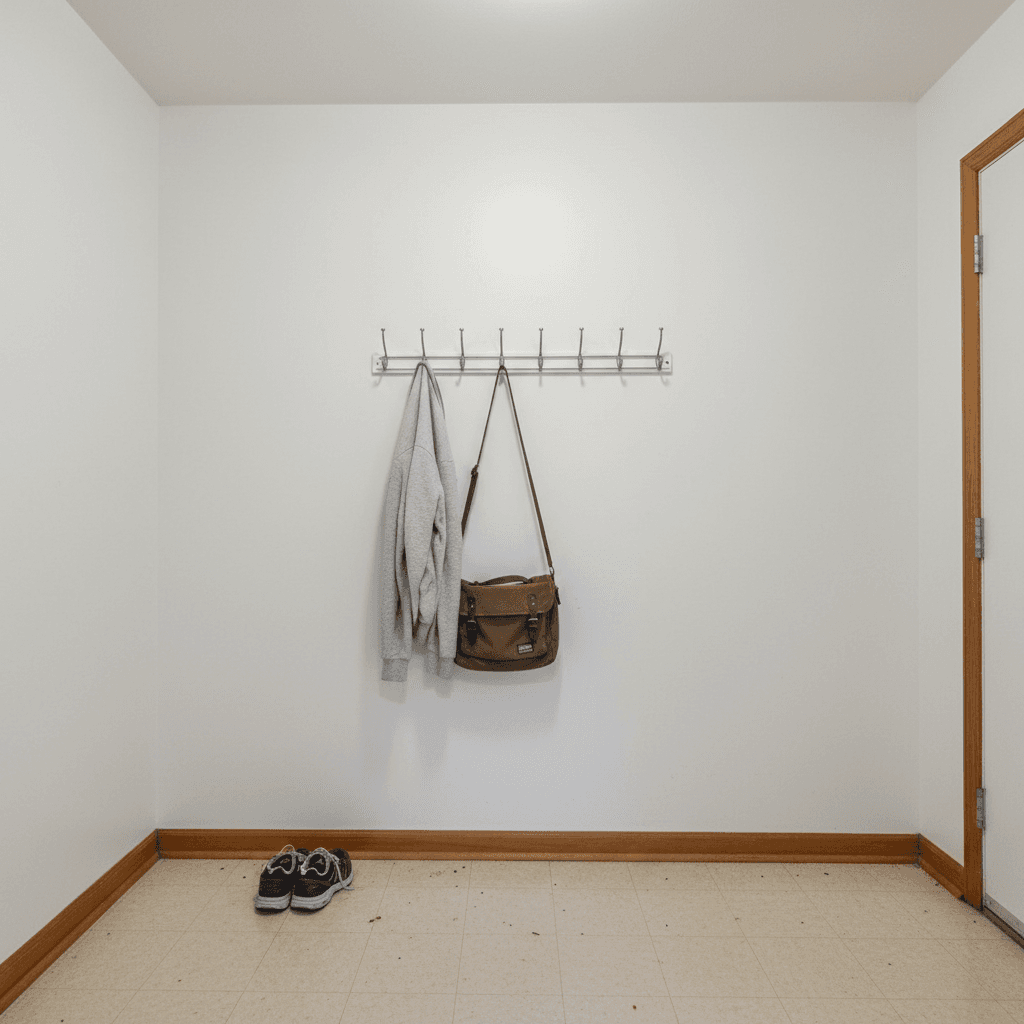
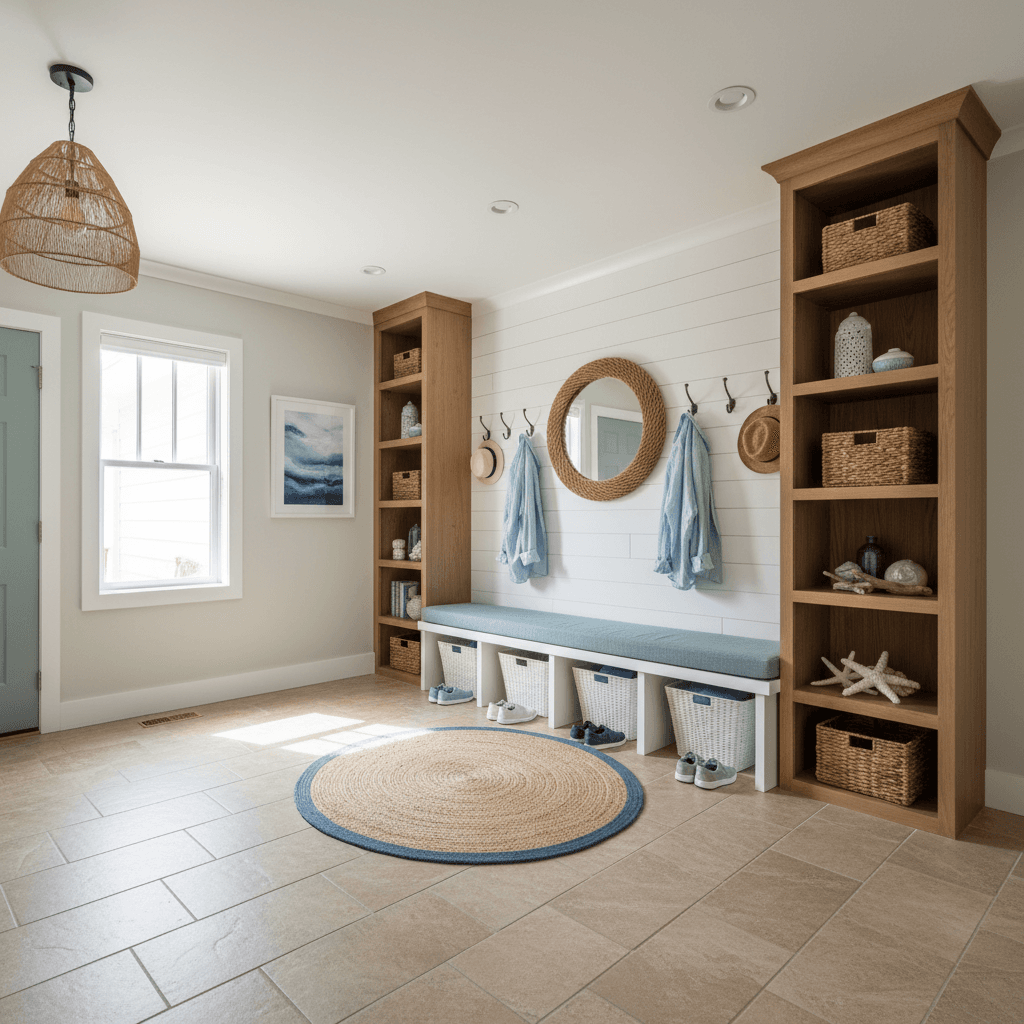
AI-generated coastal mudroom redesign from a single photo
How to get Coastal Mudroom designs
1. Upload your photo
Take a photo of your room in good daylight and upload it directly from your phone or computer. No account required to try.
2. Select style and room type
Choose your design theme and confirm the room type. Add any specific details or requirements in the optional text field.
3. Download your designs
The AI generates your redesigned room in 30 to 60 seconds. Review the result, and download or share as needed.
Coastal design principles
Coastal design distils the sensory experience of seaside living into an interior language — salt-bleached timbers, woven textures, the shifting blue-green palette of shallow water, and an abundance of natural light. At its best it is neither nautical-themed nor literalist; instead it creates rooms that feel genuinely relaxed and connected to the natural environment outside, with materials and colours that reference the coast without reproducing it.
Prioritise natural light and window treatments that maximise it
Natural light is the defining quality of coastal interiors. Replace heavy drapes with linen sheers, remove window frames that block peripheral light, and use pale, reflective surfaces on walls and floors to carry that light deeper into the room. Light-coloured linen or cotton voile panels that move in a breeze are more faithful to the coastal aesthetic than any decorative element you could add.
Build the palette around whites, sand, and water
A coastal palette is bleached and light — white, off-white, warm sand, driftwood grey, and the blue-greens of shallow sea water. The blue-green tones should be soft and slightly desaturated; saturated navy or royal blue feels nautical rather than coastal. Use the lighter neutrals as the primary base and introduce the blue-green tones selectively through textiles, ceramics, or a single accent wall.
Choose natural, tactile materials over synthetic alternatives
Seagrass, sisal, rattan, woven cotton, weathered oak, and unglazed ceramics all carry the material sensibility of the coast. When selecting furniture and accessories, ask whether the material itself could have come from or been shaped by a coastal environment. Avoid plastic or resin equivalents of natural materials — they flatten the tactile quality that makes coastal interiors feel genuinely relaxing.
Avoid over-theming with nautical accessories
Anchor prints, ship wheels, and lighthouse ornaments signal 'beach house' rather than creating an actual coastal atmosphere. The most convincing coastal interiors rely on material quality, light, and spatial openness rather than thematic decoration. If you want a reference to the sea, a large piece of sea glass, a bowl of smooth stones, or a single botanical print of coastal flora will do more than a shelf of maritime ornaments.
Mudroom design considerations
The mudroom is the first line of defence between outdoor disorder and interior calm. A well-designed mudroom contains the transition from outside to inside — boots, coats, bags, and the general accumulation of daily life — so that none of it spreads into the main living areas. It is a working room whose design is almost entirely driven by what it must contain and how efficiently it must function for every member of the household.
Allocate dedicated storage per person
The most organised mudrooms give each household member their own storage zone rather than shared hooks and cubbies that accumulate confusion. Assign each person a coat hook at the right height, a cubby or basket for shoes, and a shelf or hook for bags. In a family with children, hooks at child height alongside adult-height hooks are a functional necessity rather than a design choice. Labelling zones, at least temporarily until habits form, reduces significantly the likelihood that items migrate into the wrong place.
Choose surfaces that tolerate wet, mud, and heavy use
A mudroom is subjected to more abuse than almost any other interior space — wet boots, muddy dogs, dripping outdoor gear, and heavy bag dropping. The floor should be a hard, impermeable surface that can be mopped without damage: large-format porcelain tile, slate, or poured concrete are all excellent choices. Wall surfaces behind hooks and cubbies should be cleanable; painted board-and-batten or a full-height boot room panel are more durable than plasterboard alone.
Include a bench for putting on and removing footwear
The absence of a sitting surface in a mudroom creates the single greatest friction point in its daily use: people take shoes off at the door then carry them further inside rather than organising them properly because there is nowhere to sit. A bench — even a simple, narrow one — anchors the shoe removal process at the entry point. Under-bench storage for spare boots or seasonal footwear makes the bench more useful still.
Other styles for your Mudroom
Coastal Mudroom guides worth reading
Practical write-ups that go deeper than a single mudroom page — how to photograph the room, how to pick a style, and what AI redesign actually changes.
How to Choose an Interior Design Style: 6 Quick Tests
Most people choose an interior design style based on how it looks in photography. A better approach starts with how you actually l
How AI Interior Design Tools Actually Work in 2026
Not all AI room design tools work the same way. Understanding the difference between diffusion models and multimodal models explai
Interior Design on a Budget: 9 AI Hacks for 2026
The most expensive design mistake is buying things in the wrong order. AI visualisation changes the sequence of decision-making in
Best AI Interior Design Tools 2026: Privacy & Price Compared
There are now dozens of AI tools that claim to redesign rooms from a single photo. They vary significantly in the AI model used, p
Before you pick an AI interior design tool
Magic Room is not the only way to generate these designs. Here is how it compares to the tools most people evaluate alongside it.
best RoomGPT alternatives for AI interior design
All four tools compared on AI model, photo retention, pricing model and output quality.
DecorAI alternative
Why people switch from DecorAI, and what changes when they do.
Reimagine Home alternative
Why people switch from Reimagine Home, and what changes when they do.
Magic Room vs DecorAI
Side-by-side on AI model, photo privacy, pricing and output quality.