
Coastal Bedroom Design Ideas
By Thanos KazakisMagic Room founderUpdated
A coastal bedroom delivers the seaside quality of rest through restraint rather than literal nautical reference. White-painted timber-clad walls or a single accent wall in a soft sea-blue, linen bedding in natural and pale tones, a rattan or whitewashed timber headboard, and pendants in raffia or rope establish the character without resorting to anchor motifs or shell collections. The room earns its calm from material honesty and an abundance of natural light rather than from decoration; visualisation helps test how different timber tones will read in your specific lighting conditions.
See the transformation
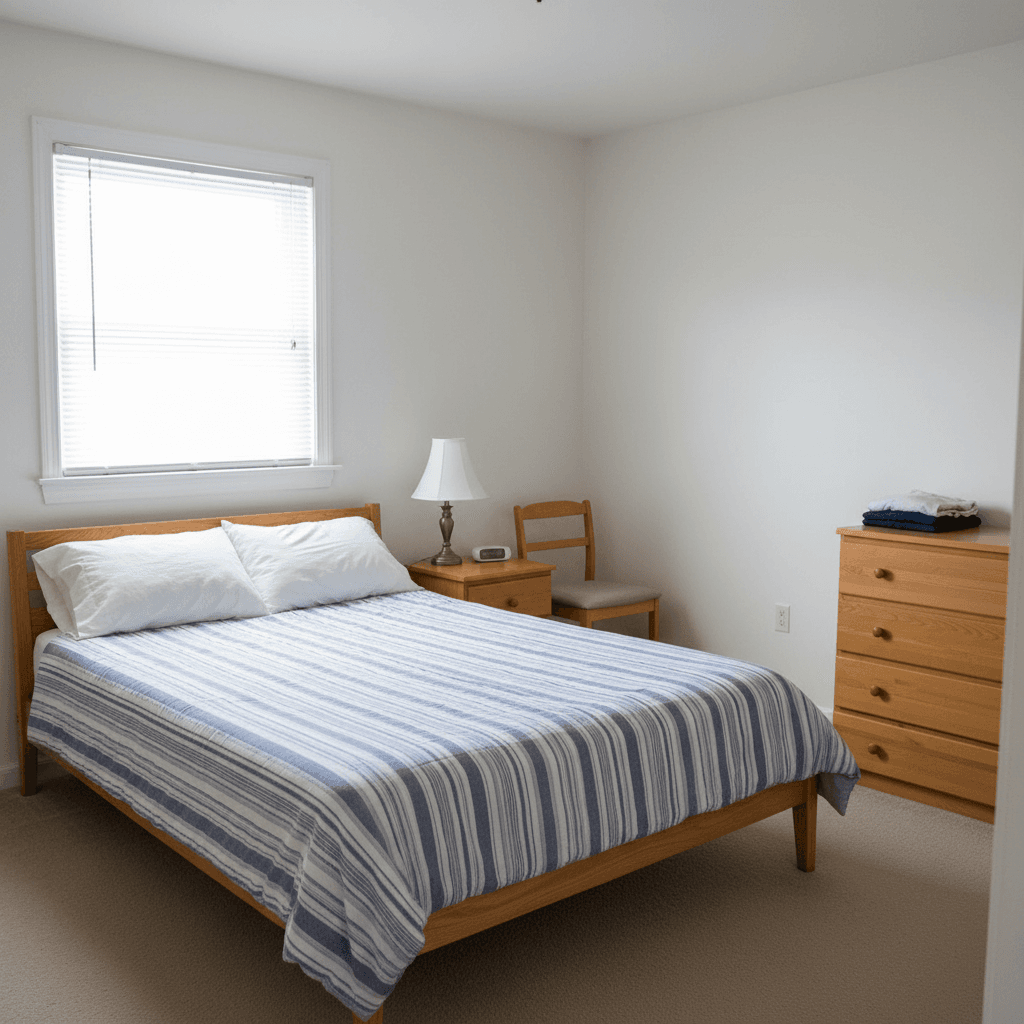
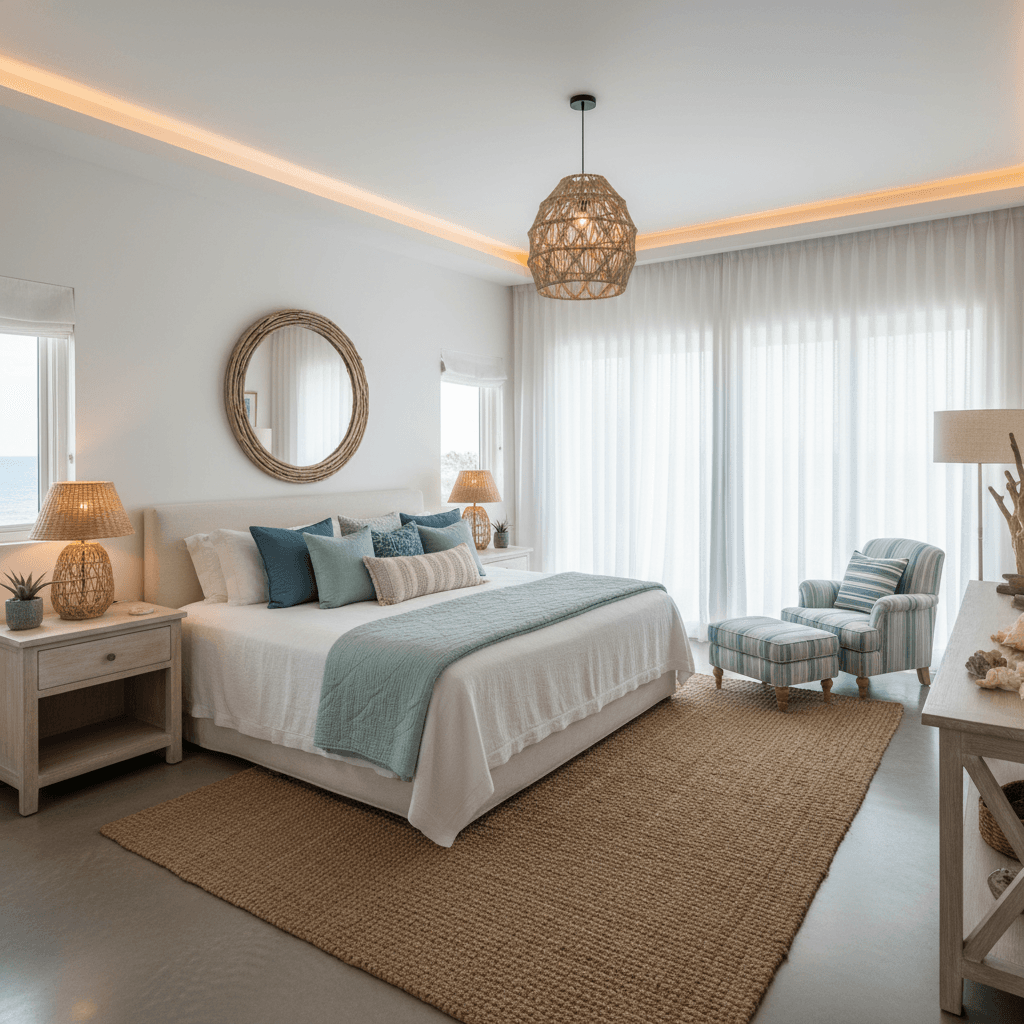
AI-generated coastal bedroom redesign from a single photo
How to get Coastal Bedroom designs
1. Upload your photo
Take a photo of your room in good daylight and upload it directly from your phone or computer. No account required to try.
2. Select style and room type
Choose your design theme and confirm the room type. Add any specific details or requirements in the optional text field.
3. Download your designs
The AI generates your redesigned room in 30 to 60 seconds. Review the result, and download or share as needed.
Coastal design principles
Coastal design distils the sensory experience of seaside living into an interior language — salt-bleached timbers, woven textures, the shifting blue-green palette of shallow water, and an abundance of natural light. At its best it is neither nautical-themed nor literalist; instead it creates rooms that feel genuinely relaxed and connected to the natural environment outside, with materials and colours that reference the coast without reproducing it.
Prioritise natural light and window treatments that maximise it
Natural light is the defining quality of coastal interiors. Replace heavy drapes with linen sheers, remove window frames that block peripheral light, and use pale, reflective surfaces on walls and floors to carry that light deeper into the room. Light-coloured linen or cotton voile panels that move in a breeze are more faithful to the coastal aesthetic than any decorative element you could add.
Build the palette around whites, sand, and water
A coastal palette is bleached and light — white, off-white, warm sand, driftwood grey, and the blue-greens of shallow sea water. The blue-green tones should be soft and slightly desaturated; saturated navy or royal blue feels nautical rather than coastal. Use the lighter neutrals as the primary base and introduce the blue-green tones selectively through textiles, ceramics, or a single accent wall.
Choose natural, tactile materials over synthetic alternatives
Seagrass, sisal, rattan, woven cotton, weathered oak, and unglazed ceramics all carry the material sensibility of the coast. When selecting furniture and accessories, ask whether the material itself could have come from or been shaped by a coastal environment. Avoid plastic or resin equivalents of natural materials — they flatten the tactile quality that makes coastal interiors feel genuinely relaxing.
Avoid over-theming with nautical accessories
Anchor prints, ship wheels, and lighthouse ornaments signal 'beach house' rather than creating an actual coastal atmosphere. The most convincing coastal interiors rely on material quality, light, and spatial openness rather than thematic decoration. If you want a reference to the sea, a large piece of sea glass, a bowl of smooth stones, or a single botanical print of coastal flora will do more than a shelf of maritime ornaments.
Bedroom design considerations
A bedroom's primary obligation is to support sleep — which means every design decision must be evaluated against how it affects rest, thermal comfort, light control, and the psychological sense of separation from the demands of daily life.
Blackout and light control
Light is the primary regulator of the human sleep-wake cycle, so controlling it is the single most important functional consideration in a bedroom. Full blackout blinds or lined curtains should be the default, regardless of aesthetic style. Sheer-only window treatments look elegant but actively impair sleep quality.
Bed position relative to the door
Placing the headboard against a solid wall, with a view of the door from the bed, is the arrangement most people find instinctively restful. Beds positioned so the door opens directly onto the sleeper's feet, or with the headboard against a window, tend to feel unsettling even when the room otherwise looks good.
Temperature and ventilation materials
Synthetic textiles, VOC-emitting finishes, and poor air circulation all affect bedroom air quality and sleep temperature. Natural fibre bedding (cotton, linen, or wool), breathable mattress materials, and a window that can be safely opened overnight cost no more than their alternatives and measurably improve sleep.
Frequently asked questions
Other styles for your Bedroom
Farmhouse Bedroom Design Ideas
Warmth, patina, and the honest beauty of working materials
Japandi Bedroom Design Ideas
Wabi-sabi meets hygge — imperfect simplicity
Luxury Bedroom Design Ideas
Exceptional materials, expert craft, enduring quality
Minimalist Bedroom Design Ideas
Less, but better — every object earns its place
Modern Bedroom Design Ideas
Clean lines, functional spaces, timeless appeal
Scandinavian Bedroom Design Ideas
Warmth, function, and the beauty of natural materials
Vintage Bedroom Design Ideas
Character from another era, curated for life today
Coastal Bedroom guides worth reading
Practical write-ups that go deeper than a single bedroom page — how to photograph the room, how to pick a style, and what AI redesign actually changes.
Redesign Your Bedroom with AI: 8 Styles to Try in 2026
Bedrooms are intensely personal spaces where the result needs to be functional, not just visually appealing. Here is how to approa
How to Choose an Interior Design Style: 6 Quick Tests
Most people choose an interior design style based on how it looks in photography. A better approach starts with how you actually l
How AI Interior Design Tools Actually Work in 2026
Not all AI room design tools work the same way. Understanding the difference between diffusion models and multimodal models explai
Interior Design on a Budget: 9 AI Hacks for 2026
The most expensive design mistake is buying things in the wrong order. AI visualisation changes the sequence of decision-making in
Before you pick an AI interior design tool
Magic Room is not the only way to generate these designs. Here is how it compares to the tools most people evaluate alongside it.
best RoomGPT alternatives for AI interior design
All four tools compared on AI model, photo retention, pricing model and output quality.
RoomGPT alternative
Why people switch from RoomGPT, and what changes when they do.
DecorAI alternative
Why people switch from DecorAI, and what changes when they do.
Magic Room vs RoomGPT
Side-by-side on AI model, photo privacy, pricing and output quality.