
Coastal Living Room Design Ideas
By Thanos KazakisMagic Room founderUpdated
A coastal living room earns its calm from light and material honesty, not from nautical decoration. Whitewashed or limed timber, slipcovered sofas in washed linen or cotton that can genuinely be removed and laundered, a jute or sisal rug, woven pendant shades, and a palette held to soft whites, sand, and one restrained sea-blue or sage accent are what actually produce the effect people are after. Because the style relies on maximising available daylight, the position of the largest seating piece relative to the room's main window matters more than any individual purchase — which is precisely the kind of decision AI visualisation lets you test against your own room before you commit to a sofa that is difficult to return.
See the transformation
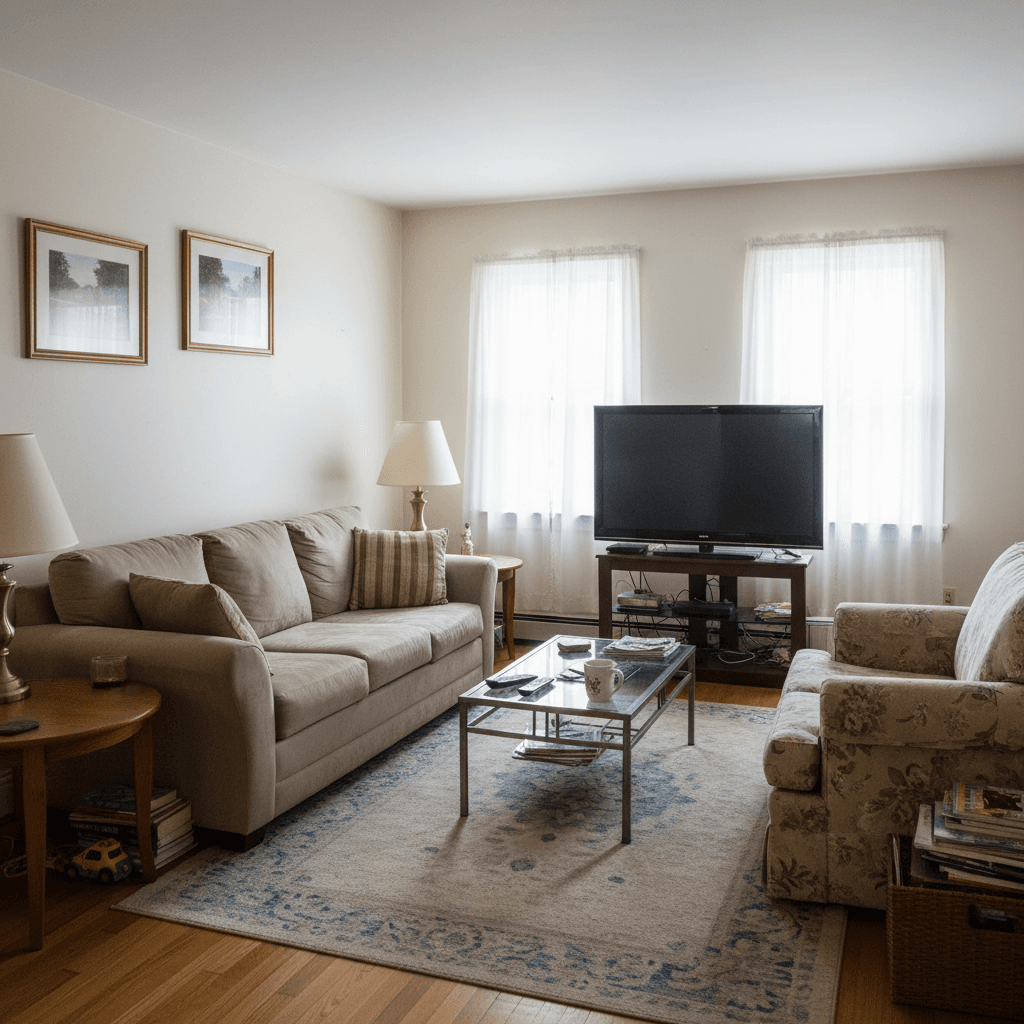
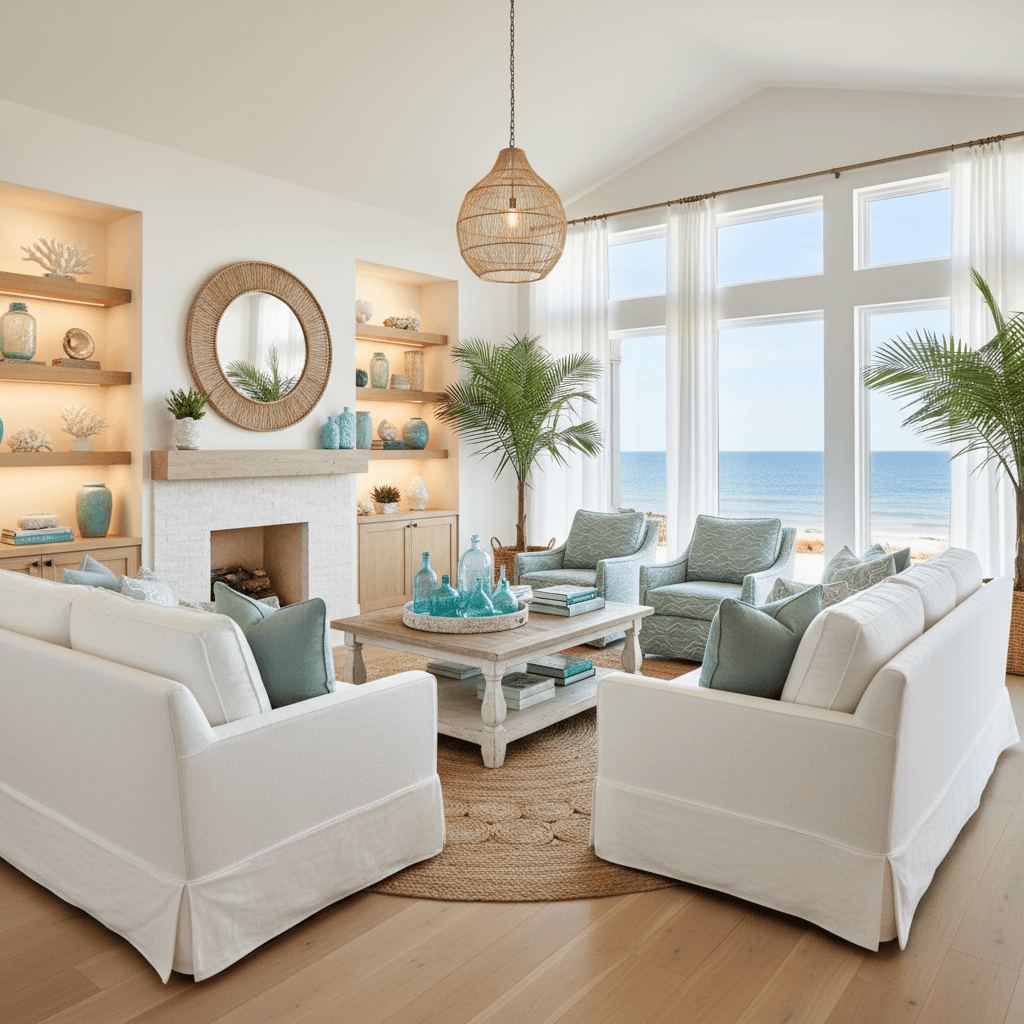
AI-generated coastal living room redesign from a single photo
How to get Coastal Living Room designs
1. Upload your photo
Take a photo of your room in good daylight and upload it directly from your phone or computer. No account required to try.
2. Select style and room type
Choose your design theme and confirm the room type. Add any specific details or requirements in the optional text field.
3. Download your designs
The AI generates your redesigned room in 30 to 60 seconds. Review the result, and download or share as needed.
Coastal design principles
Coastal design distils the sensory experience of seaside living into an interior language — salt-bleached timbers, woven textures, the shifting blue-green palette of shallow water, and an abundance of natural light. At its best it is neither nautical-themed nor literalist; instead it creates rooms that feel genuinely relaxed and connected to the natural environment outside, with materials and colours that reference the coast without reproducing it.
Prioritise natural light and window treatments that maximise it
Natural light is the defining quality of coastal interiors. Replace heavy drapes with linen sheers, remove window frames that block peripheral light, and use pale, reflective surfaces on walls and floors to carry that light deeper into the room. Light-coloured linen or cotton voile panels that move in a breeze are more faithful to the coastal aesthetic than any decorative element you could add.
Build the palette around whites, sand, and water
A coastal palette is bleached and light — white, off-white, warm sand, driftwood grey, and the blue-greens of shallow sea water. The blue-green tones should be soft and slightly desaturated; saturated navy or royal blue feels nautical rather than coastal. Use the lighter neutrals as the primary base and introduce the blue-green tones selectively through textiles, ceramics, or a single accent wall.
Choose natural, tactile materials over synthetic alternatives
Seagrass, sisal, rattan, woven cotton, weathered oak, and unglazed ceramics all carry the material sensibility of the coast. When selecting furniture and accessories, ask whether the material itself could have come from or been shaped by a coastal environment. Avoid plastic or resin equivalents of natural materials — they flatten the tactile quality that makes coastal interiors feel genuinely relaxing.
Avoid over-theming with nautical accessories
Anchor prints, ship wheels, and lighthouse ornaments signal 'beach house' rather than creating an actual coastal atmosphere. The most convincing coastal interiors rely on material quality, light, and spatial openness rather than thematic decoration. If you want a reference to the sea, a large piece of sea glass, a bowl of smooth stones, or a single botanical print of coastal flora will do more than a shelf of maritime ornaments.
Living Room design considerations
The living room is typically the room in a home that does the most social work — hosting guests, accommodating family life, and providing daily rest — which means its design must balance multiple, sometimes conflicting, demands simultaneously.
Traffic flow and furniture arrangement
Before selecting any furniture, mark out the room's natural pathways on a floor plan. Entrances, exits, connections to adjacent rooms, and the primary seating orientation all create movement lines that furniture should accommodate rather than block. Allow at least 90cm of clear walking space on main routes.
Acoustic comfort alongside visual appeal
Hard-surfaced rooms — tiled floors, plaster walls, minimal textiles — create echo and reflected sound that makes conversation tiring and television difficult to hear clearly. Rugs, upholstered furniture, curtains, and bookshelves all absorb sound energy and make a room significantly more comfortable to spend time in.
Lighting for different activities and times of day
A living room used for watching films in the evening, reading in the afternoon, and hosting guests needs different lighting for each activity. Installing separate switches or dimmers for overhead, floor, and table lamps gives you control over the room's atmosphere without requiring structural changes.
Frequently asked questions
Other styles for your Living Room
Industrial Living Room Design Ideas
Raw materials, honest structure, urban character
Japandi Living Room Design Ideas
Wabi-sabi meets hygge — imperfect simplicity
Luxury Living Room Design Ideas
Exceptional materials, expert craft, enduring quality
Mediterranean Living Room Design Ideas
Sun-warmed, textured, and alive with colour and light
Minimalist Living Room Design Ideas
Less, but better — every object earns its place
Modern Living Room Design Ideas
Clean lines, functional spaces, timeless appeal
Scandinavian Living Room Design Ideas
Warmth, function, and the beauty of natural materials
Coastal Living Room guides worth reading
Practical write-ups that go deeper than a single living room page — how to photograph the room, how to pick a style, and what AI redesign actually changes.
Redesign Your Living Room with AI: 7 Steps (2026 Guide)
AI room design tools have made it practical to visualise a completely different living room before spending anything on furniture
Redesign Your Bedroom with AI: 8 Styles to Try in 2026
Bedrooms are intensely personal spaces where the result needs to be functional, not just visually appealing. Here is how to approa
AI Home Office Design: 10 Ideas for 2026 Workspaces
Home offices need to function well for focused work and appear professional in video calls. AI design tools can help you see possi
Scandinavian Design: 12 Ideas for Small Spaces (2026)
Scandinavian design was developed in countries where domestic spaces are relatively small and daylight is seasonal. Its principles
Before you pick an AI interior design tool
Magic Room is not the only way to generate these designs. Here is how it compares to the tools most people evaluate alongside it.
best RoomGPT alternatives for AI interior design
All four tools compared on AI model, photo retention, pricing model and output quality.
Interior AI alternative
Why people switch from Interior AI, and what changes when they do.
RoomGPT alternative
Why people switch from RoomGPT, and what changes when they do.
Magic Room vs Interior AI
Side-by-side on AI model, photo privacy, pricing and output quality.