
Japandi Living Room Design Ideas
By Thanos KazakisMagic Room founderUpdated
Japandi resolves the tension between Japanese spatial discipline and Scandinavian material warmth, and the living room is where that resolution is most legible. Low-slung seating in oatmeal boucle or undyed linen, a solid oak or walnut low table with visible joinery, a single ceramic or paper pendant, one branch arrangement rather than a full display, and storage sized so nothing sits out permanently define the room. The style depends on a strictly limited palette — two woods at most, three colours at most — because it has no pattern or ornament to hide behind, so seeing the actual wood tones of your existing floor rendered alongside candidate furniture is the fastest way to avoid a mismatch that would otherwise only become obvious after delivery.
See the transformation
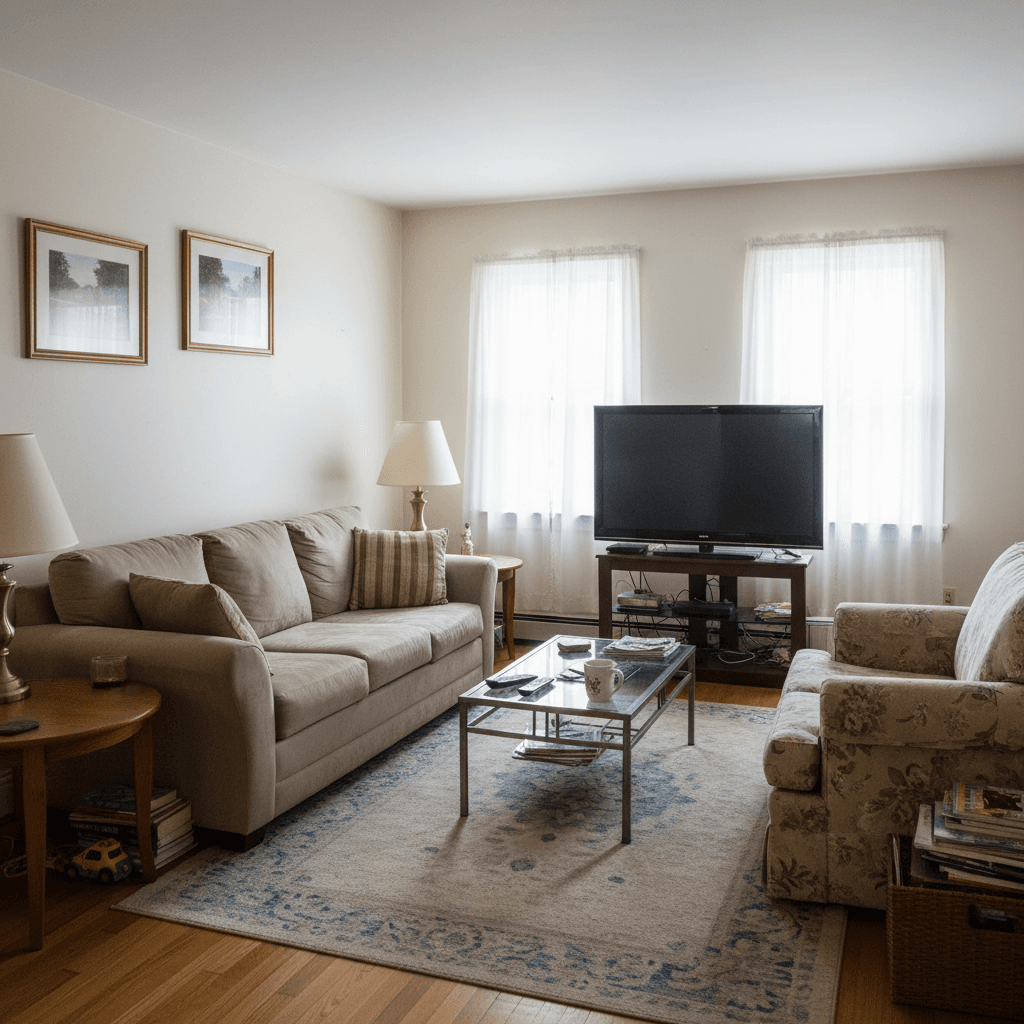
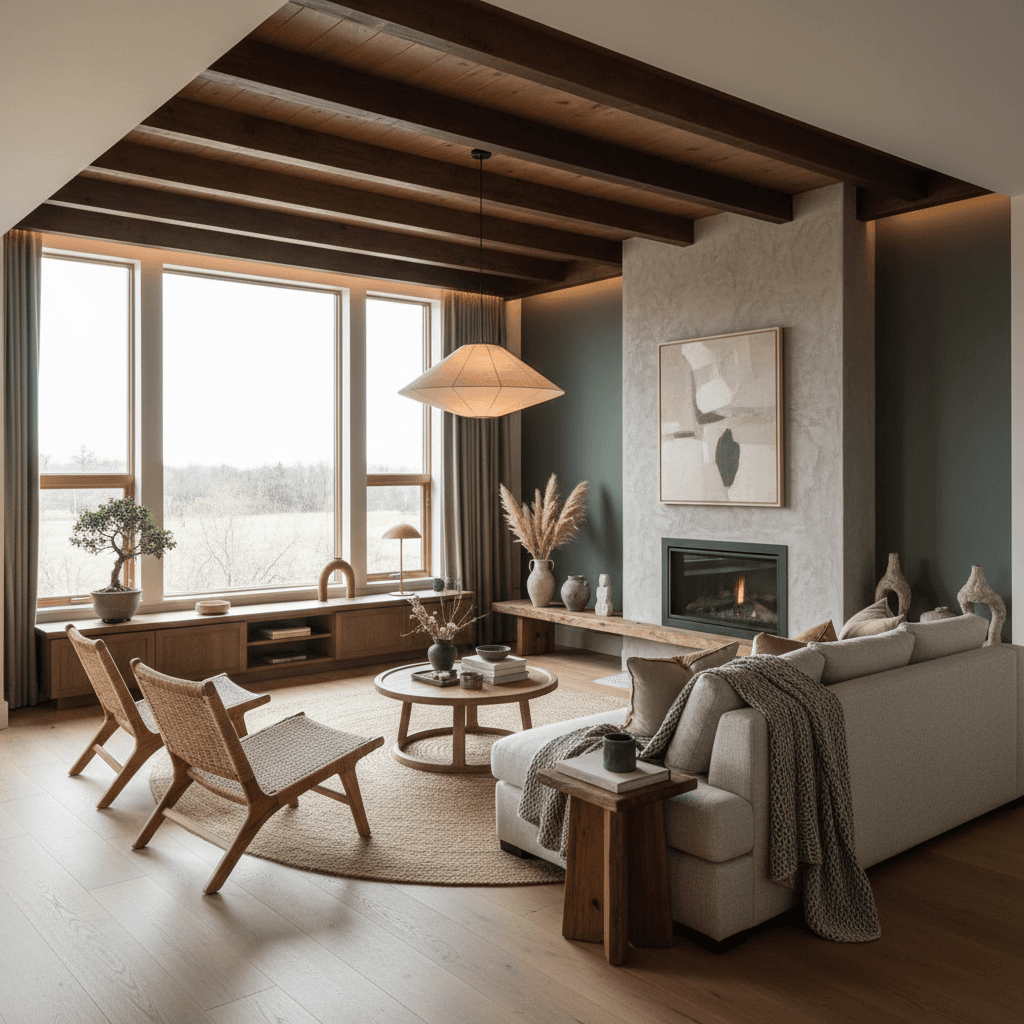
AI-generated japandi living room redesign from a single photo
How to get Japandi Living Room designs
1. Upload your photo
Take a photo of your room in good daylight and upload it directly from your phone or computer. No account required to try.
2. Select style and room type
Choose your design theme and confirm the room type. Add any specific details or requirements in the optional text field.
3. Download your designs
The AI generates your redesigned room in 30 to 60 seconds. Review the result, and download or share as needed.
Japandi design principles
Japandi fuses Japanese wabi-sabi philosophy with Scandinavian hygge sensibility, producing spaces that celebrate natural imperfection, restrained craftsmanship, and deliberate calm. Unlike either parent style alone, Japandi rooms feel simultaneously minimal and warm, with natural materials — pale wood, rattan, linen — playing against muted earthy tones and carefully edited objects.
Embrace asymmetry and natural imperfection
Japandi interiors reject the pursuit of flawless symmetry. A handmade ceramic bowl with an uneven rim, a branch arranged in a vase, or a linen throw with a visible weave all carry more character than manufactured equivalents. Selecting objects with visible signs of making or natural irregularity is one of the most direct ways to achieve the wabi-sabi quality the style depends on.
Keep the palette muted and drawn from nature
Japandi colour ranges from warm off-white and undyed linen through clay, moss, and charcoal. Saturated colour rarely appears. When choosing paint or fabric, hold samples against natural materials in real daylight — the goal is a palette that makes the room feel neither stark nor busy, but quietly grounded.
Choose furniture with honest joinery
The furniture that fits Japandi best shows how it is made — visible mortise-and-tenon joints, hand-rubbed oil finishes, and simple forms with no applied decoration. Scandinavian-influenced pieces with lower profiles and Japanese-influenced pieces with fine, precise detailing both work well in the same room because they share an underlying commitment to craft over ornamentation.
Limit objects to those with clear purpose or beauty
Both Japanese and Scandinavian design traditions hold that objects on display should either serve a function or be genuinely beautiful — ideally both. Before placing anything on a surface, apply this test. Clearing surfaces to a curated few pieces and leaving the rest of the shelf or table empty is not incompleteness — it is the point.
Living Room design considerations
The living room is typically the room in a home that does the most social work — hosting guests, accommodating family life, and providing daily rest — which means its design must balance multiple, sometimes conflicting, demands simultaneously.
Traffic flow and furniture arrangement
Before selecting any furniture, mark out the room's natural pathways on a floor plan. Entrances, exits, connections to adjacent rooms, and the primary seating orientation all create movement lines that furniture should accommodate rather than block. Allow at least 90cm of clear walking space on main routes.
Acoustic comfort alongside visual appeal
Hard-surfaced rooms — tiled floors, plaster walls, minimal textiles — create echo and reflected sound that makes conversation tiring and television difficult to hear clearly. Rugs, upholstered furniture, curtains, and bookshelves all absorb sound energy and make a room significantly more comfortable to spend time in.
Lighting for different activities and times of day
A living room used for watching films in the evening, reading in the afternoon, and hosting guests needs different lighting for each activity. Installing separate switches or dimmers for overhead, floor, and table lamps gives you control over the room's atmosphere without requiring structural changes.
Frequently asked questions
Other styles for your Living Room
Luxury Living Room Design Ideas
Exceptional materials, expert craft, enduring quality
Mediterranean Living Room Design Ideas
Sun-warmed, textured, and alive with colour and light
Minimalist Living Room Design Ideas
Less, but better — every object earns its place
Modern Living Room Design Ideas
Clean lines, functional spaces, timeless appeal
Scandinavian Living Room Design Ideas
Warmth, function, and the beauty of natural materials
Art Deco Living Room Design Ideas
Glamour, geometry, and gold — the roaring twenties reimagined
Bohemian Living Room Design Ideas
Collected over time, layered with intention, unapologetically individual
Japandi Living Room guides worth reading
Practical write-ups that go deeper than a single living room page — how to photograph the room, how to pick a style, and what AI redesign actually changes.
Redesign Your Living Room with AI: 7 Steps (2026 Guide)
AI room design tools have made it practical to visualise a completely different living room before spending anything on furniture
Industrial Kitchen Design: 15 Ideas That Actually Work
The industrial kitchen references commercial cooking infrastructure — steel, open shelving, exposed utilities — and translates it
How to Choose an Interior Design Style: 6 Quick Tests
Most people choose an interior design style based on how it looks in photography. A better approach starts with how you actually l
How AI Interior Design Tools Actually Work in 2026
Not all AI room design tools work the same way. Understanding the difference between diffusion models and multimodal models explai
Before you pick an AI interior design tool
Magic Room is not the only way to generate these designs. Here is how it compares to the tools most people evaluate alongside it.
best RoomGPT alternatives for AI interior design
All four tools compared on AI model, photo retention, pricing model and output quality.
Interior AI alternative
Why people switch from Interior AI, and what changes when they do.
RoomGPT alternative
Why people switch from RoomGPT, and what changes when they do.
Magic Room vs Interior AI
Side-by-side on AI model, photo privacy, pricing and output quality.