
Bohemian Living Room Design Ideas
By Thanos KazakisMagic Room founderUpdated
A bohemian living room is assembled rather than designed, which makes it one of the most accessible styles for people who have accumulated objects they love but cannot make cohere visually. The style provides a framework within which diverse objects can coexist: layer rugs, use colour as a unifying thread through textiles from different origins, and display collections deliberately rather than scattering them.
See the transformation
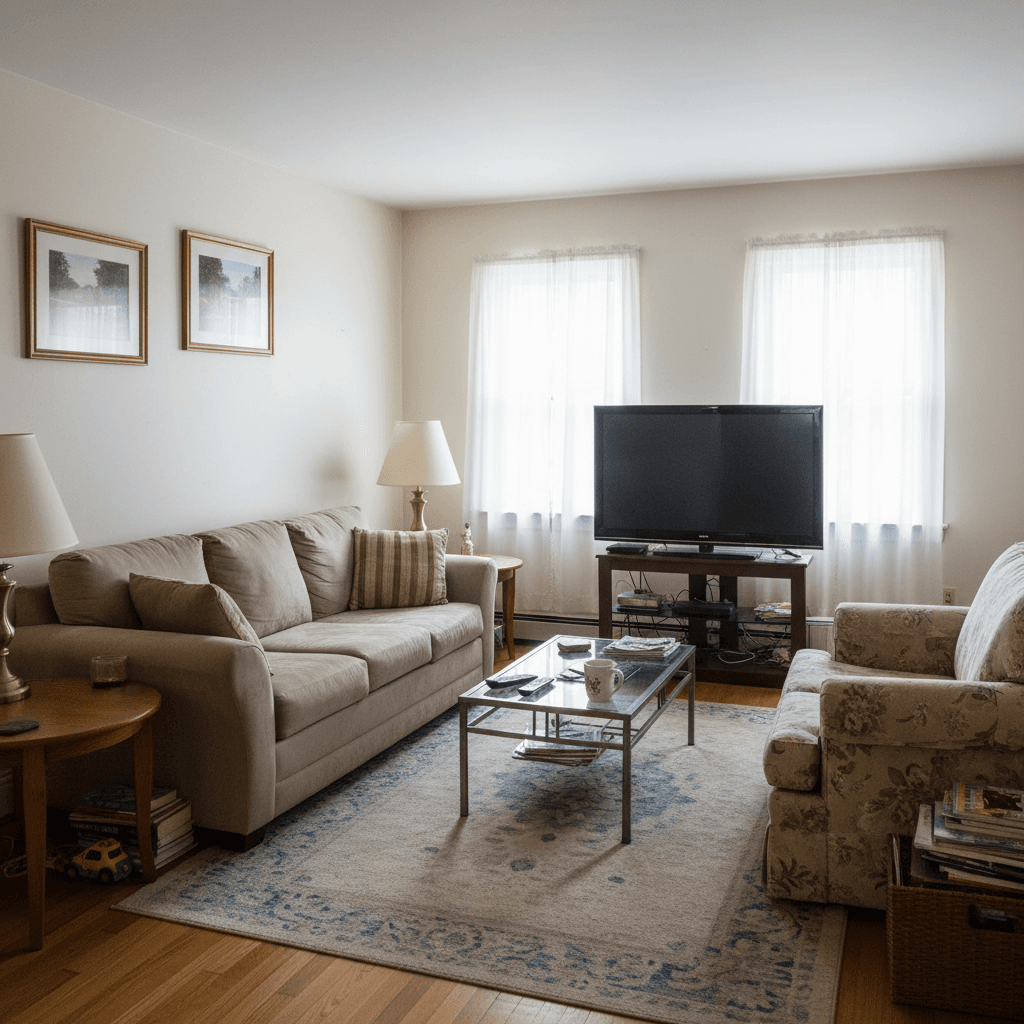
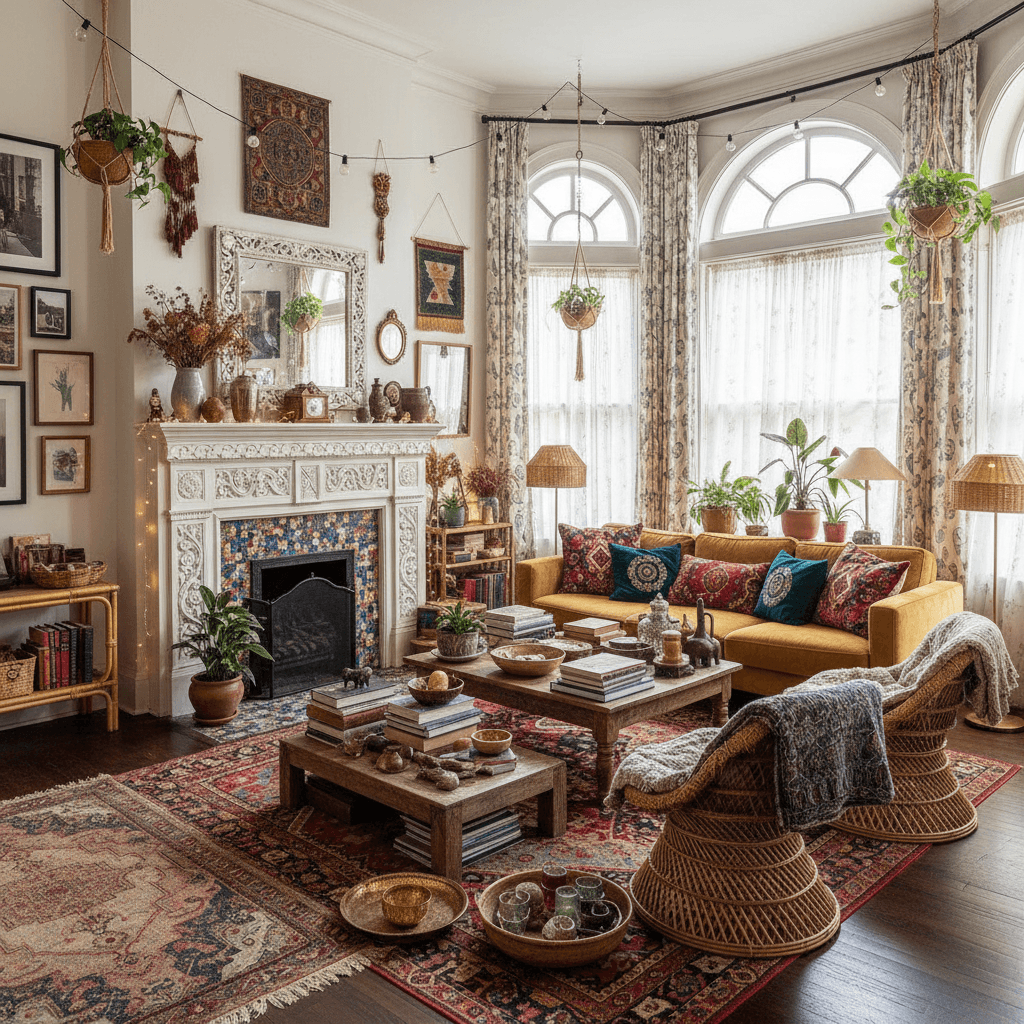
AI-generated bohemian living room redesign from a single photo
How to get Bohemian Living Room designs
1. Upload your photo
Take a photo of your room in good daylight and upload it directly from your phone or computer. No account required to try.
2. Select style and room type
Choose your design theme and confirm the room type. Add any specific details or requirements in the optional text field.
3. Download your designs
The AI generates your redesigned room in 30 to 60 seconds. Review the result, and download or share as needed.
Bohemian design principles
Bohemian interiors reject the idea that everything must match. The style is built from objects gathered across time and place — vintage textiles, handmade ceramics, inherited furniture, travel souvenirs — layered together until a room reflects the specific person who lives in it. Rules exist to be adapted, not followed.
Layer rugs rather than using one large piece
Stacking rugs of different sizes, origins, and patterns is one of the most characteristic bohemian techniques. It adds depth, defines zones in a large room, and is one of the fastest ways to soften an otherwise conventional space. Wool kilims, Moroccan Beni Ourain rugs, and flat-weave dhurries work well together.
Display collections rather than hiding them
In most interior styles, a large collection of objects is something to manage and minimise. In bohemian design, it is the point. Books stacked horizontally, a wall of framed prints in mismatched frames, shelves of ceramics and glass — these accumulations tell a story. Organise by colour if the variety feels overwhelming.
Prioritise handmade and craft pieces
Mass-produced objects look out of place in a bohemian room. Seek out handmade ceramics, hand-woven textiles, naturally dyed fabrics, and objects made by individual makers. They bring an irregularity and warmth that factory production cannot replicate, and each piece adds a layer of narrative to the space.
Mix periods and cultures thoughtfully
Bohemian rooms often combine pieces from different countries and eras, but the most successful ones do this with some attention to underlying harmony. A unifying colour thread running through textiles from different origins, or a consistent material palette, allows diverse objects to coexist without the room reading as simply chaotic.
Living Room design considerations
The living room is typically the room in a home that does the most social work — hosting guests, accommodating family life, and providing daily rest — which means its design must balance multiple, sometimes conflicting, demands simultaneously.
Traffic flow and furniture arrangement
Before selecting any furniture, mark out the room's natural pathways on a floor plan. Entrances, exits, connections to adjacent rooms, and the primary seating orientation all create movement lines that furniture should accommodate rather than block. Allow at least 90cm of clear walking space on main routes.
Acoustic comfort alongside visual appeal
Hard-surfaced rooms — tiled floors, plaster walls, minimal textiles — create echo and reflected sound that makes conversation tiring and television difficult to hear clearly. Rugs, upholstered furniture, curtains, and bookshelves all absorb sound energy and make a room significantly more comfortable to spend time in.
Lighting for different activities and times of day
A living room used for watching films in the evening, reading in the afternoon, and hosting guests needs different lighting for each activity. Installing separate switches or dimmers for overhead, floor, and table lamps gives you control over the room's atmosphere without requiring structural changes.
Frequently asked questions
Other styles for your Living Room
Coastal Living Room Design Ideas
Breezy, light-filled spaces that bring the ocean indoors
Industrial Living Room Design Ideas
Raw materials, honest structure, urban character
Japandi Living Room Design Ideas
Wabi-sabi meets hygge — imperfect simplicity
Luxury Living Room Design Ideas
Exceptional materials, expert craft, enduring quality
Mediterranean Living Room Design Ideas
Sun-warmed, textured, and alive with colour and light
Minimalist Living Room Design Ideas
Less, but better — every object earns its place
Modern Living Room Design Ideas
Clean lines, functional spaces, timeless appeal
Bohemian Living Room guides worth reading
Practical write-ups that go deeper than a single living room page — how to photograph the room, how to pick a style, and what AI redesign actually changes.
How to Choose an Interior Design Style: 6 Quick Tests
Most people choose an interior design style based on how it looks in photography. A better approach starts with how you actually l
Bohemian Bedroom Decor: 20 Ideas to Steal in 2026
A bohemian bedroom is built from objects accumulated over time rather than purchased as a set. The design challenge is creating vi
Redesign Your Living Room with AI: 7 Steps (2026 Guide)
AI room design tools have made it practical to visualise a completely different living room before spending anything on furniture
Industrial Kitchen Design: 15 Ideas That Actually Work
The industrial kitchen references commercial cooking infrastructure — steel, open shelving, exposed utilities — and translates it
Before you pick an AI interior design tool
Magic Room is not the only way to generate these designs. Here is how it compares to the tools most people evaluate alongside it.
best RoomGPT alternatives for AI interior design
All four tools compared on AI model, photo retention, pricing model and output quality.
DecorAI alternative
Why people switch from DecorAI, and what changes when they do.
Reimagine Home alternative
Why people switch from Reimagine Home, and what changes when they do.
Magic Room vs DecorAI
Side-by-side on AI model, photo privacy, pricing and output quality.