
Coastal Walk-in Closet Design Ideas
By Thanos KazakisMagic Room founderUpdated
A coastal walk-in closet borrows the style's emphasis on natural light, white-painted timber, and woven texture to turn a utility space into a room genuinely pleasant to use each morning. White Shaker-style joinery with brushed nickel or rope-pull hardware, a centre island in pale timber or a marble-topped dresser, woven seagrass baskets for accessories, and a daylight-balanced ceiling pendant create a room that feels like a cabin at the edge of a beach rather than a wardrobe corridor. Mirroring is essential — a full-length mirror positioned to catch the room's strongest light source doubles as a styling tool.
See the transformation
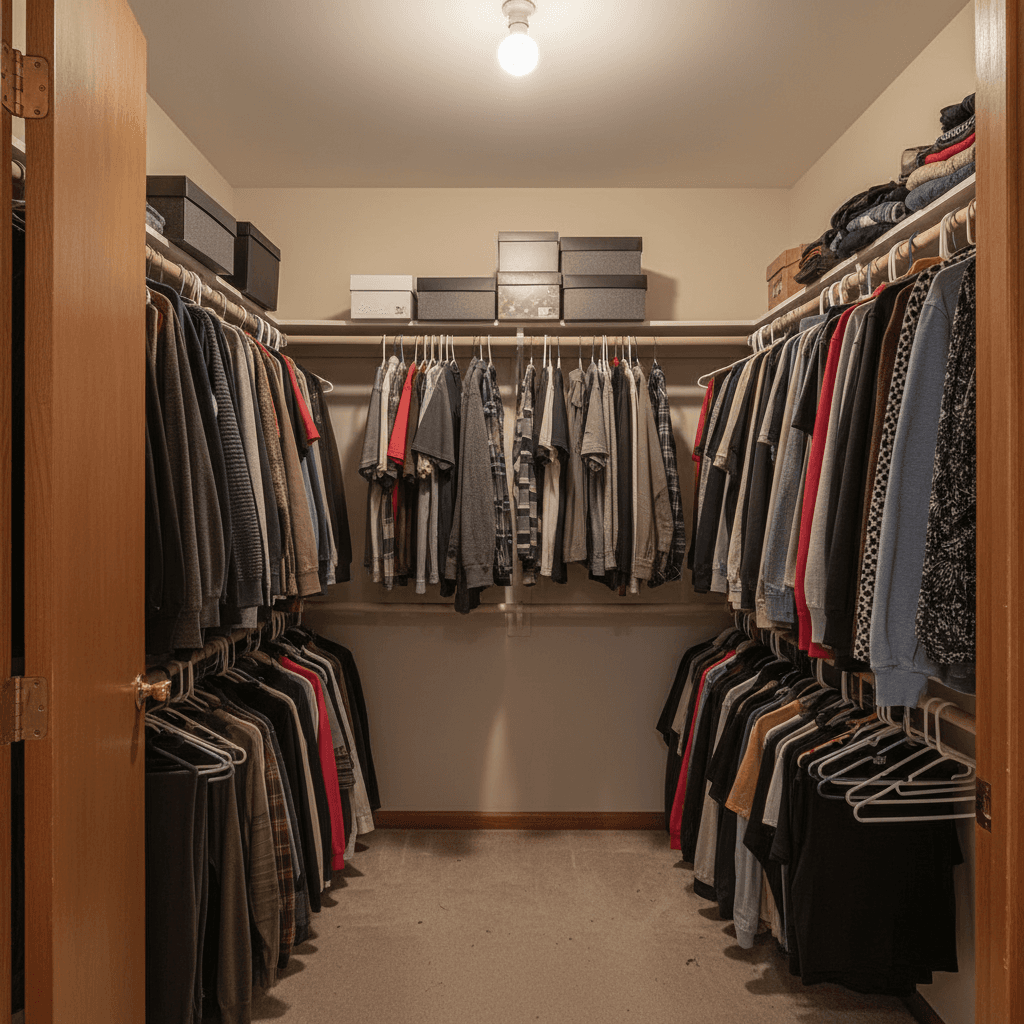
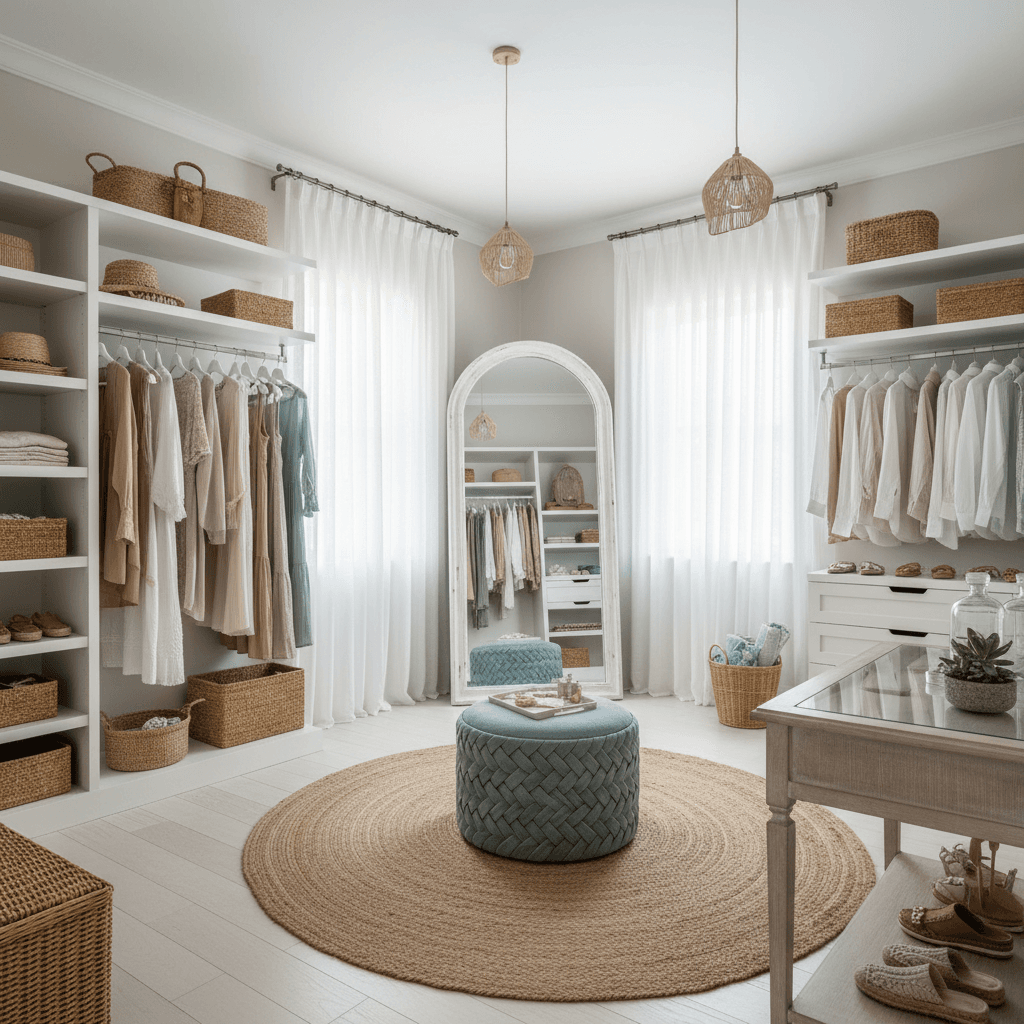
AI-generated coastal walk-in closet redesign from a single photo
How to get Coastal Walk-in Closet designs
1. Upload your photo
Take a photo of your room in good daylight and upload it directly from your phone or computer. No account required to try.
2. Select style and room type
Choose your design theme and confirm the room type. Add any specific details or requirements in the optional text field.
3. Download your designs
The AI generates your redesigned room in 30 to 60 seconds. Review the result, and download or share as needed.
Coastal design principles
Coastal design distils the sensory experience of seaside living into an interior language — salt-bleached timbers, woven textures, the shifting blue-green palette of shallow water, and an abundance of natural light. At its best it is neither nautical-themed nor literalist; instead it creates rooms that feel genuinely relaxed and connected to the natural environment outside, with materials and colours that reference the coast without reproducing it.
Prioritise natural light and window treatments that maximise it
Natural light is the defining quality of coastal interiors. Replace heavy drapes with linen sheers, remove window frames that block peripheral light, and use pale, reflective surfaces on walls and floors to carry that light deeper into the room. Light-coloured linen or cotton voile panels that move in a breeze are more faithful to the coastal aesthetic than any decorative element you could add.
Build the palette around whites, sand, and water
A coastal palette is bleached and light — white, off-white, warm sand, driftwood grey, and the blue-greens of shallow sea water. The blue-green tones should be soft and slightly desaturated; saturated navy or royal blue feels nautical rather than coastal. Use the lighter neutrals as the primary base and introduce the blue-green tones selectively through textiles, ceramics, or a single accent wall.
Choose natural, tactile materials over synthetic alternatives
Seagrass, sisal, rattan, woven cotton, weathered oak, and unglazed ceramics all carry the material sensibility of the coast. When selecting furniture and accessories, ask whether the material itself could have come from or been shaped by a coastal environment. Avoid plastic or resin equivalents of natural materials — they flatten the tactile quality that makes coastal interiors feel genuinely relaxing.
Avoid over-theming with nautical accessories
Anchor prints, ship wheels, and lighthouse ornaments signal 'beach house' rather than creating an actual coastal atmosphere. The most convincing coastal interiors rely on material quality, light, and spatial openness rather than thematic decoration. If you want a reference to the sea, a large piece of sea glass, a bowl of smooth stones, or a single botanical print of coastal flora will do more than a shelf of maritime ornaments.
Walk-in Closet design considerations
A walk-in closet is a storage system with an interior design problem: it must organise a wardrobe efficiently while creating an environment where the act of choosing what to wear is genuinely pleasant. The balance between visible organisation, lighting quality, and material finish determines whether a walk-in closet feels like an aspirational dressing room or an overwhelming storage problem.
Map your wardrobe before designing the storage
Every walk-in closet configuration should begin with a wardrobe audit: count the number of full-length hanging items, folded items, shoes, bags, and accessories. The most common error is allocating too much long-hang rail space relative to short-hang and shelving. Most wardrobes are dominated by shirts, jackets, and folded items — not full-length dresses — and a layout that reflects actual wardrobe composition will feel better organised and less cramped than a generic equal-division layout.
Light every zone with dedicated task lighting
A single ceiling light in a walk-in closet is insufficient. Hanging rails require downlighting at 45 degrees to illuminate the garments rather than the tops of hangers. Shoe shelves need light angled at their face, not their top surface. Drawers and lower cabinets benefit from interior lighting triggered by opening. LED strip lighting mounted beneath shelves and inside cabinets is an efficient and cost-effective solution. The goal is to make every item immediately visible without shadows obscuring colour or detail.
Include a full-length mirror with adequate clearance
A walk-in closet without a full-length mirror is functionally incomplete — users will get dressed and leave to check appearance elsewhere, defeating part of the room's purpose. Position the mirror on the end wall or on a door, with at least 60cm of clear floor space in front of it and good light falling on the person rather than from behind them. A second smaller mirror at an angle near the door, positioned to show the back view, is a useful addition in larger closets.
Frequently asked questions
Coastal Walk-in Closet guides worth reading
Practical write-ups that go deeper than a single walk-in closet page — how to photograph the room, how to pick a style, and what AI redesign actually changes.
Scandinavian Design: 12 Ideas for Small Spaces (2026)
Scandinavian design was developed in countries where domestic spaces are relatively small and daylight is seasonal. Its principles
Bohemian Bedroom Decor: 20 Ideas to Steal in 2026
A bohemian bedroom is built from objects accumulated over time rather than purchased as a set. The design challenge is creating vi
Industrial Kitchen Design: 15 Ideas That Actually Work
The industrial kitchen references commercial cooking infrastructure — steel, open shelving, exposed utilities — and translates it
How to Choose an Interior Design Style: 6 Quick Tests
Most people choose an interior design style based on how it looks in photography. A better approach starts with how you actually l
Before you pick an AI interior design tool
Magic Room is not the only way to generate these designs. Here is how it compares to the tools most people evaluate alongside it.
best RoomGPT alternatives for AI interior design
All four tools compared on AI model, photo retention, pricing model and output quality.
RoomGPT alternative
Why people switch from RoomGPT, and what changes when they do.
DecorAI alternative
Why people switch from DecorAI, and what changes when they do.
Magic Room vs RoomGPT
Side-by-side on AI model, photo privacy, pricing and output quality.