
Scandinavian Dining Room Design Ideas
By Thanos KazakisMagic Room founderUpdated
A Scandinavian dining room builds its character around a solid wood table that will improve with use — accepting marks, ring stains, and the evidence of shared meals as part of its value rather than as damage to be avoided. Simple bentwood or upholstered chairs, a pendant in rattan or linen, and a wool rug underfoot create a room that invites people to sit and stay rather than eating quickly and leaving.
See the transformation
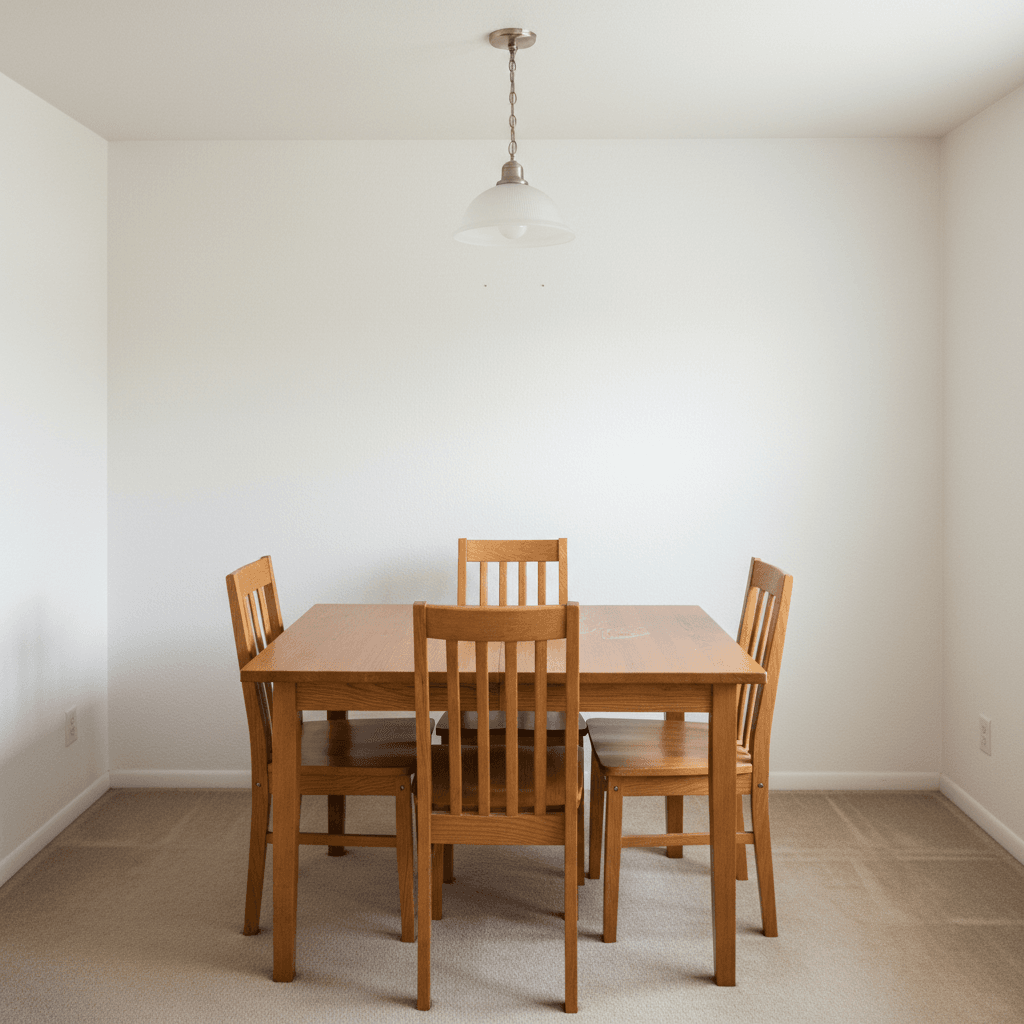
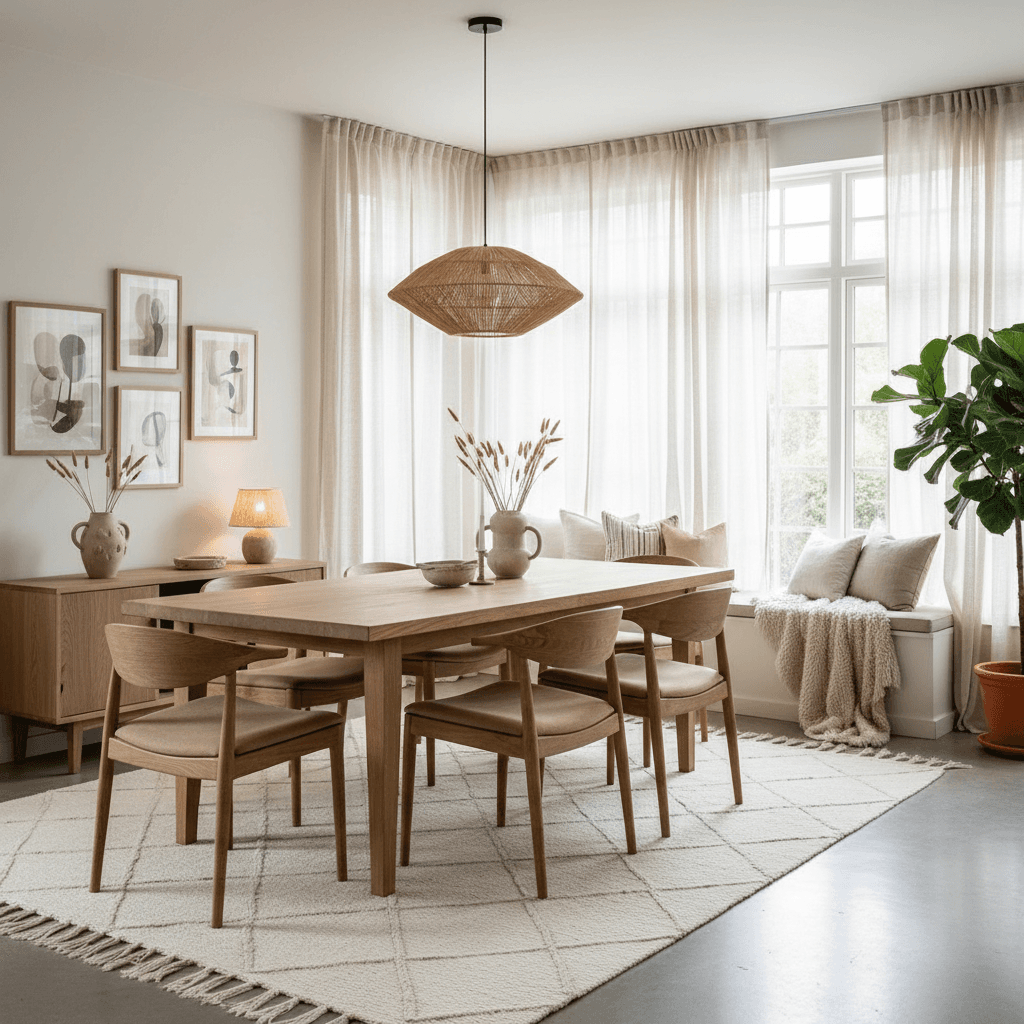
AI-generated scandinavian dining room redesign from a single photo
How to get Scandinavian Dining Room designs
1. Upload your photo
Take a photo of your room in good daylight and upload it directly from your phone or computer. No account required to try.
2. Select style and room type
Choose your design theme and confirm the room type. Add any specific details or requirements in the optional text field.
3. Download your designs
The AI generates your redesigned room in 30 to 60 seconds. Review the result, and download or share as needed.
Scandinavian design principles
Scandinavian design emerged from a climate where winters are long and daylight is scarce, so rooms were engineered to maximise warmth and comfort without sacrificing practicality. Light woods, wool textiles, candlelight, and handcrafted objects give the style a human quality that purely minimal approaches can lack.
Layer light sources strategically
Scandinavian interiors rarely rely on a single overhead fixture. Floor lamps, table lamps, candles, and under-cabinet strips create pools of warm light at different heights. This layered approach makes rooms feel cocooning in the evenings without the harshness of central lighting alone.
Choose light woods over dark ones
Pine, birch, and oak in lighter finishes reflect more of the available natural light and prevent the heavy quality that characterises other traditional styles. When in doubt, go lighter — you can always add a darker piece as a contrast accent later.
Introduce the concept of hygge through textiles
The Danish concept of hygge — a feeling of cosy contentment — is achieved largely through textiles. Chunky knit throws, sheepskin rugs, linen curtains, and wool cushions make a room feel safe and inhabited rather than styled. Layer multiple textures rather than relying on a single statement piece.
Keep decoration functional
Scandinavian homes decorate with objects that do something — a ceramic mug on a shelf, a wooden tray holding candles, a stack of books used rather than arranged. This prevents the over-styled look that makes rooms feel like showrooms rather than places people actually live.
Dining Room design considerations
The dining room — or dining zone in an open-plan layout — needs to work for both the intimacy of daily family meals and the occasion of entertaining guests, which demands flexibility in lighting, furniture arrangement, and acoustic separation from adjacent spaces.
Table size and seating clearance
A dining table needs at least 90cm of clear space on all sides to allow chairs to be pulled out fully and people to move around occupied seating. Many dining rooms are furnished with tables that are too large for comfortable circulation, which makes the room feel cramped regardless of how it is decorated. Measure first; choose the table second.
Pendant lighting positioned precisely over the table
The pendant or chandelier over a dining table is one of the few interior design elements where precise positioning matters as much as appearance. The bottom of a pendant should hang roughly 75-85cm above the table surface — low enough to create intimacy, high enough not to obstruct sightlines across the table. A fitting that is off-centre relative to the table is immediately noticeable and difficult to adjust without electrical work.
Storage for tableware near the table
A sideboard, dresser, or fitted storage unit in a dining room does double duty — it stores the items needed for the table (glasses, serving dishes, tablecloths, candles) and provides a surface for serving dishes and a display area for decorative objects. A dining room without storage tends to feel unfinished and creates practical inconvenience at every meal.
Frequently asked questions
Scandinavian Dining Room guides worth reading
Practical write-ups that go deeper than a single dining room page — how to photograph the room, how to pick a style, and what AI redesign actually changes.
Scandinavian Design: 12 Ideas for Small Spaces (2026)
Scandinavian design was developed in countries where domestic spaces are relatively small and daylight is seasonal. Its principles
Industrial Kitchen Design: 15 Ideas That Actually Work
The industrial kitchen references commercial cooking infrastructure — steel, open shelving, exposed utilities — and translates it
How to Choose an Interior Design Style: 6 Quick Tests
Most people choose an interior design style based on how it looks in photography. A better approach starts with how you actually l
How AI Interior Design Tools Actually Work in 2026
Not all AI room design tools work the same way. Understanding the difference between diffusion models and multimodal models explai
Before you pick an AI interior design tool
Magic Room is not the only way to generate these designs. Here is how it compares to the tools most people evaluate alongside it.
best RoomGPT alternatives for AI interior design
All four tools compared on AI model, photo retention, pricing model and output quality.
Interior AI alternative
Why people switch from Interior AI, and what changes when they do.
RoomGPT alternative
Why people switch from RoomGPT, and what changes when they do.
Magic Room vs Interior AI
Side-by-side on AI model, photo privacy, pricing and output quality.