
Industrial Gaming Room Design Ideas
By Thanos KazakisMagic Room founderUpdated
The industrial gaming room has natural compatibility with the genre's technical equipment — metal surfaces, dark palettes, and visible structure all suit screens and peripheral devices in ways that soft domestic rooms do not. The key difference from a generic gaming aesthetic is quality of material and deliberateness of arrangement: industrial elements that are clearly chosen rather than accumulated.
See the transformation
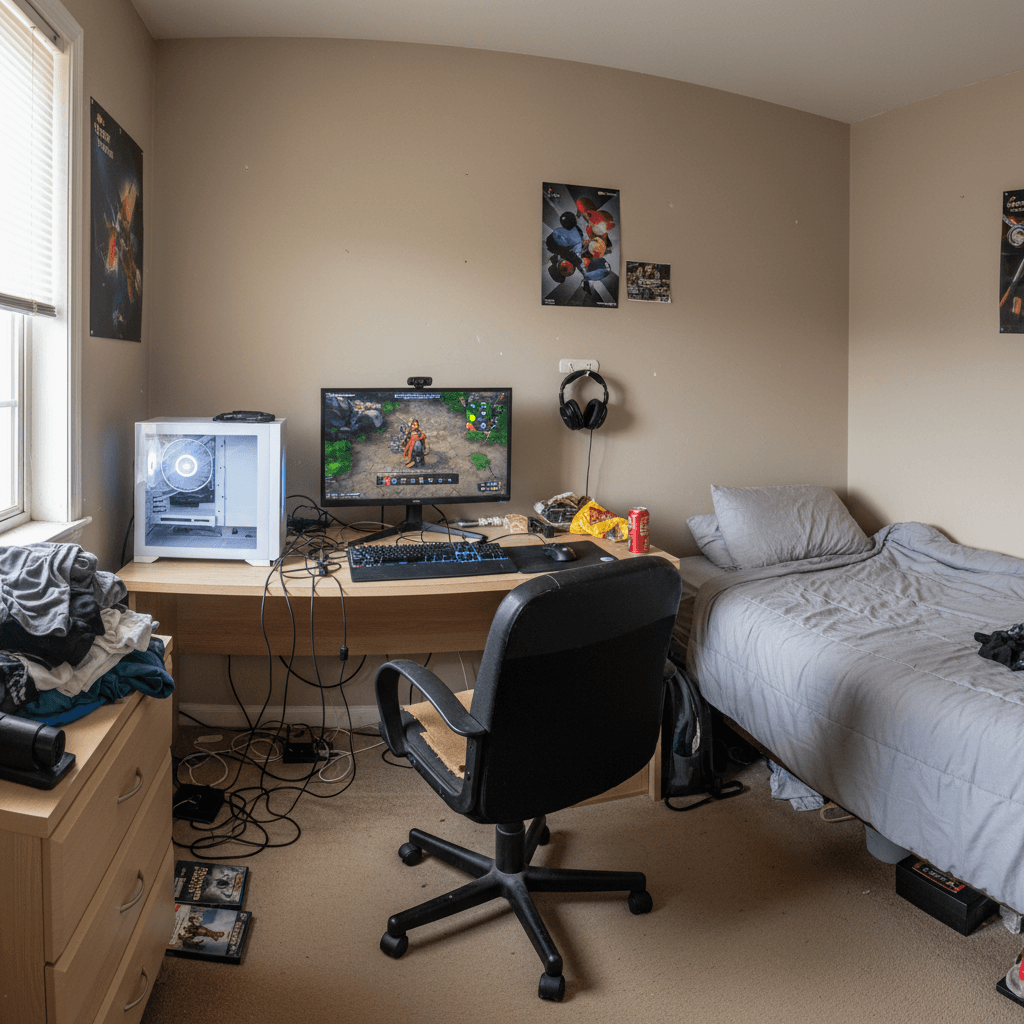
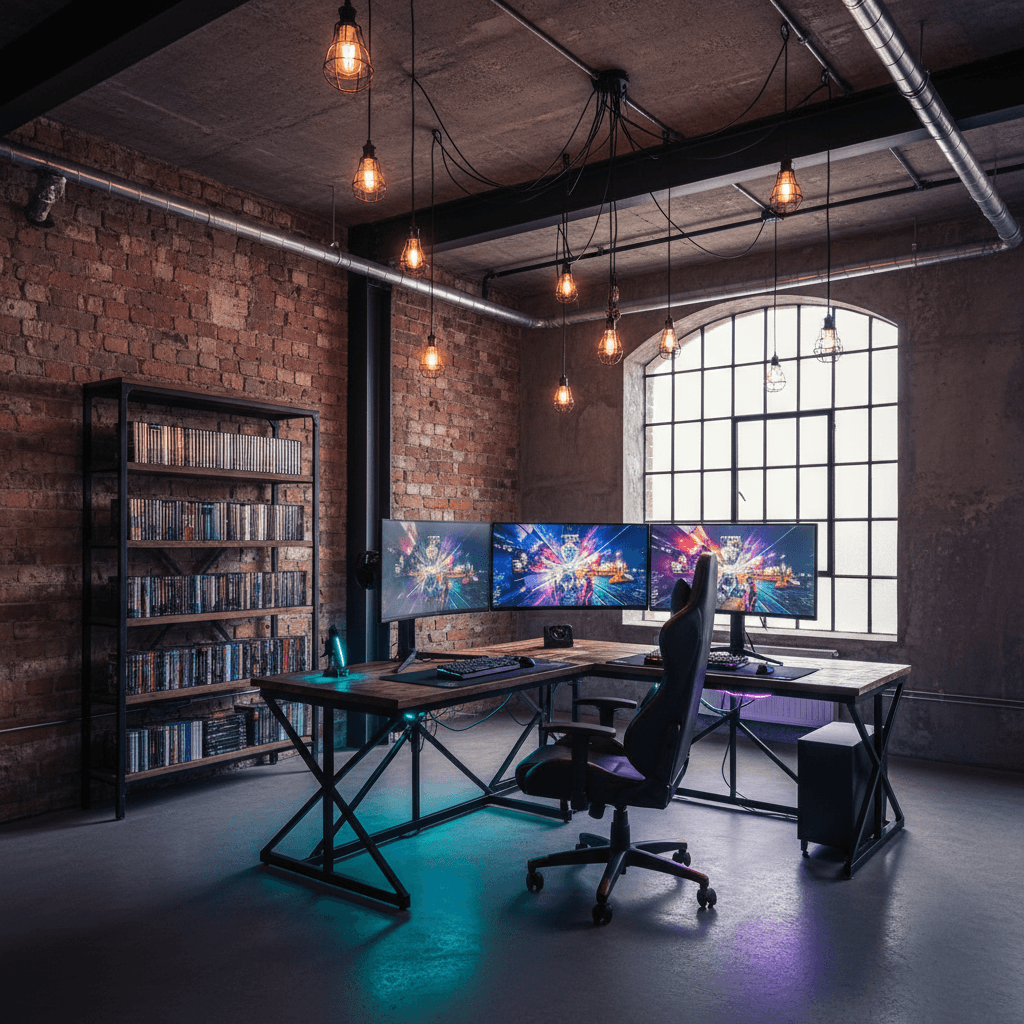
AI-generated industrial gaming room redesign from a single photo
How to get Industrial Gaming Room designs
1. Upload your photo
Take a photo of your room in good daylight and upload it directly from your phone or computer. No account required to try.
2. Select style and room type
Choose your design theme and confirm the room type. Add any specific details or requirements in the optional text field.
3. Download your designs
The AI generates your redesigned room in 30 to 60 seconds. Review the result, and download or share as needed.
Industrial design principles
Industrial design treats a building's infrastructure as a feature rather than something to hide. Exposed brick, steel beams, concrete floors, and visible ductwork form the backdrop. Against that raw shell, leather, worn wood, and vintage factory pieces create spaces that feel lived-in from day one.
Expose the building rather than covering it
If you have original brick, structural beams, or concrete, treat them as assets. Sandblasting brick, stripping paint from columns, or leaving ceiling joists visible is almost always a better starting point than adding faux-industrial cladding on top of a conventional interior.
Balance raw with refined
Unrelieved roughness quickly becomes oppressive. Pair concrete floors with a soft area rug, contrast steel shelving with warm leather seating, or add linen curtains against an exposed brick wall. The tension between raw and refined is what gives the style its energy.
Source factory and workshop furniture
Authentic industrial furniture — metal lockers repurposed as wardrobes, factory stools used at a kitchen island, vintage filing cabinets as side tables — carries genuine history. Flea markets, industrial surplus dealers, and architectural salvage yards are better sources than retail replicas.
Use Edison bulbs and adjustable metal fixtures
Lighting in an industrial space should look mechanical and deliberate. Exposed bulbs on pendant cords, clip-on metal reflectors, and track lighting on conduit all suit the aesthetic. Warm filament bulbs soften the rawness of the materials around them without compromising the overall character.
Gaming Room design considerations
A dedicated gaming room needs to solve several technical problems simultaneously — screen glare control, acoustic management, cable organisation, and ergonomic seating for extended sessions — while creating an environment that is genuinely motivating to spend time in.
Screen placement and ambient light control
Monitor glare and ambient light that washes out a display are the most common functional problems in gaming rooms. Blackout blinds or heavy curtains are often essential even if the room faces away from direct sunlight, since overhead lighting and reflected daylight can significantly degrade image quality. Position screens away from windows where possible, or use anti-glare panels.
Seating designed for extended use
Gaming sessions lasting several hours place specific demands on seating that general lounge furniture does not meet. The lumbar support, seat depth, armrest height, and reclining range of a chair matter considerably when someone is seated and focused for two to four hours at a time. Ergonomic gaming chairs and monitors at correct eye height together reduce the most common physical complaints associated with extended gaming.
Acoustic treatment for both immersion and consideration
Sound quality matters in a gaming environment, but so does containing that sound. Acoustic foam panels or fabric-wrapped acoustic boards on walls reduce reflected sound inside the room, improving the clarity of surround sound or headphone audio. They also reduce the amount of noise that travels to adjacent rooms, which matters considerably in shared households.
Frequently asked questions
Other styles for your Gaming Room
Industrial Gaming Room guides worth reading
Practical write-ups that go deeper than a single gaming room page — how to photograph the room, how to pick a style, and what AI redesign actually changes.
Industrial Kitchen Design: 15 Ideas That Actually Work
The industrial kitchen references commercial cooking infrastructure — steel, open shelving, exposed utilities — and translates it
AI Home Office Design: 10 Ideas for 2026 Workspaces
Home offices need to function well for focused work and appear professional in video calls. AI design tools can help you see possi
Scandinavian Design: 12 Ideas for Small Spaces (2026)
Scandinavian design was developed in countries where domestic spaces are relatively small and daylight is seasonal. Its principles
Bohemian Bedroom Decor: 20 Ideas to Steal in 2026
A bohemian bedroom is built from objects accumulated over time rather than purchased as a set. The design challenge is creating vi
Before you pick an AI interior design tool
Magic Room is not the only way to generate these designs. Here is how it compares to the tools most people evaluate alongside it.
best RoomGPT alternatives for AI interior design
All four tools compared on AI model, photo retention, pricing model and output quality.
DecorAI alternative
Why people switch from DecorAI, and what changes when they do.
Reimagine Home alternative
Why people switch from Reimagine Home, and what changes when they do.
Magic Room vs DecorAI
Side-by-side on AI model, photo privacy, pricing and output quality.