
Transitional Nursery Design Ideas
By Thanos KazakisMagic Room founderUpdated
Generate transitional nursery design ideas instantly with AI.
See the transformation
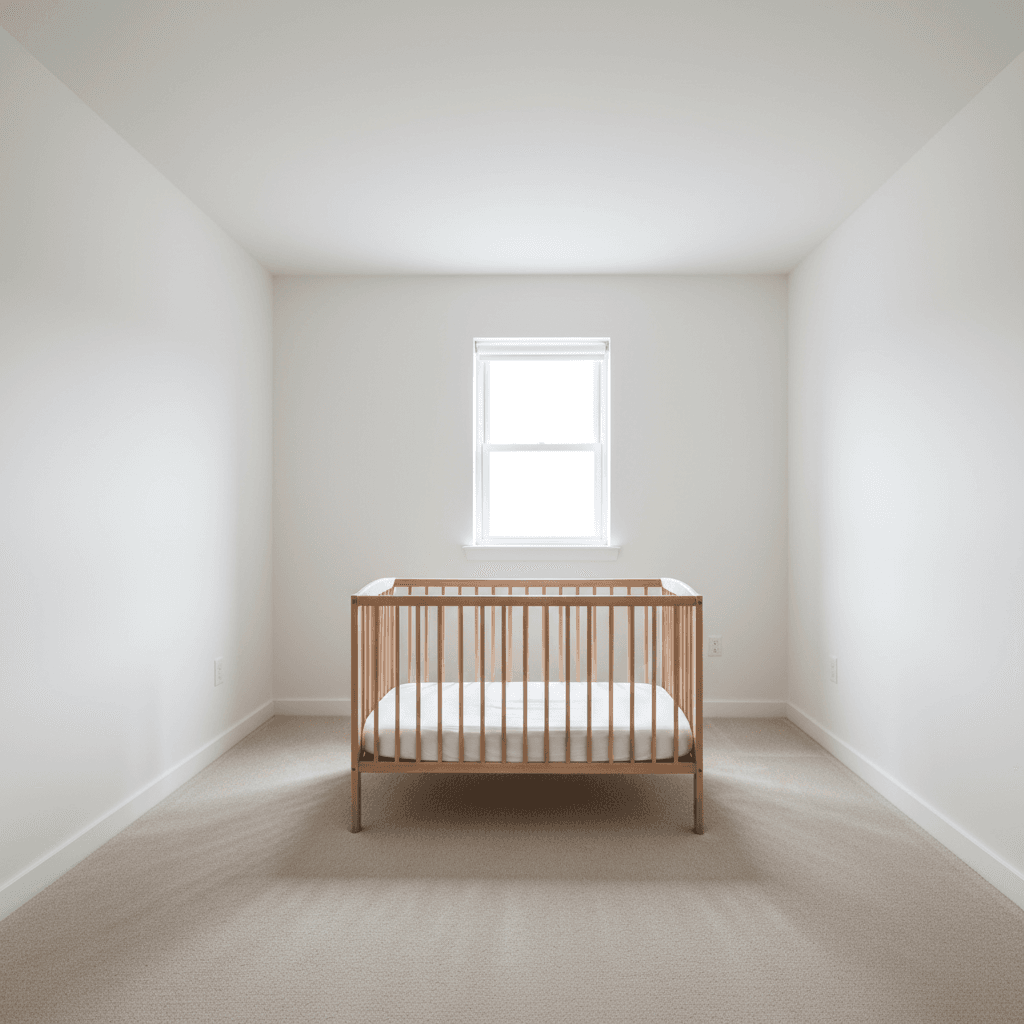
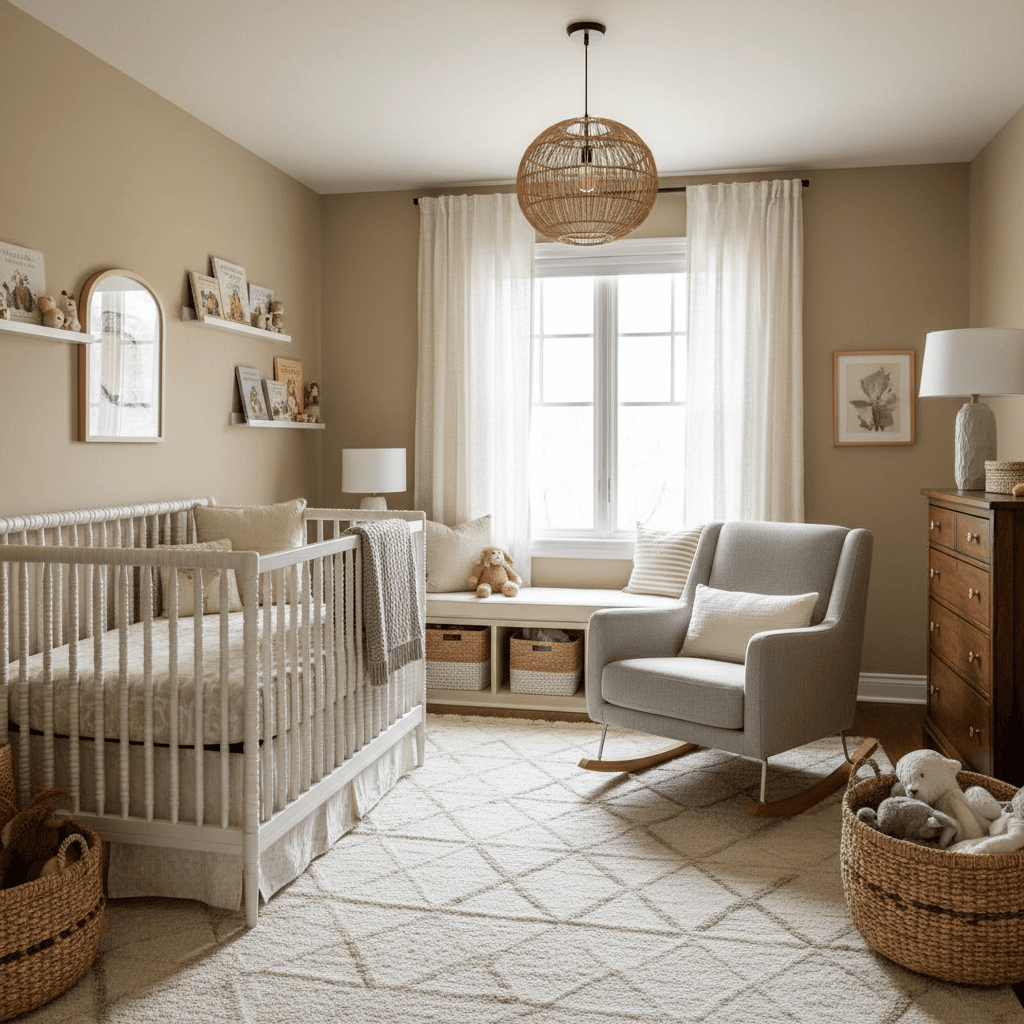
AI-generated transitional nursery redesign from a single photo
How to get Transitional Nursery designs
1. Upload your photo
Take a photo of your room in good daylight and upload it directly from your phone or computer. No account required to try.
2. Select style and room type
Choose your design theme and confirm the room type. Add any specific details or requirements in the optional text field.
3. Download your designs
The AI generates your redesigned room in 30 to 60 seconds. Review the result, and download or share as needed.
Transitional design principles
Transitional interior design sits in the productive tension between traditional warmth and contemporary clarity. It avoids the formality of classical interiors while retaining their sense of permanence, and avoids the austerity of modern design while adopting its clean geometry and functional approach. The result is rooms that feel neither dated nor aggressively current — permanently liveable rather than momentarily fashionable.
Pair traditional forms with contemporary finishes
Transitional design often places a traditionally-shaped sofa — with rolled arms, turned legs, or a classic Chesterfield profile — in a material that reads as current: performance linen, a muted geometric fabric, or a solid mid-tone neutral. The tension between familiar form and updated finish is the source of the style's appeal. The same principle applies to case furniture, lighting, and architectural elements.
Use a neutral palette with subtle warmth
Transitional interiors avoid both the cool greys of contemporary design and the warm creams of traditional interiors. The sweet spot is a slightly warm neutral — greige, warm white, taupe, soft stone — that reads as neither strictly modern nor period. Introduce depth through texture and tone variation rather than colour contrast. Wood tones should be medium rather than very pale (Scandi) or very dark (traditional).
Mix antique or vintage pieces with new ones deliberately
The most convincing transitional rooms contain at least one piece with genuine age alongside contemporary items. An antique mirror above a modern console, a traditional painting in a slim metal frame, or a vintage rug under a clean-lined sofa all create the temporal layering that distinguishes transitional from either pure contemporary or period design. The key is that each piece should be genuinely well-designed, not just old.
Keep architectural detail moderate
Transitional design uses mouldings, cornices, and panelling where they exist but doesn't add elaborate period detail to contemporary spaces. Simple panel moulding on a door, a restrained cornice, or a classic skirting board profile is enough architectural reference. Avoid reproduced ornate period detailing — it pushes the room into traditional territory — and avoid stripping all detail — it tips it into pure contemporary.
Nursery design considerations
A nursery must solve design challenges that no other room faces: it needs to be safe for a newborn, stimulating enough for a developing mind, and adaptable enough to serve a child across the first several years of life. It must also accommodate parents who will spend significant time in the space, often during night hours, which makes the functional and sensory decisions here unusually consequential.
Safety first — no exceptions
All furniture should meet current safety standards for children's products — cot and bed heights, guardrail dimensions, and stability requirements vary by country and are updated regularly. Secure all tall furniture to walls with anti-tip brackets, eliminate blind cords entirely, and ensure any paint or finish used in the room is non-toxic and fully cured before occupation. These requirements should be confirmed before purchasing any item, not retrofitted afterward.
Design for the full growth arc, not just infancy
A room designed only for a newborn will require complete refurnishing within eighteen months. Choose a cot that converts to a toddler bed, invest in a chest of drawers that can serve as a changing station now and a wardrobe component later, and select a wall colour that will not feel babyish at age five. Spending more on fewer, more adaptable pieces produces better value than decorating purely for the first year.
Manage light for both daytime and night-time functions
Nurseries require blackout capability during the day for nap times and a very low-level warm light source for night feeds and settling. Full blackout blinds or curtains with a blackout lining are essential from day one. Install a secondary warm, dimmable light — a plug-in lamp with a warm bulb at low level — so that night duties can happen without triggering full wakefulness in either parent or child.
Transitional Nursery guides worth reading
Practical write-ups that go deeper than a single nursery page — how to photograph the room, how to pick a style, and what AI redesign actually changes.
Best AI Interior Design Tools 2026: Privacy & Price Compared
There are now dozens of AI tools that claim to redesign rooms from a single photo. They vary significantly in the AI model used, p
AI Home Staging Before Selling: What Works (and Fails)
Traditional home staging is expensive and logistically complex. AI home staging is inexpensive and immediate. Understanding what e
Virtual Staging for Real Estate: Worth It in 2026?
Traditional staging costs between £1,500 and £5,000 for a mid-size property. AI virtual staging has reduced that cost to a fractio
Modern vs Minimalist Design: 5 Real Differences (2026)
Modern and minimalist are often used interchangeably, but they have different origins, different values, and different practical i
Before you pick an AI interior design tool
Magic Room is not the only way to generate these designs. Here is how it compares to the tools most people evaluate alongside it.
best RoomGPT alternatives for AI interior design
All four tools compared on AI model, photo retention, pricing model and output quality.
Interior AI alternative
Why people switch from Interior AI, and what changes when they do.
RoomGPT alternative
Why people switch from RoomGPT, and what changes when they do.
Magic Room vs Interior AI
Side-by-side on AI model, photo privacy, pricing and output quality.