
Industrial Nursery Design Ideas
By Thanos KazakisMagic Room founderUpdated
Generate industrial nursery design ideas instantly with AI.
See the transformation

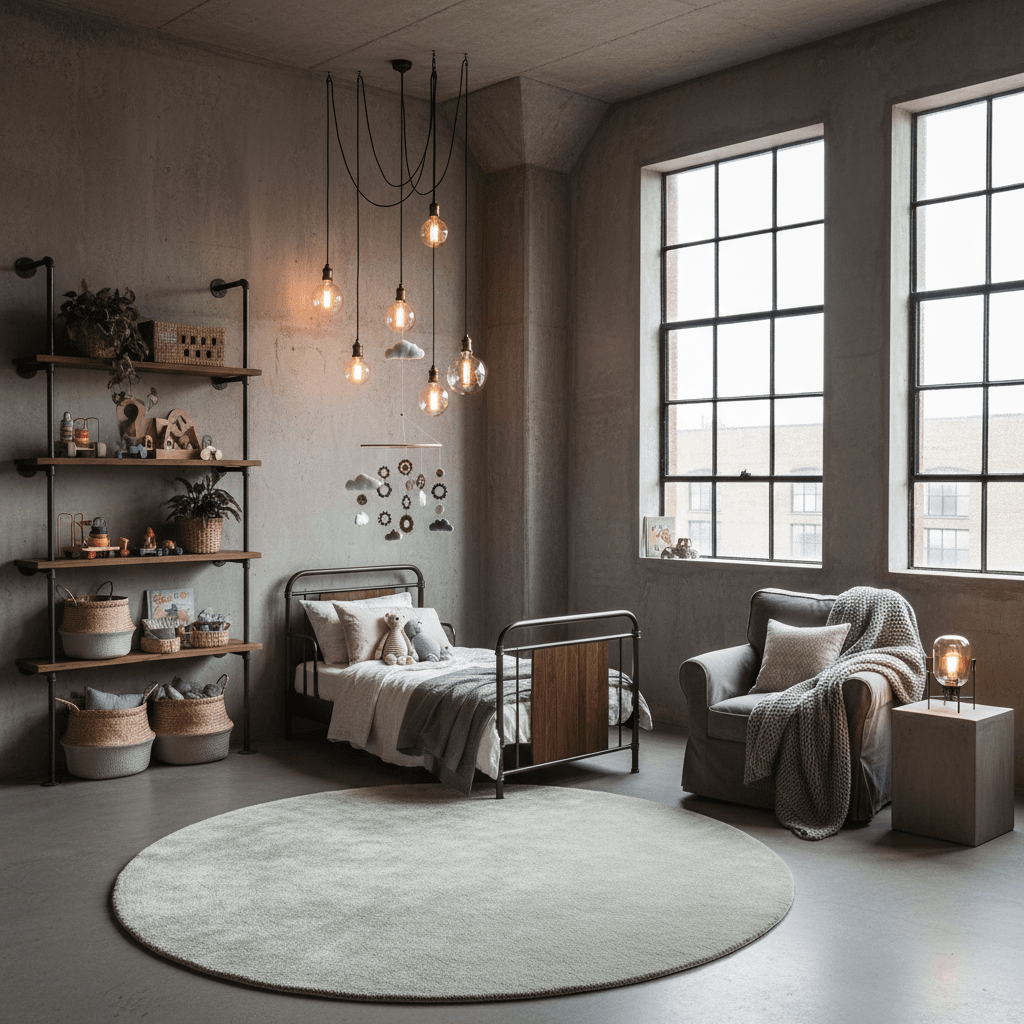
AI-generated industrial nursery redesign from a single photo
How to get Industrial Nursery designs
1. Upload your photo
Take a photo of your room in good daylight and upload it directly from your phone or computer. No account required to try.
2. Select style and room type
Choose your design theme and confirm the room type. Add any specific details or requirements in the optional text field.
3. Download your designs
The AI generates your redesigned room in 30 to 60 seconds. Review the result, and download or share as needed.
Industrial design principles
Industrial design treats a building's infrastructure as a feature rather than something to hide. Exposed brick, steel beams, concrete floors, and visible ductwork form the backdrop. Against that raw shell, leather, worn wood, and vintage factory pieces create spaces that feel lived-in from day one.
Expose the building rather than covering it
If you have original brick, structural beams, or concrete, treat them as assets. Sandblasting brick, stripping paint from columns, or leaving ceiling joists visible is almost always a better starting point than adding faux-industrial cladding on top of a conventional interior.
Balance raw with refined
Unrelieved roughness quickly becomes oppressive. Pair concrete floors with a soft area rug, contrast steel shelving with warm leather seating, or add linen curtains against an exposed brick wall. The tension between raw and refined is what gives the style its energy.
Source factory and workshop furniture
Authentic industrial furniture — metal lockers repurposed as wardrobes, factory stools used at a kitchen island, vintage filing cabinets as side tables — carries genuine history. Flea markets, industrial surplus dealers, and architectural salvage yards are better sources than retail replicas.
Use Edison bulbs and adjustable metal fixtures
Lighting in an industrial space should look mechanical and deliberate. Exposed bulbs on pendant cords, clip-on metal reflectors, and track lighting on conduit all suit the aesthetic. Warm filament bulbs soften the rawness of the materials around them without compromising the overall character.
Nursery design considerations
A nursery must solve design challenges that no other room faces: it needs to be safe for a newborn, stimulating enough for a developing mind, and adaptable enough to serve a child across the first several years of life. It must also accommodate parents who will spend significant time in the space, often during night hours, which makes the functional and sensory decisions here unusually consequential.
Safety first — no exceptions
All furniture should meet current safety standards for children's products — cot and bed heights, guardrail dimensions, and stability requirements vary by country and are updated regularly. Secure all tall furniture to walls with anti-tip brackets, eliminate blind cords entirely, and ensure any paint or finish used in the room is non-toxic and fully cured before occupation. These requirements should be confirmed before purchasing any item, not retrofitted afterward.
Design for the full growth arc, not just infancy
A room designed only for a newborn will require complete refurnishing within eighteen months. Choose a cot that converts to a toddler bed, invest in a chest of drawers that can serve as a changing station now and a wardrobe component later, and select a wall colour that will not feel babyish at age five. Spending more on fewer, more adaptable pieces produces better value than decorating purely for the first year.
Manage light for both daytime and night-time functions
Nurseries require blackout capability during the day for nap times and a very low-level warm light source for night feeds and settling. Full blackout blinds or curtains with a blackout lining are essential from day one. Install a secondary warm, dimmable light — a plug-in lamp with a warm bulb at low level — so that night duties can happen without triggering full wakefulness in either parent or child.
Industrial Nursery guides worth reading
Practical write-ups that go deeper than a single nursery page — how to photograph the room, how to pick a style, and what AI redesign actually changes.
Industrial Kitchen Design: 15 Ideas That Actually Work
The industrial kitchen references commercial cooking infrastructure — steel, open shelving, exposed utilities — and translates it
How to Choose an Interior Design Style: 6 Quick Tests
Most people choose an interior design style based on how it looks in photography. A better approach starts with how you actually l
How AI Interior Design Tools Actually Work in 2026
Not all AI room design tools work the same way. Understanding the difference between diffusion models and multimodal models explai
Interior Design on a Budget: 9 AI Hacks for 2026
The most expensive design mistake is buying things in the wrong order. AI visualisation changes the sequence of decision-making in
Before you pick an AI interior design tool
Magic Room is not the only way to generate these designs. Here is how it compares to the tools most people evaluate alongside it.
best RoomGPT alternatives for AI interior design
All four tools compared on AI model, photo retention, pricing model and output quality.
RoomGPT alternative
Why people switch from RoomGPT, and what changes when they do.
DecorAI alternative
Why people switch from DecorAI, and what changes when they do.
Magic Room vs RoomGPT
Side-by-side on AI model, photo privacy, pricing and output quality.