
Coastal Nursery Design Ideas
By Thanos KazakisMagic Room founderUpdated
Generate coastal nursery design ideas instantly with AI.
See the transformation

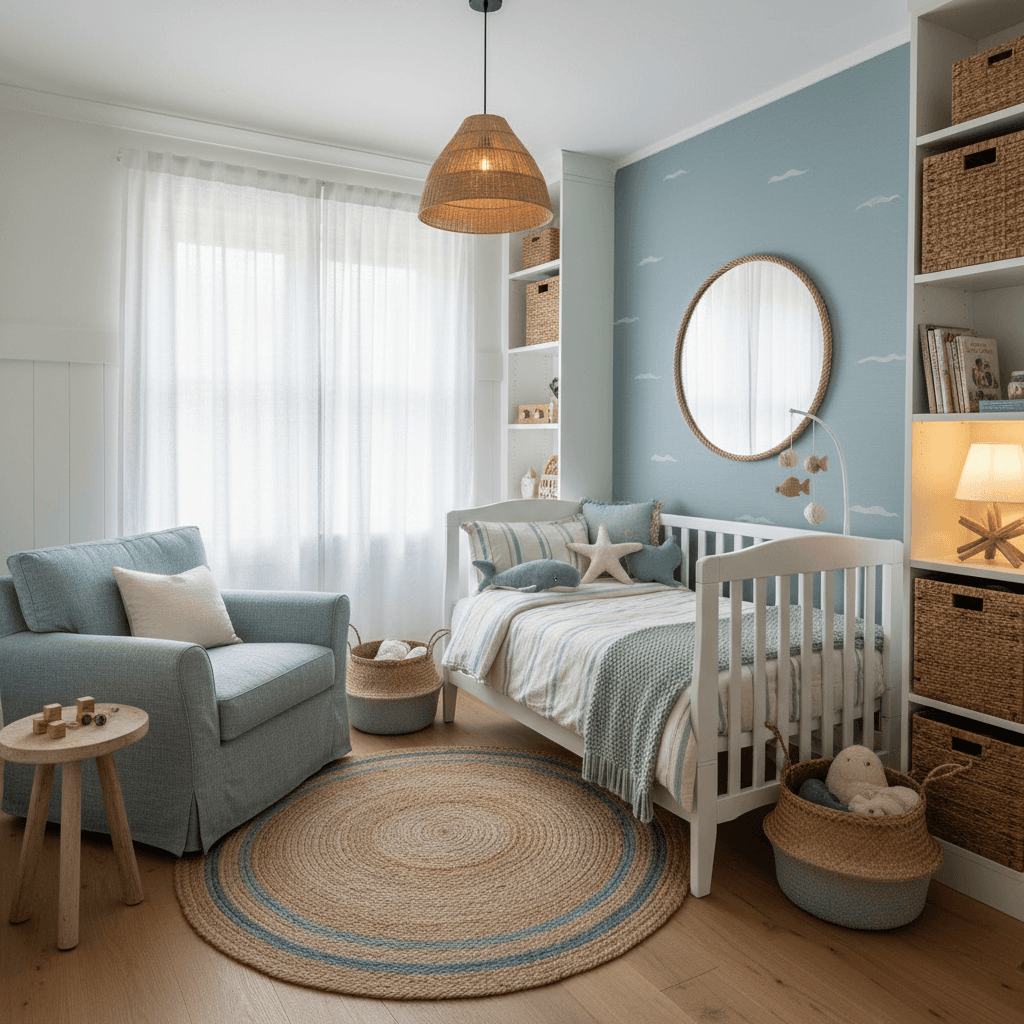
AI-generated coastal nursery redesign from a single photo
How to get Coastal Nursery designs
1. Upload your photo
Take a photo of your room in good daylight and upload it directly from your phone or computer. No account required to try.
2. Select style and room type
Choose your design theme and confirm the room type. Add any specific details or requirements in the optional text field.
3. Download your designs
The AI generates your redesigned room in 30 to 60 seconds. Review the result, and download or share as needed.
Coastal design principles
Coastal design distils the sensory experience of seaside living into an interior language — salt-bleached timbers, woven textures, the shifting blue-green palette of shallow water, and an abundance of natural light. At its best it is neither nautical-themed nor literalist; instead it creates rooms that feel genuinely relaxed and connected to the natural environment outside, with materials and colours that reference the coast without reproducing it.
Prioritise natural light and window treatments that maximise it
Natural light is the defining quality of coastal interiors. Replace heavy drapes with linen sheers, remove window frames that block peripheral light, and use pale, reflective surfaces on walls and floors to carry that light deeper into the room. Light-coloured linen or cotton voile panels that move in a breeze are more faithful to the coastal aesthetic than any decorative element you could add.
Build the palette around whites, sand, and water
A coastal palette is bleached and light — white, off-white, warm sand, driftwood grey, and the blue-greens of shallow sea water. The blue-green tones should be soft and slightly desaturated; saturated navy or royal blue feels nautical rather than coastal. Use the lighter neutrals as the primary base and introduce the blue-green tones selectively through textiles, ceramics, or a single accent wall.
Choose natural, tactile materials over synthetic alternatives
Seagrass, sisal, rattan, woven cotton, weathered oak, and unglazed ceramics all carry the material sensibility of the coast. When selecting furniture and accessories, ask whether the material itself could have come from or been shaped by a coastal environment. Avoid plastic or resin equivalents of natural materials — they flatten the tactile quality that makes coastal interiors feel genuinely relaxing.
Avoid over-theming with nautical accessories
Anchor prints, ship wheels, and lighthouse ornaments signal 'beach house' rather than creating an actual coastal atmosphere. The most convincing coastal interiors rely on material quality, light, and spatial openness rather than thematic decoration. If you want a reference to the sea, a large piece of sea glass, a bowl of smooth stones, or a single botanical print of coastal flora will do more than a shelf of maritime ornaments.
Nursery design considerations
A nursery must solve design challenges that no other room faces: it needs to be safe for a newborn, stimulating enough for a developing mind, and adaptable enough to serve a child across the first several years of life. It must also accommodate parents who will spend significant time in the space, often during night hours, which makes the functional and sensory decisions here unusually consequential.
Safety first — no exceptions
All furniture should meet current safety standards for children's products — cot and bed heights, guardrail dimensions, and stability requirements vary by country and are updated regularly. Secure all tall furniture to walls with anti-tip brackets, eliminate blind cords entirely, and ensure any paint or finish used in the room is non-toxic and fully cured before occupation. These requirements should be confirmed before purchasing any item, not retrofitted afterward.
Design for the full growth arc, not just infancy
A room designed only for a newborn will require complete refurnishing within eighteen months. Choose a cot that converts to a toddler bed, invest in a chest of drawers that can serve as a changing station now and a wardrobe component later, and select a wall colour that will not feel babyish at age five. Spending more on fewer, more adaptable pieces produces better value than decorating purely for the first year.
Manage light for both daytime and night-time functions
Nurseries require blackout capability during the day for nap times and a very low-level warm light source for night feeds and settling. Full blackout blinds or curtains with a blackout lining are essential from day one. Install a secondary warm, dimmable light — a plug-in lamp with a warm bulb at low level — so that night duties can happen without triggering full wakefulness in either parent or child.
Coastal Nursery guides worth reading
Practical write-ups that go deeper than a single nursery page — how to photograph the room, how to pick a style, and what AI redesign actually changes.
Redesign Your Living Room with AI: 7 Steps (2026 Guide)
AI room design tools have made it practical to visualise a completely different living room before spending anything on furniture
Redesign Your Bedroom with AI: 8 Styles to Try in 2026
Bedrooms are intensely personal spaces where the result needs to be functional, not just visually appealing. Here is how to approa
AI Home Office Design: 10 Ideas for 2026 Workspaces
Home offices need to function well for focused work and appear professional in video calls. AI design tools can help you see possi
Scandinavian Design: 12 Ideas for Small Spaces (2026)
Scandinavian design was developed in countries where domestic spaces are relatively small and daylight is seasonal. Its principles
Before you pick an AI interior design tool
Magic Room is not the only way to generate these designs. Here is how it compares to the tools most people evaluate alongside it.
best RoomGPT alternatives for AI interior design
All four tools compared on AI model, photo retention, pricing model and output quality.
RoomGPT alternative
Why people switch from RoomGPT, and what changes when they do.
DecorAI alternative
Why people switch from DecorAI, and what changes when they do.
Magic Room vs RoomGPT
Side-by-side on AI model, photo privacy, pricing and output quality.