
Transitional Mudroom Design Ideas
By Thanos KazakisMagic Room founderUpdated
Generate transitional mudroom design ideas instantly with AI.
See the transformation
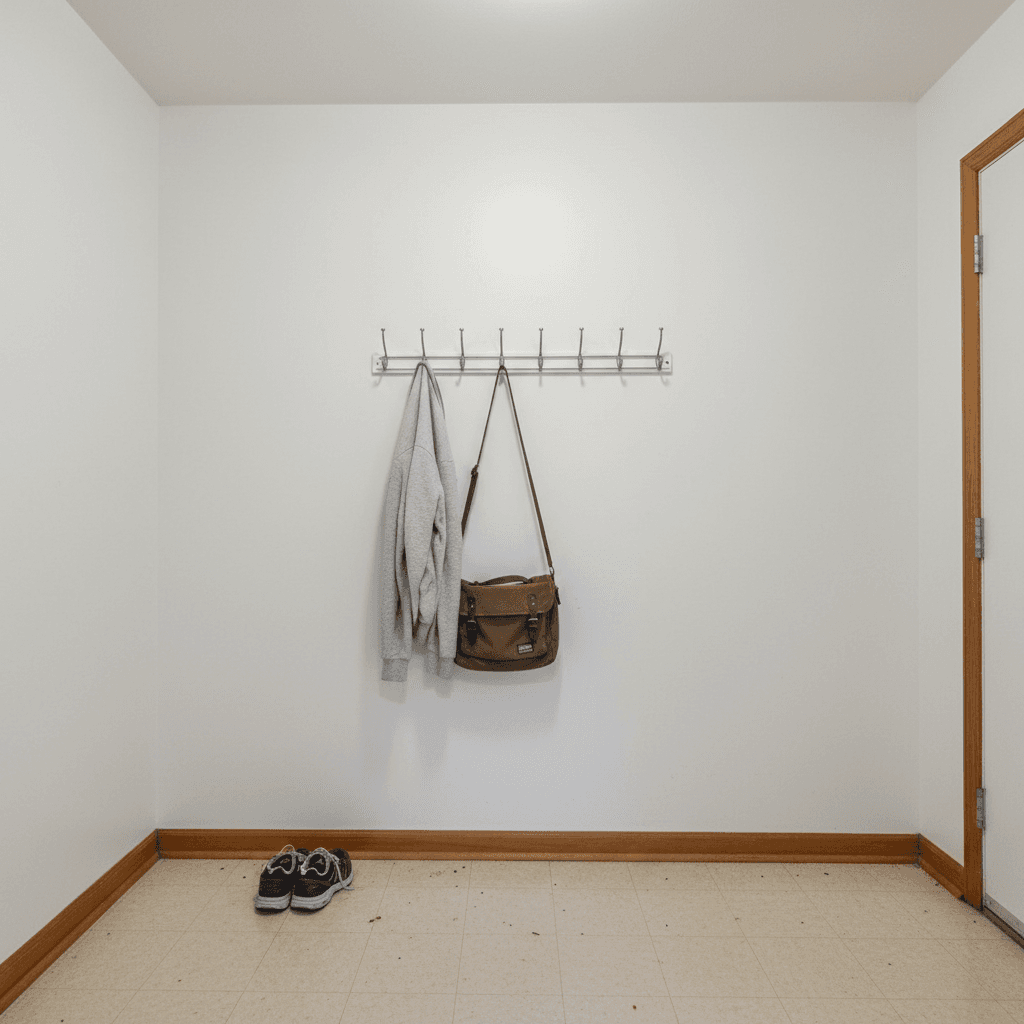
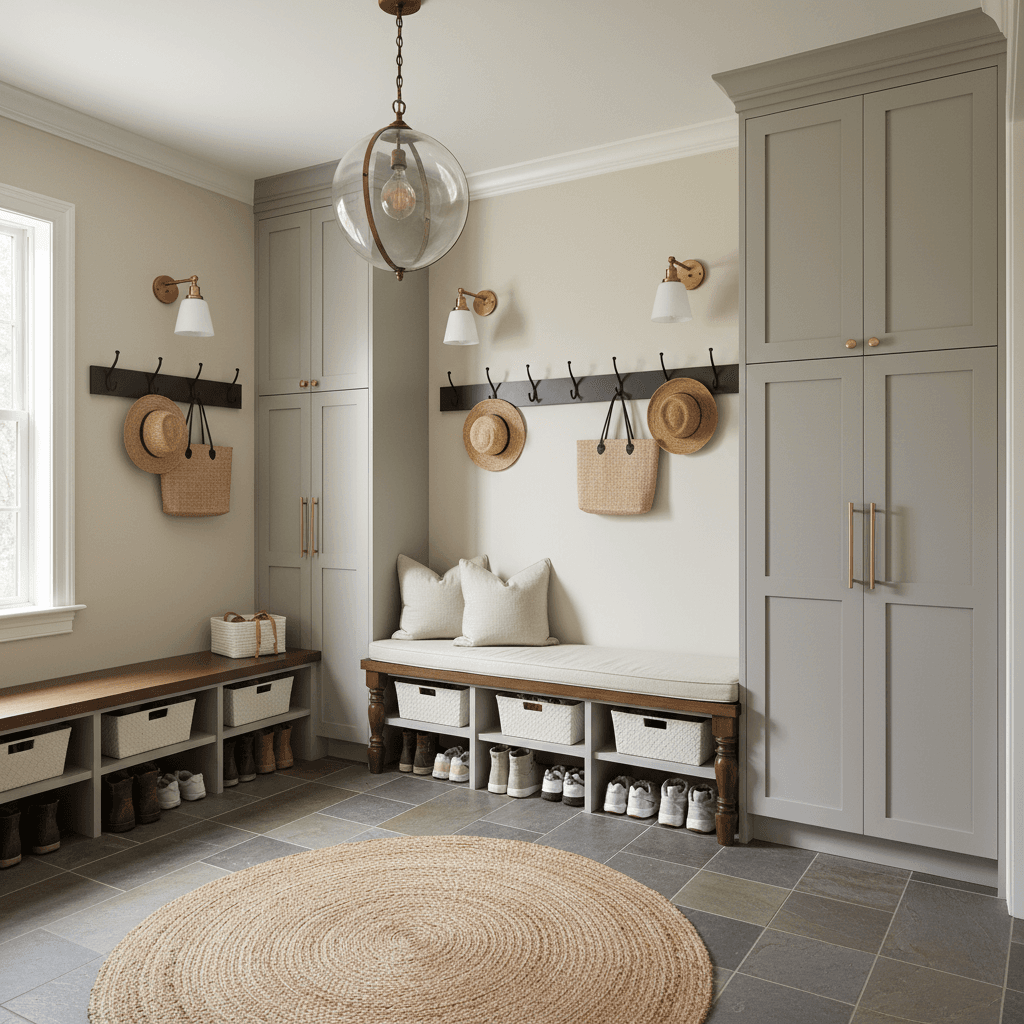
AI-generated transitional mudroom redesign from a single photo
How to get Transitional Mudroom designs
1. Upload your photo
Take a photo of your room in good daylight and upload it directly from your phone or computer. No account required to try.
2. Select style and room type
Choose your design theme and confirm the room type. Add any specific details or requirements in the optional text field.
3. Download your designs
The AI generates your redesigned room in 30 to 60 seconds. Review the result, and download or share as needed.
Transitional design principles
Transitional interior design sits in the productive tension between traditional warmth and contemporary clarity. It avoids the formality of classical interiors while retaining their sense of permanence, and avoids the austerity of modern design while adopting its clean geometry and functional approach. The result is rooms that feel neither dated nor aggressively current — permanently liveable rather than momentarily fashionable.
Pair traditional forms with contemporary finishes
Transitional design often places a traditionally-shaped sofa — with rolled arms, turned legs, or a classic Chesterfield profile — in a material that reads as current: performance linen, a muted geometric fabric, or a solid mid-tone neutral. The tension between familiar form and updated finish is the source of the style's appeal. The same principle applies to case furniture, lighting, and architectural elements.
Use a neutral palette with subtle warmth
Transitional interiors avoid both the cool greys of contemporary design and the warm creams of traditional interiors. The sweet spot is a slightly warm neutral — greige, warm white, taupe, soft stone — that reads as neither strictly modern nor period. Introduce depth through texture and tone variation rather than colour contrast. Wood tones should be medium rather than very pale (Scandi) or very dark (traditional).
Mix antique or vintage pieces with new ones deliberately
The most convincing transitional rooms contain at least one piece with genuine age alongside contemporary items. An antique mirror above a modern console, a traditional painting in a slim metal frame, or a vintage rug under a clean-lined sofa all create the temporal layering that distinguishes transitional from either pure contemporary or period design. The key is that each piece should be genuinely well-designed, not just old.
Keep architectural detail moderate
Transitional design uses mouldings, cornices, and panelling where they exist but doesn't add elaborate period detail to contemporary spaces. Simple panel moulding on a door, a restrained cornice, or a classic skirting board profile is enough architectural reference. Avoid reproduced ornate period detailing — it pushes the room into traditional territory — and avoid stripping all detail — it tips it into pure contemporary.
Mudroom design considerations
The mudroom is the first line of defence between outdoor disorder and interior calm. A well-designed mudroom contains the transition from outside to inside — boots, coats, bags, and the general accumulation of daily life — so that none of it spreads into the main living areas. It is a working room whose design is almost entirely driven by what it must contain and how efficiently it must function for every member of the household.
Allocate dedicated storage per person
The most organised mudrooms give each household member their own storage zone rather than shared hooks and cubbies that accumulate confusion. Assign each person a coat hook at the right height, a cubby or basket for shoes, and a shelf or hook for bags. In a family with children, hooks at child height alongside adult-height hooks are a functional necessity rather than a design choice. Labelling zones, at least temporarily until habits form, reduces significantly the likelihood that items migrate into the wrong place.
Choose surfaces that tolerate wet, mud, and heavy use
A mudroom is subjected to more abuse than almost any other interior space — wet boots, muddy dogs, dripping outdoor gear, and heavy bag dropping. The floor should be a hard, impermeable surface that can be mopped without damage: large-format porcelain tile, slate, or poured concrete are all excellent choices. Wall surfaces behind hooks and cubbies should be cleanable; painted board-and-batten or a full-height boot room panel are more durable than plasterboard alone.
Include a bench for putting on and removing footwear
The absence of a sitting surface in a mudroom creates the single greatest friction point in its daily use: people take shoes off at the door then carry them further inside rather than organising them properly because there is nowhere to sit. A bench — even a simple, narrow one — anchors the shoe removal process at the entry point. Under-bench storage for spare boots or seasonal footwear makes the bench more useful still.
Other styles for your Mudroom
Transitional Mudroom guides worth reading
Practical write-ups that go deeper than a single mudroom page — how to photograph the room, how to pick a style, and what AI redesign actually changes.
Scandinavian Design: 12 Ideas for Small Spaces (2026)
Scandinavian design was developed in countries where domestic spaces are relatively small and daylight is seasonal. Its principles
Bohemian Bedroom Decor: 20 Ideas to Steal in 2026
A bohemian bedroom is built from objects accumulated over time rather than purchased as a set. The design challenge is creating vi
Industrial Kitchen Design: 15 Ideas That Actually Work
The industrial kitchen references commercial cooking infrastructure — steel, open shelving, exposed utilities — and translates it
How to Choose an Interior Design Style: 6 Quick Tests
Most people choose an interior design style based on how it looks in photography. A better approach starts with how you actually l
Before you pick an AI interior design tool
Magic Room is not the only way to generate these designs. Here is how it compares to the tools most people evaluate alongside it.
best RoomGPT alternatives for AI interior design
All four tools compared on AI model, photo retention, pricing model and output quality.
Reimagine Home alternative
Why people switch from Reimagine Home, and what changes when they do.
Interior AI alternative
Why people switch from Interior AI, and what changes when they do.
Magic Room vs Reimagine Home
Side-by-side on AI model, photo privacy, pricing and output quality.