
Modern Sunroom Design Ideas
By Thanos KazakisMagic Room founderUpdated
A modern sunroom uses the style's emphasis on architectural clarity to produce a room that frames the landscape rather than competing with it. Slim-profile aluminium glazing maximising the apparent glass area, a single-tone flooring that runs continuously to the threshold, low-profile upholstery in a neutral linen or boucle, and a deliberate absence of decorative pattern direct attention outward through the glass. A modern sunroom rewards careful editing — fewer, larger pieces of furniture, no scattered accessories — because the view does most of the visual work.
See the transformation
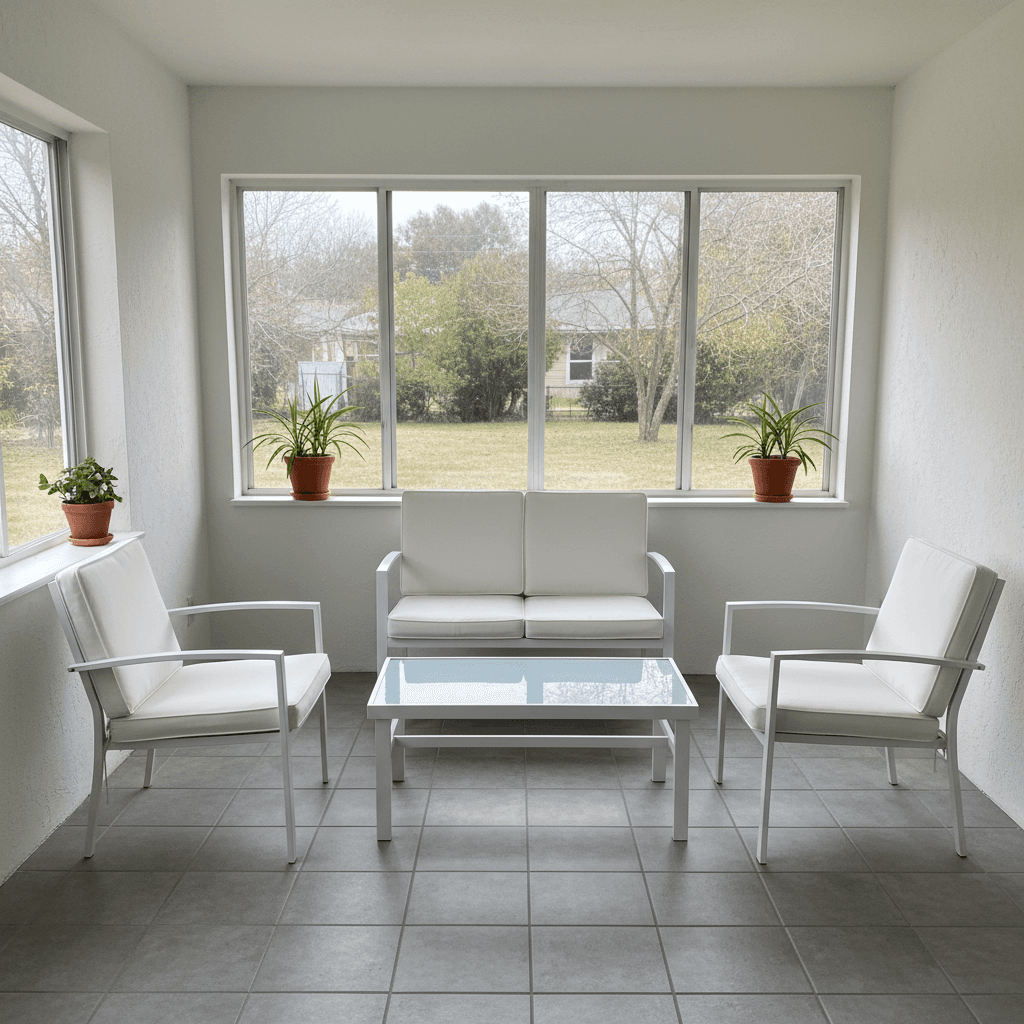
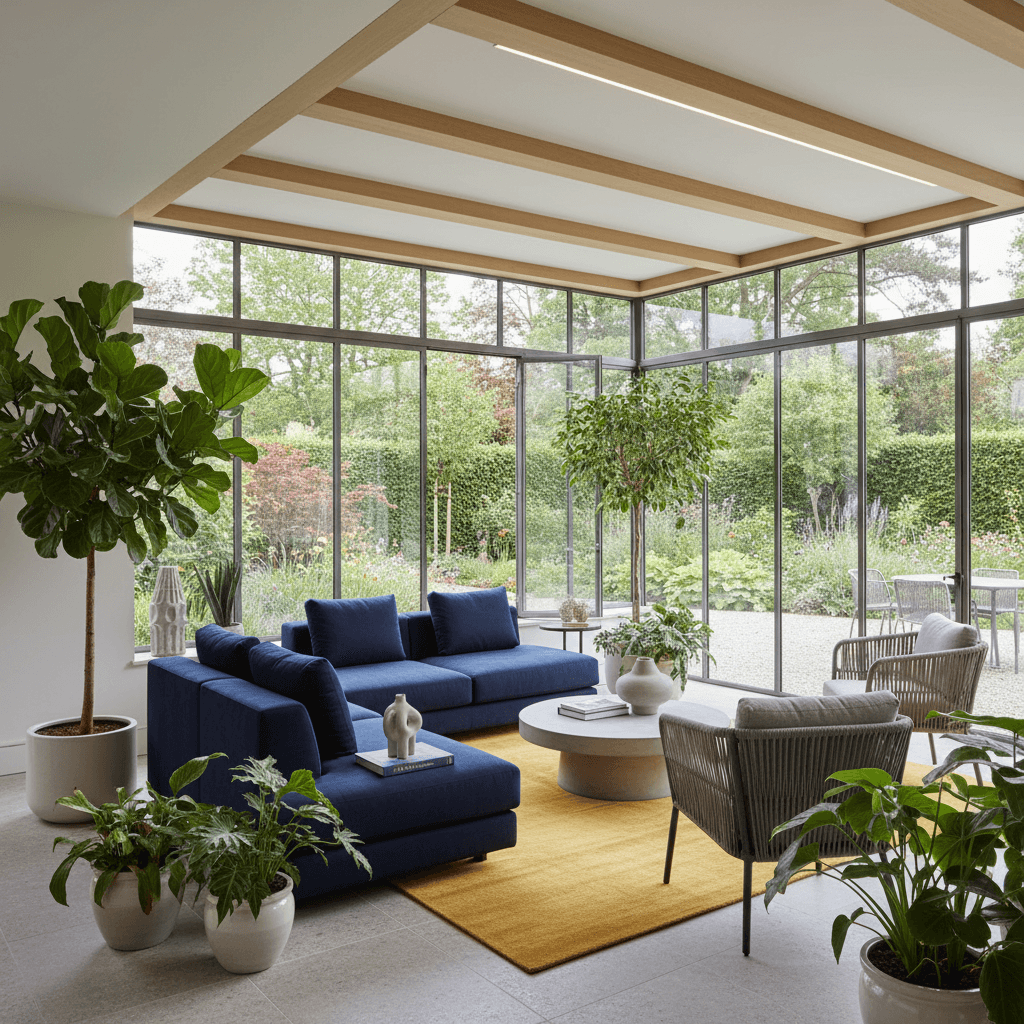
AI-generated modern sunroom redesign from a single photo
How to get Modern Sunroom designs
1. Upload your photo
Take a photo of your room in good daylight and upload it directly from your phone or computer. No account required to try.
2. Select style and room type
Choose your design theme and confirm the room type. Add any specific details or requirements in the optional text field.
3. Download your designs
The AI generates your redesigned room in 30 to 60 seconds. Review the result, and download or share as needed.
Modern design principles
Modern interior design strips away visual noise to let architecture and carefully chosen pieces speak for themselves. It relies on geometric forms, neutral palettes with deliberate accent colours, and materials like concrete, glass, and brushed metal to create rooms that feel effortlessly ordered.
Commit to a restrained palette
Modern rooms work best with two or three core colours. Anchor the space with a neutral base — warm white, greige, or charcoal — then introduce one accent through cushions, artwork, or a single piece of furniture. Resist adding more until the room feels complete.
Let negative space do the work
Empty wall sections and floor areas are not wasted space in a modern interior — they provide visual breathing room that makes each object more legible. Resist the urge to fill every surface, and edit your existing collection ruthlessly before adding anything new.
Choose furniture with visible legs
Pieces that float off the floor keep sightlines open and make rooms read as larger. Sofas, side tables, and beds with slender legs let light pass underneath, reinforcing the airy quality that defines the style.
Unify flooring across zones
Modern design treats an open-plan area as a single composition. Using the same flooring material throughout, rather than changing at doorways or zone boundaries, strengthens the cohesion and lets the furniture arrangement define the zones instead.
Sunroom design considerations
A sunroom occupies an unusual position in a home — partly interior, partly exterior, designed to maximise natural light and connection to the garden while remaining sheltered from weather. Its design brief is distinct from any other room: the architecture and glazing do most of the work, and the interior furnishing must respond to those conditions — intense light, temperature variation, and visual connection to the outside — rather than fight them.
Choose materials that tolerate direct sunlight and heat
A south-facing sunroom can reach very high temperatures in summer and suffer significant UV exposure year-round. Many materials that perform well in shaded interior rooms fade, warp, or deteriorate under these conditions. Choose UV-stable fabrics — solution-dyed acrylic outdoor fabrics perform exceptionally well — and avoid dark upholstery that will absorb heat uncomfortably. Solid hardwood furniture may develop stress cracks in rooms with significant temperature and humidity fluctuation; engineered pieces or materials designed for outdoor use will outlast them.
Design for glare management alongside light maximisation
The same glazing that makes a sunroom bright and pleasant in winter can create uncomfortable glare and heat in summer. Cellular blinds or roller blinds with heat-reflective backing can be fitted within the roof glazing to reduce solar gain without eliminating daylight. Planting outside the glazed walls — deciduous climbers that provide shade in summer and admit light after leaf-fall in winter — is an elegant and effective long-term solution.
Connect the flooring to the outdoor space visually
One of the most effective design moves in a sunroom is to use a flooring material that bridges indoors and outdoors — large-format porcelain tile that continues as paving outside, or natural stone used inside and on an adjacent terrace. This visual continuity makes the garden feel like an extension of the interior rather than a separate space, which is precisely the quality that makes sunrooms valuable as living spaces.
Frequently asked questions
Other styles for your Sunroom
More Modern room designs
Modern Bathroom Design Ideas
Apply the modern style to your bathroom.
Modern Bedroom Design Ideas
Apply the modern style to your bedroom.
Modern Home Theater Design Ideas
Apply the modern style to your home theater.
Modern Kitchen Design Ideas
Apply the modern style to your kitchen.
Modern Living Room Design Ideas
Apply the modern style to your living room.
Modern Office Design Ideas
Apply the modern style to your office.
Modern Sunroom guides worth reading
Practical write-ups that go deeper than a single sunroom page — how to photograph the room, how to pick a style, and what AI redesign actually changes.
Modern vs Minimalist Design: 5 Real Differences (2026)
Modern and minimalist are often used interchangeably, but they have different origins, different values, and different practical i
Redesign Your Bedroom with AI: 8 Styles to Try in 2026
Bedrooms are intensely personal spaces where the result needs to be functional, not just visually appealing. Here is how to approa
AI Home Office Design: 10 Ideas for 2026 Workspaces
Home offices need to function well for focused work and appear professional in video calls. AI design tools can help you see possi
Scandinavian Design: 12 Ideas for Small Spaces (2026)
Scandinavian design was developed in countries where domestic spaces are relatively small and daylight is seasonal. Its principles
Before you pick an AI interior design tool
Magic Room is not the only way to generate these designs. Here is how it compares to the tools most people evaluate alongside it.
best RoomGPT alternatives for AI interior design
All four tools compared on AI model, photo retention, pricing model and output quality.
Interior AI alternative
Why people switch from Interior AI, and what changes when they do.
RoomGPT alternative
Why people switch from RoomGPT, and what changes when they do.
Magic Room vs Interior AI
Side-by-side on AI model, photo privacy, pricing and output quality.