
Modern Bathroom Design Ideas
By Thanos KazakisMagic Room founderUpdated
The bathroom is one of the rooms where modern design delivers its greatest practical return. Wall-hung sanitaryware, continuous floor tiles that run under fittings, and concealed cisterns eliminate the gaps and corners where cleaning becomes difficult. Visualising these choices in a rendered version of your existing bathroom removes much of the uncertainty from a renovation that is costly and disruptive to undo.
See the transformation
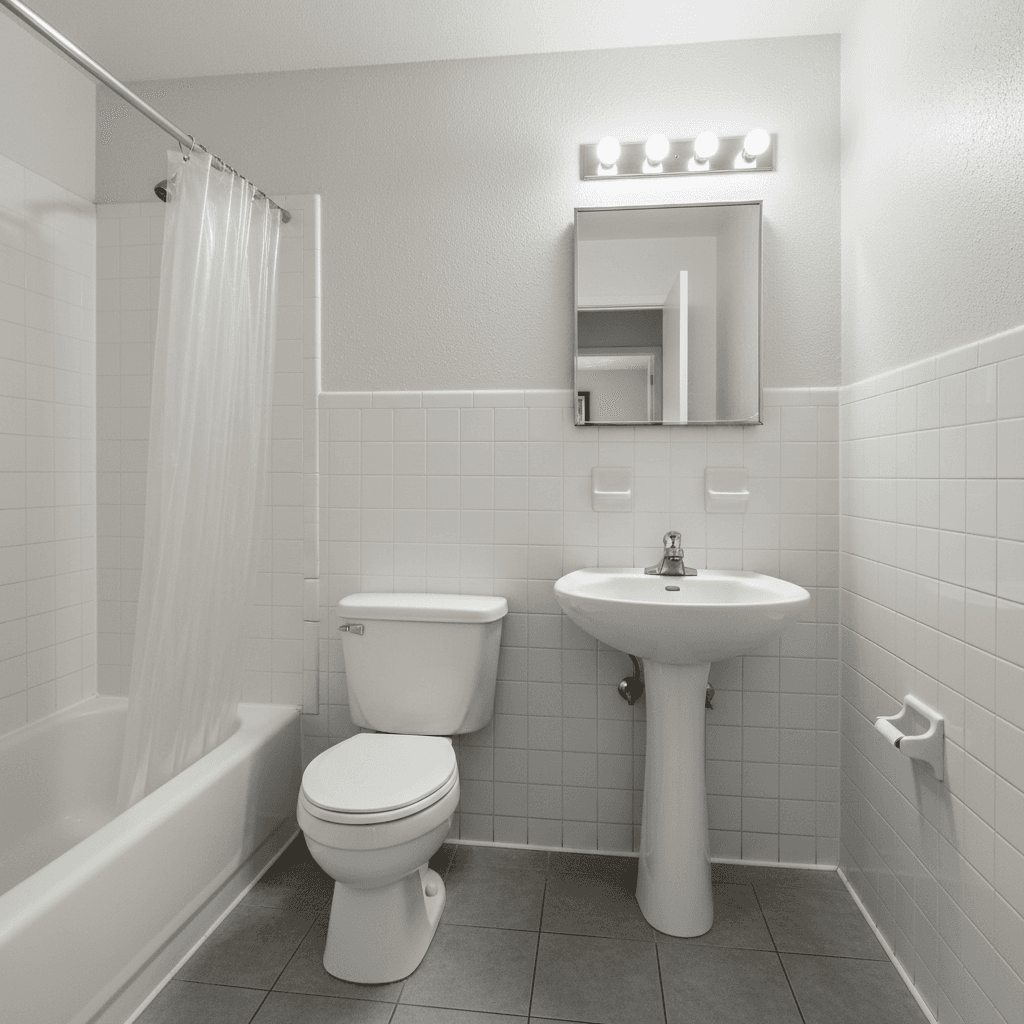
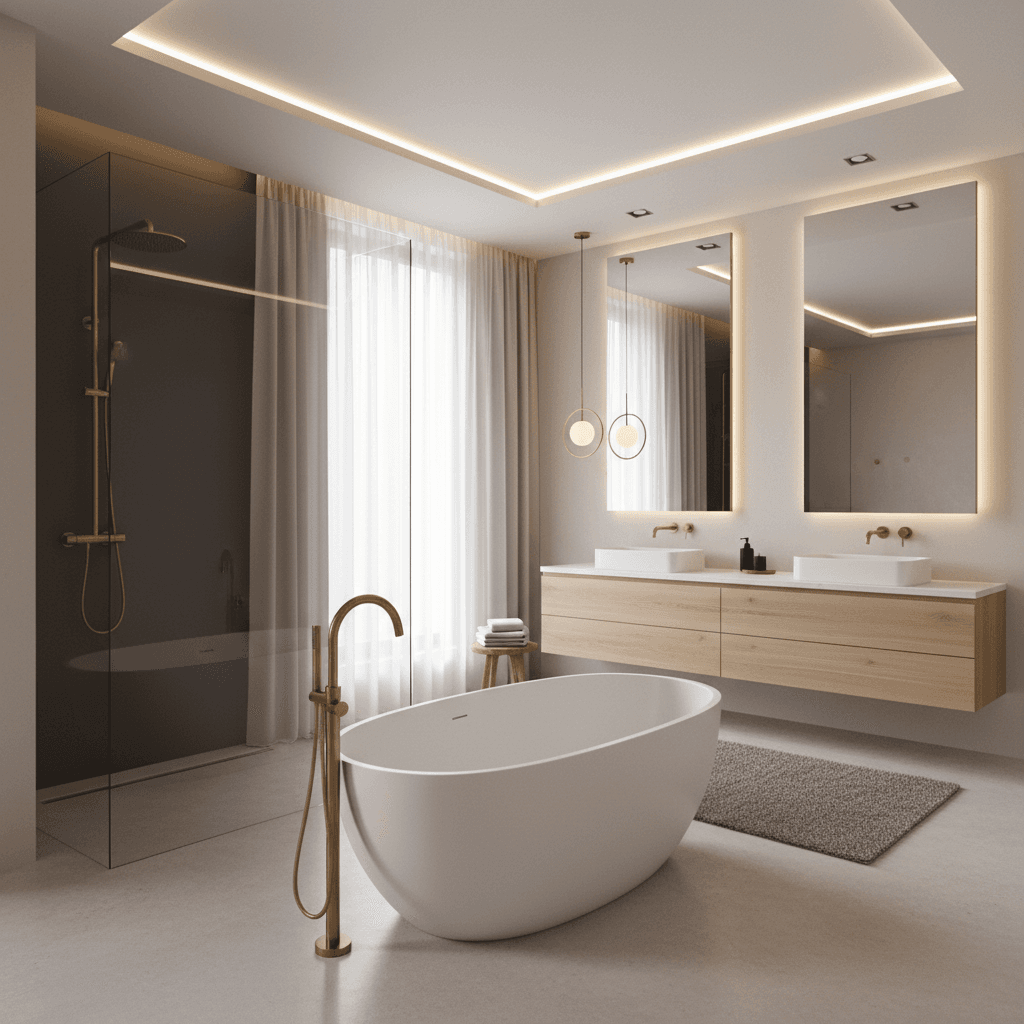
AI-generated modern bathroom redesign from a single photo
How to get Modern Bathroom designs
1. Upload your photo
Take a photo of your room in good daylight and upload it directly from your phone or computer. No account required to try.
2. Select style and room type
Choose your design theme and confirm the room type. Add any specific details or requirements in the optional text field.
3. Download your designs
The AI generates your redesigned room in 30 to 60 seconds. Review the result, and download or share as needed.
Modern design principles
Modern interior design strips away visual noise to let architecture and carefully chosen pieces speak for themselves. It relies on geometric forms, neutral palettes with deliberate accent colours, and materials like concrete, glass, and brushed metal to create rooms that feel effortlessly ordered.
Commit to a restrained palette
Modern rooms work best with two or three core colours. Anchor the space with a neutral base — warm white, greige, or charcoal — then introduce one accent through cushions, artwork, or a single piece of furniture. Resist adding more until the room feels complete.
Let negative space do the work
Empty wall sections and floor areas are not wasted space in a modern interior — they provide visual breathing room that makes each object more legible. Resist the urge to fill every surface, and edit your existing collection ruthlessly before adding anything new.
Choose furniture with visible legs
Pieces that float off the floor keep sightlines open and make rooms read as larger. Sofas, side tables, and beds with slender legs let light pass underneath, reinforcing the airy quality that defines the style.
Unify flooring across zones
Modern design treats an open-plan area as a single composition. Using the same flooring material throughout, rather than changing at doorways or zone boundaries, strengthens the cohesion and lets the furniture arrangement define the zones instead.
Bathroom design considerations
Bathrooms present unique design constraints because every material must perform in a high-moisture, high-use environment while the room itself is usually small, fixed in its plumbing positions, and expected to look good for ten or more years without major renovation.
Waterproofing as the non-negotiable foundation
All visible finishes in a bathroom sit on top of a waterproofing system that must be correctly specified and installed before any aesthetic decisions matter. Inadequate tanking or incorrectly applied membrane systems behind tiles or cladding cause failures that are expensive and disruptive to remediate. Budget for this correctly before spending on surface finishes.
Scale of fittings relative to the room
Bathroom showrooms display products in generous open spaces that bear no resemblance to a typical bathroom's dimensions. A large freestanding bath that looks proportionate in a showroom can make a small bathroom feel unusable. Always work from accurate room dimensions and leave adequate clear space around each fitting for comfortable use.
Ventilation to prevent mould and surface degradation
Mechanical ventilation — a correctly sized extractor fan that runs during use and for a timed period afterwards — is essential in any bathroom without reliable natural ventilation. Even in bathrooms with windows, condensation accumulates faster than natural airflow removes it. Mould damage to grout, silicone, and decorative surfaces is the most common bathroom maintenance problem and is largely preventable.
Frequently asked questions
More Modern room designs
Modern Bedroom Design Ideas
Apply the modern style to your bedroom.
Modern Home Theater Design Ideas
Apply the modern style to your home theater.
Modern Kitchen Design Ideas
Apply the modern style to your kitchen.
Modern Living Room Design Ideas
Apply the modern style to your living room.
Modern Office Design Ideas
Apply the modern style to your office.
Modern Sunroom Design Ideas
Apply the modern style to your sunroom.
Modern Bathroom guides worth reading
Practical write-ups that go deeper than a single bathroom page — how to photograph the room, how to pick a style, and what AI redesign actually changes.
Modern vs Minimalist Design: 5 Real Differences (2026)
Modern and minimalist are often used interchangeably, but they have different origins, different values, and different practical i
AI Home Staging Before Selling: What Works (and Fails)
Traditional home staging is expensive and logistically complex. AI home staging is inexpensive and immediate. Understanding what e
Virtual Staging for Real Estate: Worth It in 2026?
Traditional staging costs between £1,500 and £5,000 for a mid-size property. AI virtual staging has reduced that cost to a fractio
Redesign Your Living Room with AI: 7 Steps (2026 Guide)
AI room design tools have made it practical to visualise a completely different living room before spending anything on furniture
Before you pick an AI interior design tool
Magic Room is not the only way to generate these designs. Here is how it compares to the tools most people evaluate alongside it.
best RoomGPT alternatives for AI interior design
All four tools compared on AI model, photo retention, pricing model and output quality.
RoomGPT alternative
Why people switch from RoomGPT, and what changes when they do.
DecorAI alternative
Why people switch from DecorAI, and what changes when they do.
Magic Room vs RoomGPT
Side-by-side on AI model, photo privacy, pricing and output quality.