
Minimalist Dining Room Design Ideas
By Thanos KazakisMagic Room founderUpdated
A minimalist dining room concentrates investment in the quality of the table and chairs — the objects you use at every meal — rather than in decorative accessories around them. A single statement pendant over a well-proportioned table on a plain floor covering is often all the room needs. AI rendering makes it straightforward to test different table sizes and pendant heights before purchasing.
See the transformation
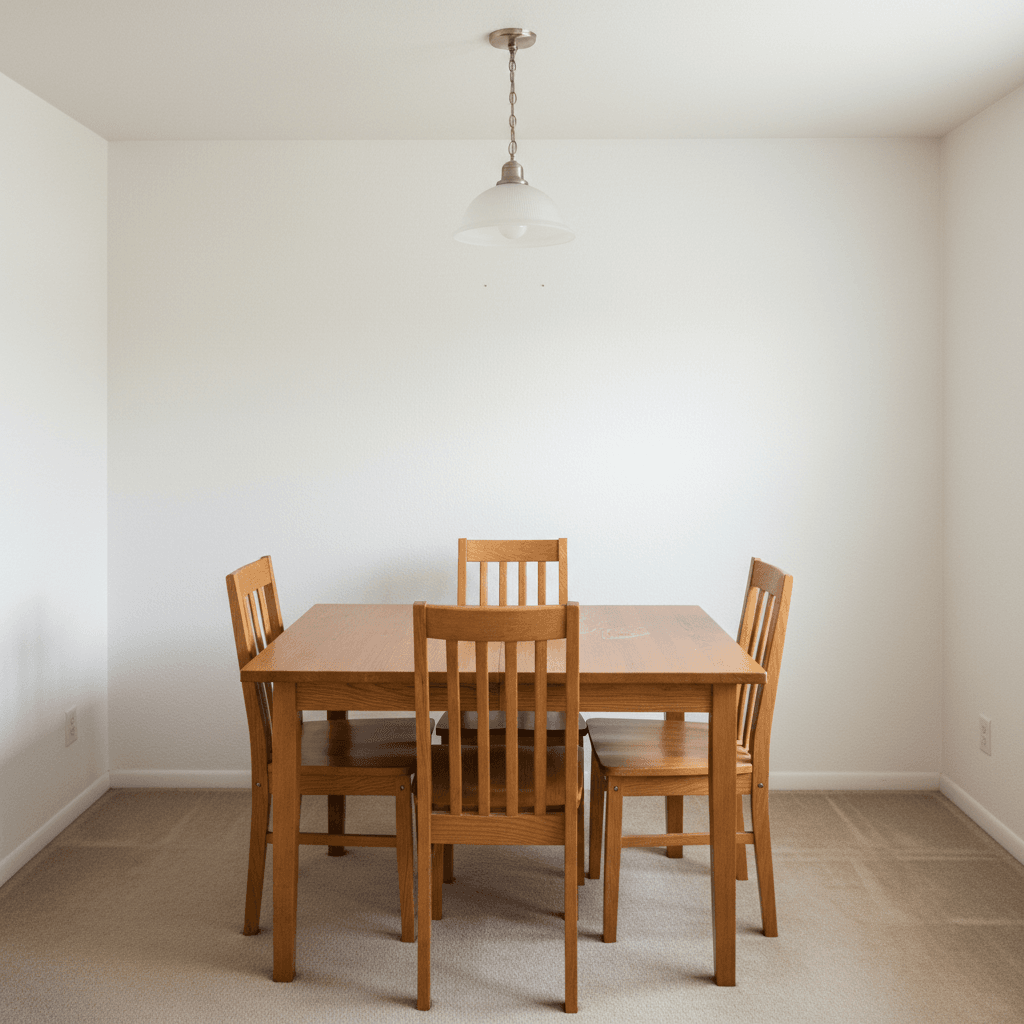
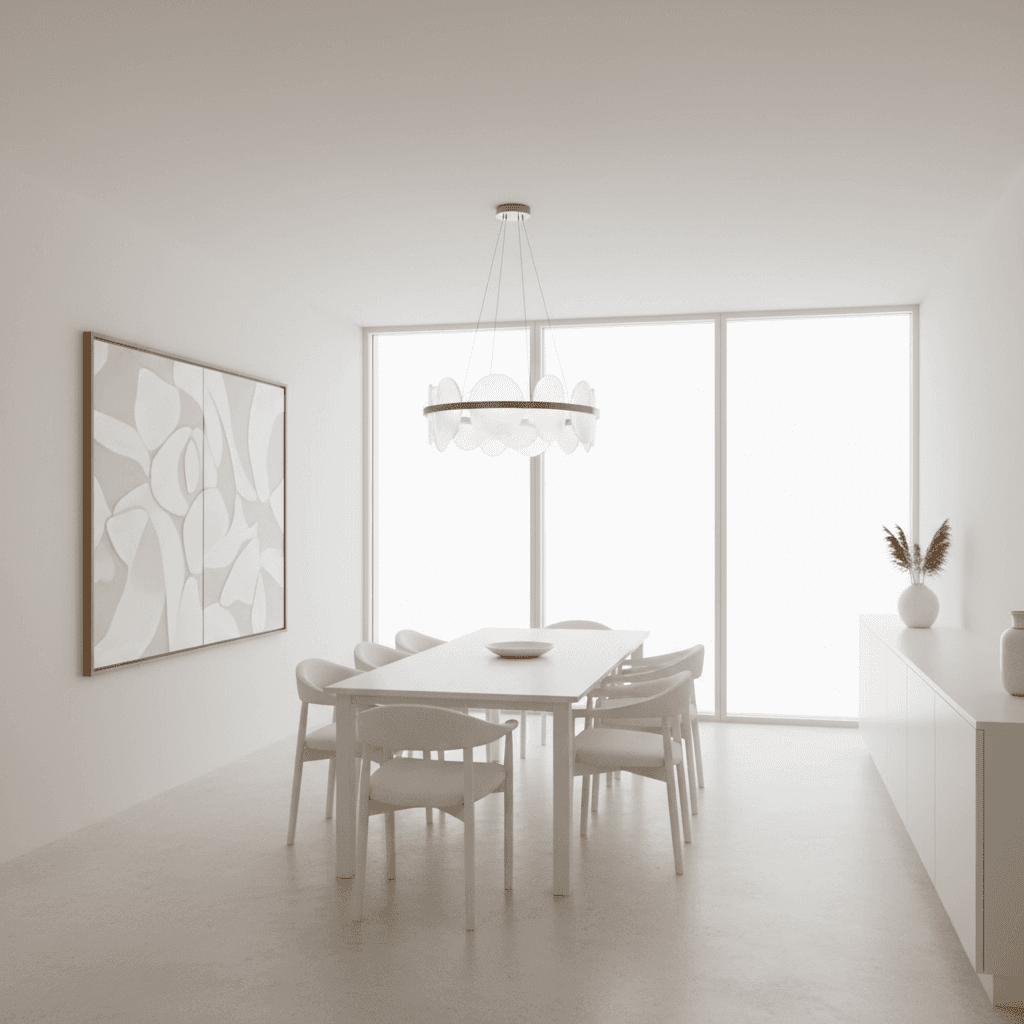
AI-generated minimalist dining room redesign from a single photo
How to get Minimalist Dining Room designs
1. Upload your photo
Take a photo of your room in good daylight and upload it directly from your phone or computer. No account required to try.
2. Select style and room type
Choose your design theme and confirm the room type. Add any specific details or requirements in the optional text field.
3. Download your designs
The AI generates your redesigned room in 30 to 60 seconds. Review the result, and download or share as needed.
Minimalist design principles
Minimalist design applies a simple test to every object in a space: does it serve a clear purpose, or does it bring genuine joy? Anything that fails both criteria leaves the room. The result is an environment where attention is never scattered, materials are appreciated for their intrinsic quality, and the mind can settle.
Start by removing rather than adding
Before purchasing anything new, spend a weekend taking things out of a room. Clear surfaces, move furniture into storage temporarily, and assess which pieces you genuinely missed after a few days. Only return the items that passed that test.
Invest in storage that disappears
Visible clutter defeats minimalism immediately. Built-in joinery, handle-free cabinet doors, and furniture with integrated storage allow the volume of possessions you actually own to exist without being seen. The cost is usually worth the visual payoff.
Use texture to prevent sterility
A minimalist room with only smooth, flat surfaces can feel cold. Introduce contrast through a linen throw, a rough stone ornament, or a tactile rug. The variety in texture provides the visual interest that patterned wallpaper or busy accessories would otherwise supply.
Define one focal point and anchor the rest
Every minimalist room benefits from a single deliberate focal point — a piece of art, a statement light fitting, or a window with a strong view. Orient furniture toward it, and resist creating competing points of interest elsewhere in the space.
Dining Room design considerations
The dining room — or dining zone in an open-plan layout — needs to work for both the intimacy of daily family meals and the occasion of entertaining guests, which demands flexibility in lighting, furniture arrangement, and acoustic separation from adjacent spaces.
Table size and seating clearance
A dining table needs at least 90cm of clear space on all sides to allow chairs to be pulled out fully and people to move around occupied seating. Many dining rooms are furnished with tables that are too large for comfortable circulation, which makes the room feel cramped regardless of how it is decorated. Measure first; choose the table second.
Pendant lighting positioned precisely over the table
The pendant or chandelier over a dining table is one of the few interior design elements where precise positioning matters as much as appearance. The bottom of a pendant should hang roughly 75-85cm above the table surface — low enough to create intimacy, high enough not to obstruct sightlines across the table. A fitting that is off-centre relative to the table is immediately noticeable and difficult to adjust without electrical work.
Storage for tableware near the table
A sideboard, dresser, or fitted storage unit in a dining room does double duty — it stores the items needed for the table (glasses, serving dishes, tablecloths, candles) and provides a surface for serving dishes and a display area for decorative objects. A dining room without storage tends to feel unfinished and creates practical inconvenience at every meal.
Frequently asked questions
Minimalist Dining Room guides worth reading
Practical write-ups that go deeper than a single dining room page — how to photograph the room, how to pick a style, and what AI redesign actually changes.
Modern vs Minimalist Design: 5 Real Differences (2026)
Modern and minimalist are often used interchangeably, but they have different origins, different values, and different practical i
Scandinavian Design: 12 Ideas for Small Spaces (2026)
Scandinavian design was developed in countries where domestic spaces are relatively small and daylight is seasonal. Its principles
Bohemian Bedroom Decor: 20 Ideas to Steal in 2026
A bohemian bedroom is built from objects accumulated over time rather than purchased as a set. The design challenge is creating vi
Industrial Kitchen Design: 15 Ideas That Actually Work
The industrial kitchen references commercial cooking infrastructure — steel, open shelving, exposed utilities — and translates it
Before you pick an AI interior design tool
Magic Room is not the only way to generate these designs. Here is how it compares to the tools most people evaluate alongside it.
best RoomGPT alternatives for AI interior design
All four tools compared on AI model, photo retention, pricing model and output quality.
DecorAI alternative
Why people switch from DecorAI, and what changes when they do.
Reimagine Home alternative
Why people switch from Reimagine Home, and what changes when they do.
Magic Room vs DecorAI
Side-by-side on AI model, photo privacy, pricing and output quality.