
Farmhouse Laundry Room Design Ideas
By Thanos KazakisMagic Room founderUpdated
Generate farmhouse laundry room design ideas instantly with AI.
See the transformation
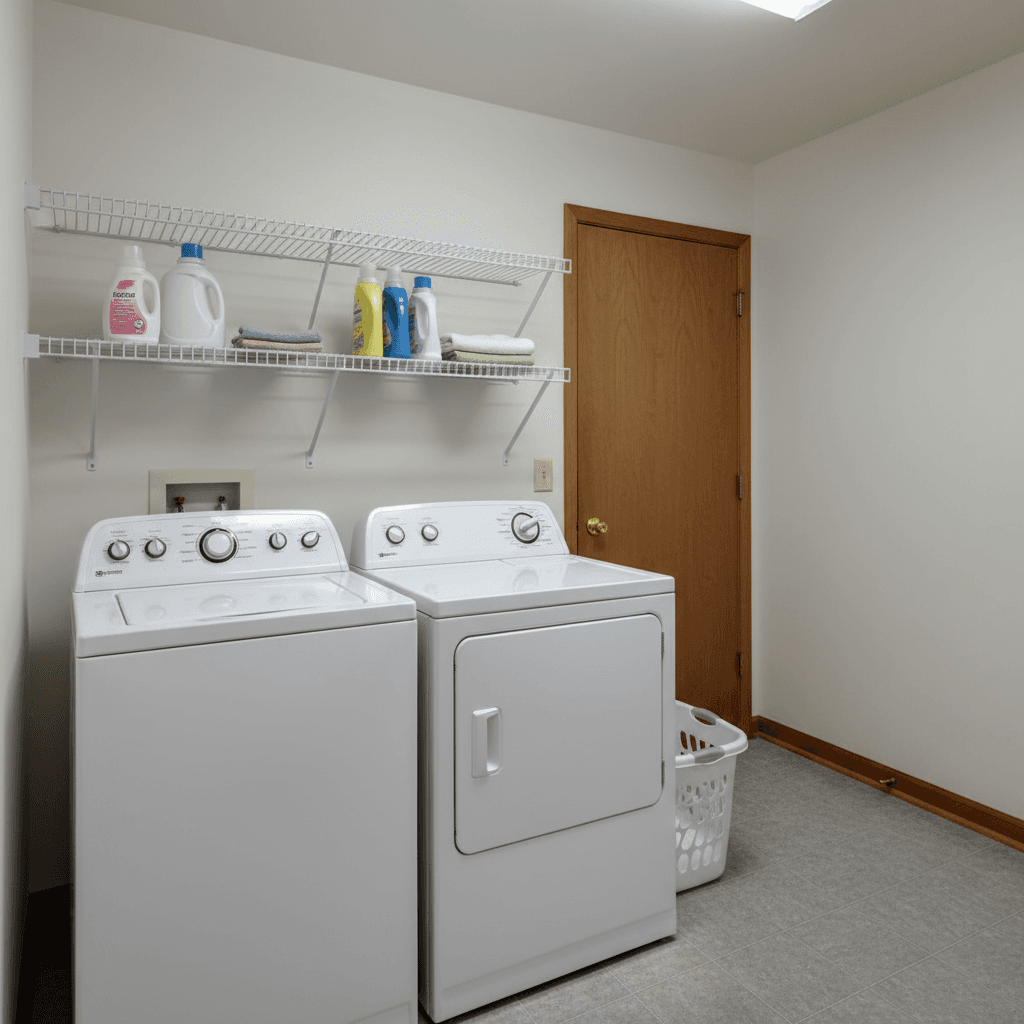
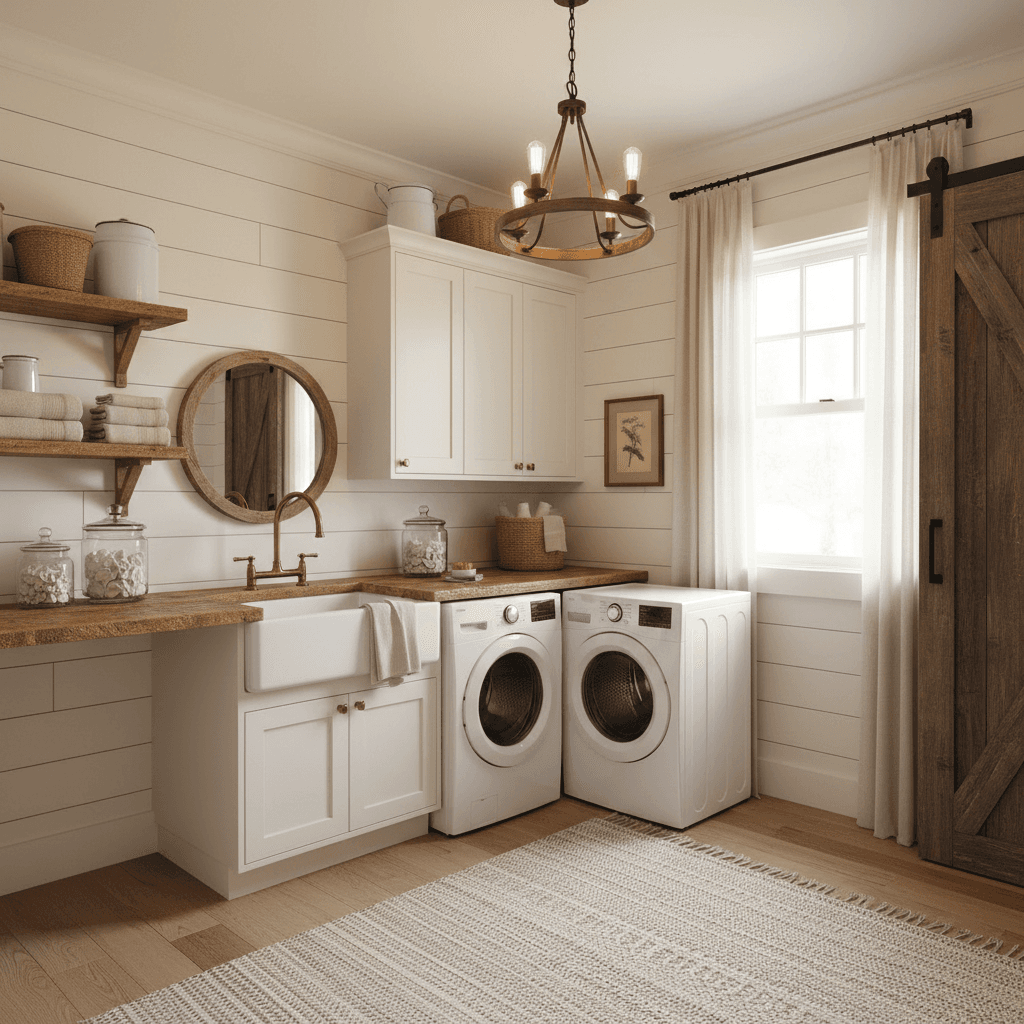
AI-generated farmhouse laundry room redesign from a single photo
How to get Farmhouse Laundry Room designs
1. Upload your photo
Take a photo of your room in good daylight and upload it directly from your phone or computer. No account required to try.
2. Select style and room type
Choose your design theme and confirm the room type. Add any specific details or requirements in the optional text field.
3. Download your designs
The AI generates your redesigned room in 30 to 60 seconds. Review the result, and download or share as needed.
Farmhouse design principles
Farmhouse interior design values substance over surface — reclaimed wood, hand-thrown ceramics, linen and cotton textiles, and furniture that has earned its character through use rather than applied distressing. Contemporary farmhouse interiors balance this material honesty with thoughtful editing that prevents the aesthetic from reading as cluttered or nostalgic, creating rooms that feel lived-in and genuinely warm.
Source materials with genuine history where possible
The quality that separates authentic farmhouse design from its imitators is the difference between genuine patina and manufactured distressing. Reclaimed timber beams, vintage furniture, hand-thrown ceramics with irregular glazes, and natural stone floors all carry a visual honesty that factory-distressed alternatives cannot replicate. Even if a single authentic piece costs more, it will define the room more effectively than ten new-but-aged substitutes.
Use a neutral palette anchored by natural texture
Farmhouse interiors work in warm whites, creams, warm greys, and the natural tones of unfinished wood. The colour interest comes from texture — the grain of timber, the weave of linen, the rough surface of stone — rather than paint. If you introduce colour, keep it as a single accent through a textile, a painted cabinet, or a piece of stoneware, and ensure it reads as a natural pigment rather than a synthetic one.
Mix old and new pieces with confidence
Contemporary farmhouse design does not require period furniture. A modern sofa with clean lines sits naturally in a farmhouse room if it is upholstered in natural linen or cotton, positioned near a reclaimed wood beam or an antique chest. The key is that the new pieces share the same material honesty — natural fibres, simple forms, no applied decoration — as the older ones.
Let functional objects become decorative elements
In farmhouse design, objects are not hidden away; they are displayed because they are good at what they do. A copper pot on an open shelf, a bunch of dried herbs above the window, a woven basket holding firewood — these serve purposes while contributing to the room's character. Avoid decorating with objects that only exist to look decorative; it produces the opposite of authenticity.
Laundry Room design considerations
The laundry room is the most functional space in a home, but that does not mean it has to be the least considered. Purpose-designed utility spaces that are genuinely pleasant to spend time in actively improve the likelihood that household tasks are completed promptly and that adjacent areas stay organised. Practicality and considered design are not in competition here — the brief requires both simultaneously.
Plan storage before selecting appliances
The most common laundry room failure is installing appliances and then trying to organise around them. Start by listing everything that needs to be stored — detergent, fabric softener, ironing equipment, cleaning supplies, spare linens — and allocate specific storage positions for each before finalising the layout. Tall cabinets above machines, pull-out laundry sorting hampers built into lower cabinetry, and a fold-down ironing board mounted in a wall cabinet are all significantly more functional than open shelving added after the fact.
Include a dedicated folding and sorting surface
The absence of a folding surface is the single most common reason laundry piles up unfolded. A counter running the full width of the room above the machines, even at 50cm deep, transforms how the space is used. If the room is very small, a wall-mounted fold-down surface that collapses flat when not in use provides the functionality without permanently occupying floor space.
Ventilate properly to prevent moisture problems
Tumble dryers produce large volumes of humid air, and washing machines create heat and steam during operation. Without adequate ventilation, this moisture accumulates in wall cavities and behind appliances, leading to mould, damaged finishes, and poor air quality throughout adjacent rooms. An externally-vented extractor fan running during and after operation is the minimum requirement; a heat recovery ventilation system is the ideal solution in a fully insulated home.
More Farmhouse room designs
Farmhouse Bathroom Design Ideas
Apply the farmhouse style to your bathroom.
Farmhouse Bedroom Design Ideas
Apply the farmhouse style to your bedroom.
Farmhouse Dining Room Design Ideas
Apply the farmhouse style to your dining room.
Farmhouse Gaming Room Design Ideas
Apply the farmhouse style to your gaming room.
Farmhouse Home Theater Design Ideas
Apply the farmhouse style to your home theater.
Farmhouse Kitchen Design Ideas
Apply the farmhouse style to your kitchen.
Farmhouse Laundry Room guides worth reading
Practical write-ups that go deeper than a single laundry room page — how to photograph the room, how to pick a style, and what AI redesign actually changes.
Modern vs Minimalist Design: 5 Real Differences (2026)
Modern and minimalist are often used interchangeably, but they have different origins, different values, and different practical i
Redesign Your Living Room with AI: 7 Steps (2026 Guide)
AI room design tools have made it practical to visualise a completely different living room before spending anything on furniture
Redesign Your Bedroom with AI: 8 Styles to Try in 2026
Bedrooms are intensely personal spaces where the result needs to be functional, not just visually appealing. Here is how to approa
AI Home Office Design: 10 Ideas for 2026 Workspaces
Home offices need to function well for focused work and appear professional in video calls. AI design tools can help you see possi
Before you pick an AI interior design tool
Magic Room is not the only way to generate these designs. Here is how it compares to the tools most people evaluate alongside it.
best RoomGPT alternatives for AI interior design
All four tools compared on AI model, photo retention, pricing model and output quality.
Reimagine Home alternative
Why people switch from Reimagine Home, and what changes when they do.
Interior AI alternative
Why people switch from Interior AI, and what changes when they do.
Magic Room vs Reimagine Home
Side-by-side on AI model, photo privacy, pricing and output quality.