
Farmhouse Home Theater Design Ideas
By Thanos KazakisMagic Room founderUpdated
A farmhouse home theater translates the cinema-room brief into a setting that feels like a converted barn or a long-occupied family room rather than a black-walled commercial cinema. Reclaimed timber wall cladding, a deep-buttoned leather sectional or a row of wide upholstered armchairs in linen, sconces with warm filament bulbs that dim cleanly, and a barn-door panel concealing the screen between viewings create a room that hosts other activities as easily as it hosts a film. Acoustic treatment is hidden behind tongue-and-groove panelling so the room reads as domestic rather than technical.
See the transformation
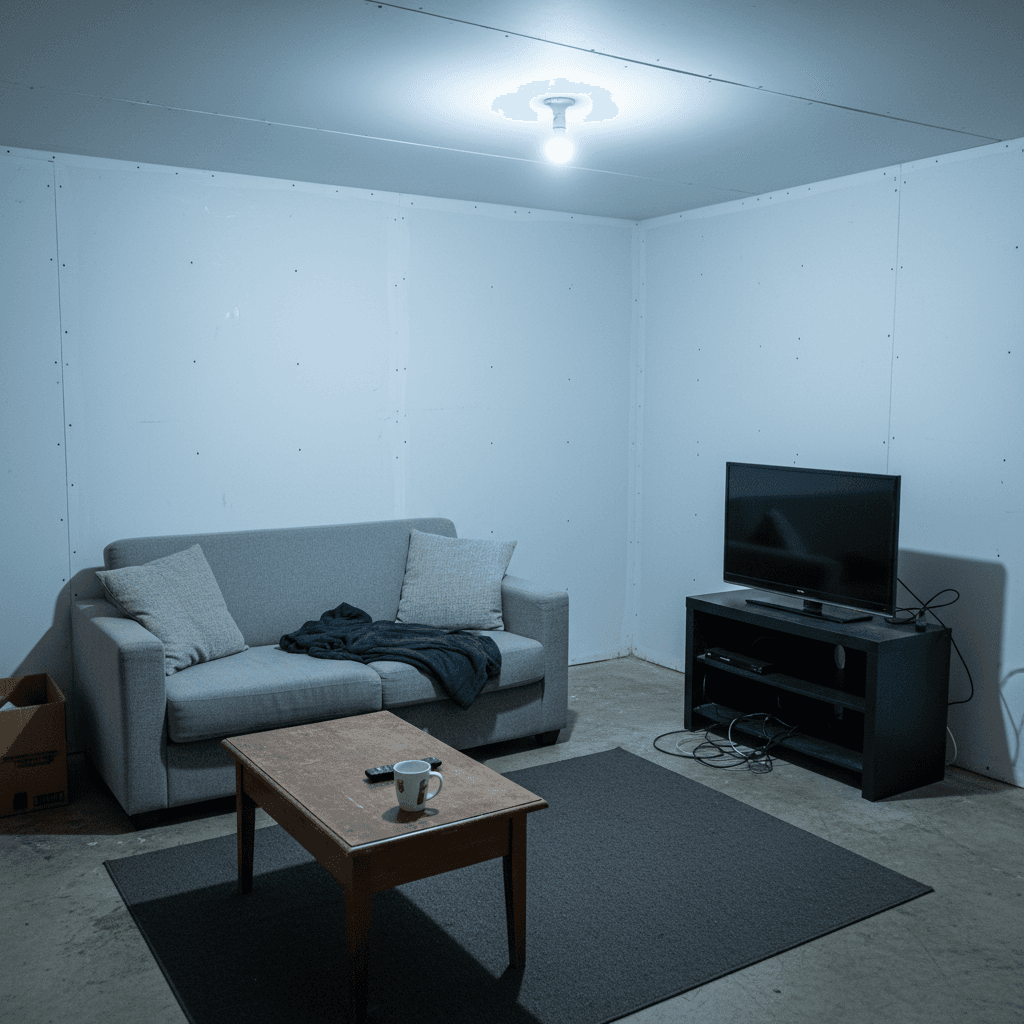
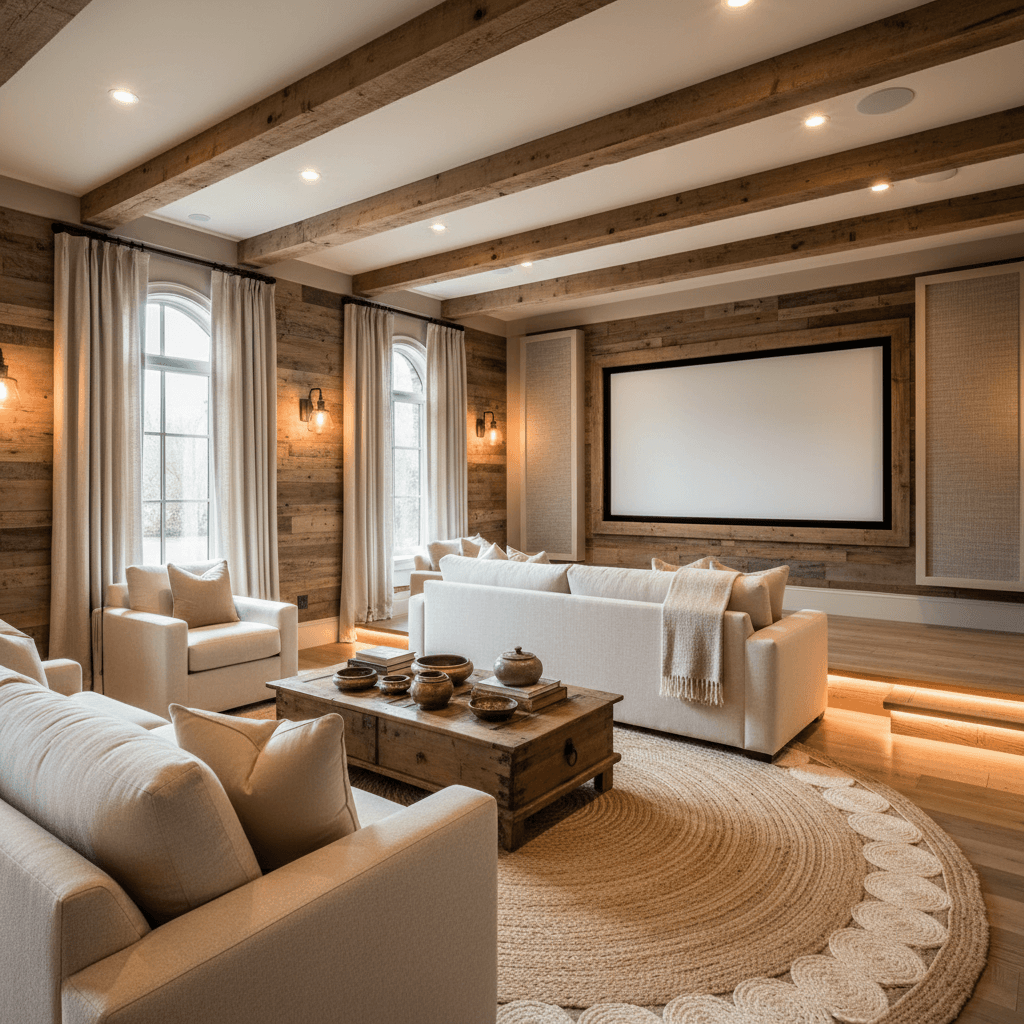
AI-generated farmhouse home theater redesign from a single photo
How to get Farmhouse Home Theater designs
1. Upload your photo
Take a photo of your room in good daylight and upload it directly from your phone or computer. No account required to try.
2. Select style and room type
Choose your design theme and confirm the room type. Add any specific details or requirements in the optional text field.
3. Download your designs
The AI generates your redesigned room in 30 to 60 seconds. Review the result, and download or share as needed.
Farmhouse design principles
Farmhouse interior design values substance over surface — reclaimed wood, hand-thrown ceramics, linen and cotton textiles, and furniture that has earned its character through use rather than applied distressing. Contemporary farmhouse interiors balance this material honesty with thoughtful editing that prevents the aesthetic from reading as cluttered or nostalgic, creating rooms that feel lived-in and genuinely warm.
Source materials with genuine history where possible
The quality that separates authentic farmhouse design from its imitators is the difference between genuine patina and manufactured distressing. Reclaimed timber beams, vintage furniture, hand-thrown ceramics with irregular glazes, and natural stone floors all carry a visual honesty that factory-distressed alternatives cannot replicate. Even if a single authentic piece costs more, it will define the room more effectively than ten new-but-aged substitutes.
Use a neutral palette anchored by natural texture
Farmhouse interiors work in warm whites, creams, warm greys, and the natural tones of unfinished wood. The colour interest comes from texture — the grain of timber, the weave of linen, the rough surface of stone — rather than paint. If you introduce colour, keep it as a single accent through a textile, a painted cabinet, or a piece of stoneware, and ensure it reads as a natural pigment rather than a synthetic one.
Mix old and new pieces with confidence
Contemporary farmhouse design does not require period furniture. A modern sofa with clean lines sits naturally in a farmhouse room if it is upholstered in natural linen or cotton, positioned near a reclaimed wood beam or an antique chest. The key is that the new pieces share the same material honesty — natural fibres, simple forms, no applied decoration — as the older ones.
Let functional objects become decorative elements
In farmhouse design, objects are not hidden away; they are displayed because they are good at what they do. A copper pot on an open shelf, a bunch of dried herbs above the window, a woven basket holding firewood — these serve purposes while contributing to the room's character. Avoid decorating with objects that only exist to look decorative; it produces the opposite of authenticity.
Home Theater design considerations
A dedicated home theater room exists to maximise the audio-visual experience of watching film and television, which means its design brief is unusually technical. Every element — wall colour, seat arrangement, acoustic treatment, projector or screen placement, and lighting — either supports or undermines the viewing experience. Understanding these relationships before committing to finishes is particularly valuable.
Control ambient light completely
Projected images and even high-quality screens lose significant contrast and colour accuracy in the presence of ambient light. Full blackout window treatments are non-negotiable in a dedicated cinema room. Walls should be painted in dark, matte, non-reflective finishes — deep grey, charcoal, or dark navy are common choices — to prevent reflected light from the screen washing out dark areas of the image. Any bias lighting behind the screen (used to reduce eye strain) should be warm-toned and very low intensity.
Address acoustics from the room-planning stage
Bare walls and hard floors create reflected sound that degrades audio quality in ways that expensive speaker upgrades cannot overcome. Acoustic treatment in a home theater should address first-reflection points — the side walls and ceiling at the position where sound from the speakers first bounces before reaching the listener. Bass traps in corners control low-frequency buildup. Acoustic panels, heavy curtains, upholstered seating, and thick carpeting all contribute to sound absorption. These need to be planned into the room's design, not added as afterthought decoration.
Plan tiered seating for rooms deeper than 3.5 metres
In a long room with more than one row of seating, the second row will have obstructed sightlines unless it is elevated. A raised platform of 15–20cm behind the front row resolves this cleanly. The platform also provides a natural housing location for in-floor conduits routing speaker cables and power to the rear row. If the room depth allows for only one row, this consideration does not apply, but it is essential to plan for cable management from the start regardless.
Frequently asked questions
Other styles for your Home Theater
More Farmhouse room designs
Farmhouse Kitchen Design Ideas
Apply the farmhouse style to your kitchen.
Farmhouse Bathroom Design Ideas
Apply the farmhouse style to your bathroom.
Farmhouse Bedroom Design Ideas
Apply the farmhouse style to your bedroom.
Farmhouse Dining Room Design Ideas
Apply the farmhouse style to your dining room.
Farmhouse Gaming Room Design Ideas
Apply the farmhouse style to your gaming room.
Farmhouse Home Theater guides worth reading
Practical write-ups that go deeper than a single home theater page — how to photograph the room, how to pick a style, and what AI redesign actually changes.
How AI Interior Design Tools Actually Work in 2026
Not all AI room design tools work the same way. Understanding the difference between diffusion models and multimodal models explai
Interior Design on a Budget: 9 AI Hacks for 2026
The most expensive design mistake is buying things in the wrong order. AI visualisation changes the sequence of decision-making in
Best AI Interior Design Tools 2026: Privacy & Price Compared
There are now dozens of AI tools that claim to redesign rooms from a single photo. They vary significantly in the AI model used, p
AI Home Staging Before Selling: What Works (and Fails)
Traditional home staging is expensive and logistically complex. AI home staging is inexpensive and immediate. Understanding what e
Before you pick an AI interior design tool
Magic Room is not the only way to generate these designs. Here is how it compares to the tools most people evaluate alongside it.
best RoomGPT alternatives for AI interior design
All four tools compared on AI model, photo retention, pricing model and output quality.
Reimagine Home alternative
Why people switch from Reimagine Home, and what changes when they do.
Interior AI alternative
Why people switch from Interior AI, and what changes when they do.
Magic Room vs Reimagine Home
Side-by-side on AI model, photo privacy, pricing and output quality.