
Art Deco Bedroom Design Ideas
By Thanos KazakisMagic Room founderUpdated
An Art Deco bedroom translates the period's confident geometry and jewel-tone palette into a room where rest is the priority. The most successful contemporary versions choose two or three signature elements — a velvet headboard with a fan or sunburst silhouette, a brass-framed mirror, and a single statement pendant — and let them sit within a calmer base of warm-painted walls and lacquered timber floors. Visualising those choices in your existing room before purchasing avoids the most common failure of the style: an accumulation of metallic accents that tips from glamorous into theatrical.
See the transformation
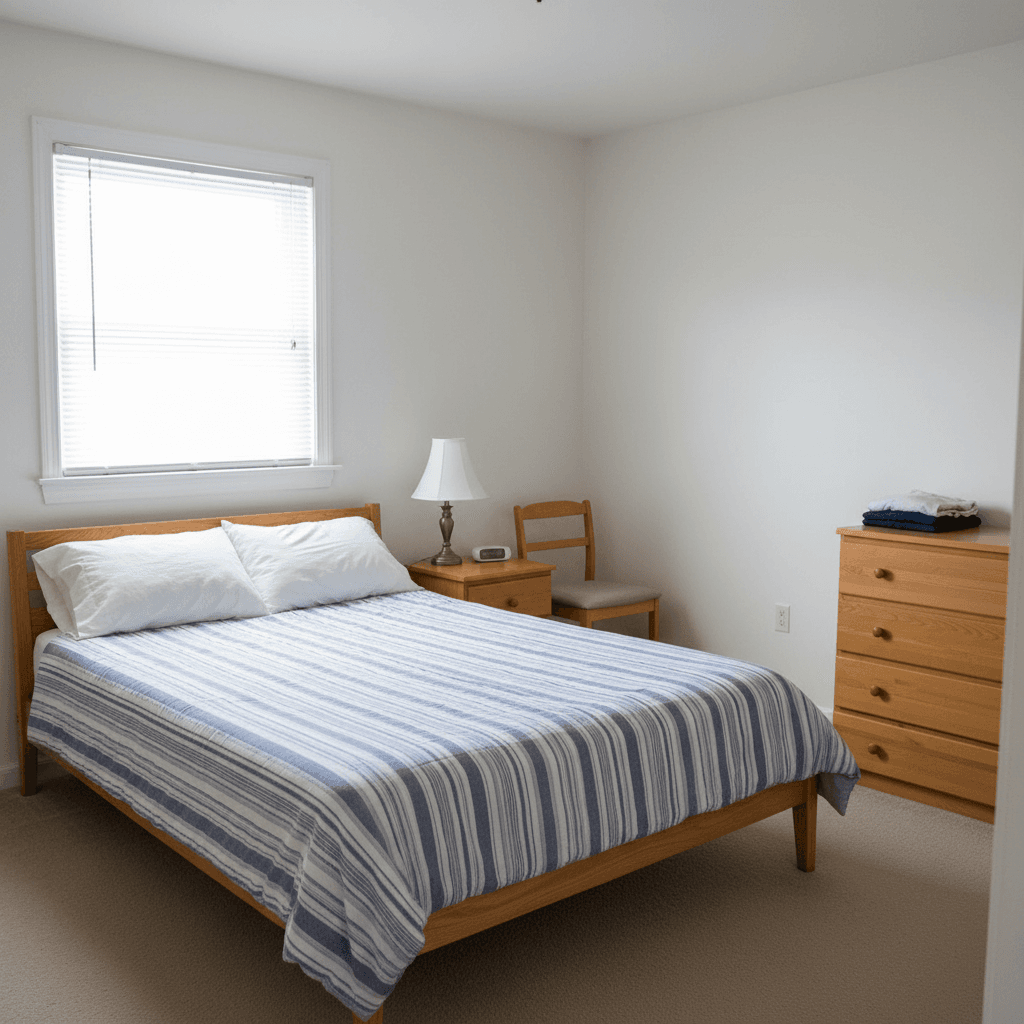
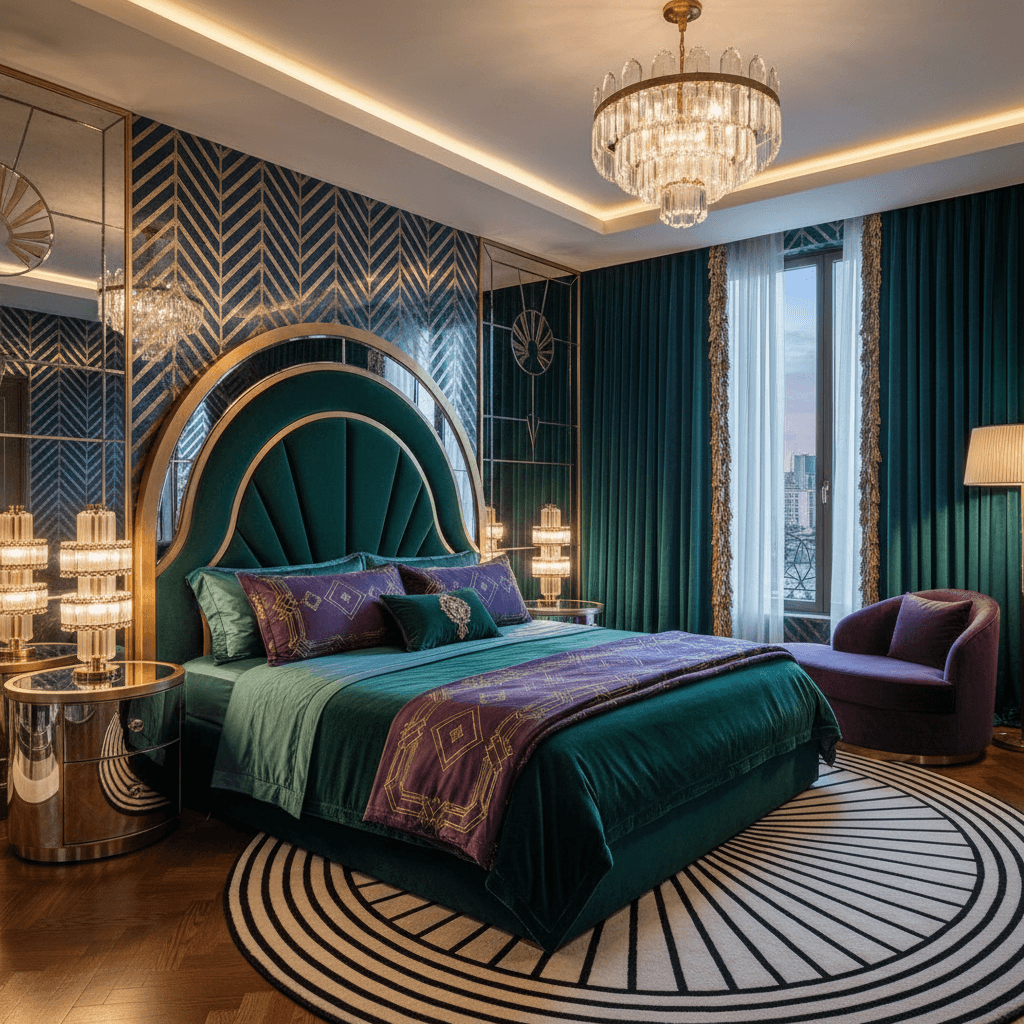
AI-generated art deco bedroom redesign from a single photo
How to get Art Deco Bedroom designs
1. Upload your photo
Take a photo of your room in good daylight and upload it directly from your phone or computer. No account required to try.
2. Select style and room type
Choose your design theme and confirm the room type. Add any specific details or requirements in the optional text field.
3. Download your designs
The AI generates your redesigned room in 30 to 60 seconds. Review the result, and download or share as needed.
Art Deco design principles
Art Deco interior design is an exercise in confident opulence — geometric patterns, mirrored surfaces, rich jewel tones, and metallic accents assembled to create spaces that feel theatrical and deliberate. Born in 1920s Paris and popularised globally through the 1930s, the style translates into contemporary residential settings when applied with discipline and a selective hand rather than wholesale reproduction.
Use geometry as a structural design element
Art Deco draws its visual energy from bold geometric forms — sunburst patterns, chevrons, stepped profiles, and fan shapes. Rather than applying these as surface decoration alone, look for furniture and architectural details that carry them structurally: a headboard with a geometric silhouette, skirting boards with stepped profiles, or a rug with a strong geometric repeat. The geometry should feel built-in, not stuck-on.
Anchor with jewel tones and add metallics sparingly
Deep emerald, sapphire, amethyst, and burgundy are the natural palette of Art Deco. Use one as the dominant wall or upholstery colour and introduce gold, brass, or black lacquer as accent rather than structure. When metallics appear on too many surfaces simultaneously, the room tips from glamorous into gaudy. A single prominent gold element — a ceiling light, a console frame — reads more powerfully than six smaller ones.
Incorporate mirrored and reflective surfaces thoughtfully
Mirrored furniture, glass table tops, and lacquered surfaces are signature Art Deco elements, and their practical function — making rooms feel larger and moving light around — is genuinely valuable. Position mirrored pieces to reflect a window or a decorative light source rather than a blank wall. Too many reflective surfaces in one sightline create visual noise; used selectively, they amplify the room's best features.
Balance opulence with restraint
The most successful contemporary Art Deco interiors borrow the language of the period without attempting full reproduction. Choose two or three signature elements per room — a geometric light fitting, velvet upholstery in a jewel tone, a brass-framed mirror — and build around a restrained base. Letting the key pieces breathe within a calmer surrounding makes them read as deliberate rather than accumulated.
Bedroom design considerations
A bedroom's primary obligation is to support sleep — which means every design decision must be evaluated against how it affects rest, thermal comfort, light control, and the psychological sense of separation from the demands of daily life.
Blackout and light control
Light is the primary regulator of the human sleep-wake cycle, so controlling it is the single most important functional consideration in a bedroom. Full blackout blinds or lined curtains should be the default, regardless of aesthetic style. Sheer-only window treatments look elegant but actively impair sleep quality.
Bed position relative to the door
Placing the headboard against a solid wall, with a view of the door from the bed, is the arrangement most people find instinctively restful. Beds positioned so the door opens directly onto the sleeper's feet, or with the headboard against a window, tend to feel unsettling even when the room otherwise looks good.
Temperature and ventilation materials
Synthetic textiles, VOC-emitting finishes, and poor air circulation all affect bedroom air quality and sleep temperature. Natural fibre bedding (cotton, linen, or wool), breathable mattress materials, and a window that can be safely opened overnight cost no more than their alternatives and measurably improve sleep.
Art Deco bedroom ideas, element by element
Art Deco is a vocabulary of specific shapes and materials rather than a general mood, which is why it is one of the easier styles to get 80% right and one of the harder styles to get the last 20% right. The elements below are the ones that actually carry the style. A bedroom that has three of them reads unmistakably Art Deco; a bedroom that has nine of them reads like a themed hotel suite.
- Headboard — the single highest-impact element. A tall upholstered panel in channel tufting, a fan silhouette, or a stepped ziggurat outline, in velvet or a tight-weave bouclé. Emerald, sapphire, oxblood and dusty rose are the period-correct jewel tones; charcoal and camel are the safe contemporary substitutes.
- Geometry — fans, sunbursts, chevrons, stepped forms and concentric circles. Introduce it in exactly one repeated motif rather than three competing ones. A single sunburst mirror above a chest of drawers does more for the room than patterned wallpaper plus a geometric rug plus a chevron throw.
- Metals — brass and polished chrome, not brushed nickel and not matte black. Art Deco predates the matte-black hardware convention entirely, and matte black is the fastest way to make a Deco bedroom read as generic contemporary.
- Lacquer and high-gloss timber — ebonised walnut, black lacquered bedside tables, or a burl-veneer chest. The reflective surface is doing the same job the metals are: bouncing light in a palette that is otherwise quite dark.
- Lighting — a tiered or fluted pendant with frosted glass, plus wall sconces flanking the bed rather than table lamps. Sconces are the detail that most contemporary Deco bedrooms skip, and their absence is why those rooms look like a Deco headboard in an ordinary bedroom.
- Flooring and rugs — dark stained timber or parquet, with a low-pile rug carrying one geometric motif. Avoid layering a second patterned textile on top.
Modern Art Deco vs 1920s Art Deco: which one are you actually after?
Most people searching for an Art Deco bedroom want the modern interpretation, not a period reconstruction, and the difference matters because it changes almost every decision downstream. A period-accurate 1920s bedroom uses saturated colour across the whole envelope — patterned wallpaper, dark ceilings, heavily figured veneers — and a lot of ornament per square metre. It photographs beautifully and is genuinely difficult to sleep in.
The modern interpretation keeps the geometry and the metals but strips the ornament density back by roughly two thirds. Walls go to a warm off-white, greige, or a single deep accent behind the bed only. Pattern is confined to one surface. The jewel tones survive but move onto the headboard and one or two cushions rather than onto the walls. This is also the version that resells: a channel-tufted emerald headboard against a neutral wall reads as considered in almost any house, while a fully committed 1920s envelope reads as a decision the next owner has to undo.
If your search was for a minimalist or simple Art Deco bedroom, you are describing the modern interpretation with the ornament dialled back further still — one geometric motif, brass hardware, a lacquered surface, and nothing else. That version is easier to live with and much cheaper to execute.
What an Art Deco bedroom actually costs to execute
The costs below are indicative mid-market European figures for a standard double bedroom, and exist to show where the money concentrates rather than to be quoted. The headboard and the lighting account for most of the effect and most of the spend; the geometry can be introduced for very little.
| Element | Indicative cost | Impact on the style |
|---|---|---|
| Upholstered velvet headboard (king) | €350–€900 | Highest — this is the element people read first |
| Pair of brass wall sconces | €120–€400 | High — the detail most contemporary versions omit |
| Tiered / fluted pendant light | €150–€500 | High |
| Sunburst or fan mirror | €80–€300 | Medium-high — cheapest way to introduce the geometry |
| Lacquered or burl-veneer bedside pair | €300–€1,200 | Medium |
| Low-pile geometric rug | €150–€600 | Medium |
| Accent wall paint (deep tone) | €40–€90 | Medium — highest impact per euro spent |
| Velvet cushions and throw | €60–€200 | Low-medium |
Art Deco in a small bedroom
The style is usually shown in large rooms with high ceilings, which is misleading — Art Deco was designed for ocean liner cabins and apartment blocks as much as for ballrooms, and it compresses well if you change the ratios rather than the vocabulary.
In a room under about 12 square metres: keep the tall headboard, because vertical emphasis makes a small room read taller, but drop the freestanding furniture to wall-mounted bedside shelves. Move the geometry onto the mirror and the hardware only, and leave the walls plain in a warm off-white so the dark tones do not close the space in. Replace the pendant with two sconces, which free up the ceiling plane entirely. The result keeps the sunburst-and-brass signature while removing the three things that make Deco feel heavy: floor-standing case goods, patterned walls, and a large light fitting.
What AI gets wrong on Art Deco bedrooms — and how to prompt around it
This is worth saying plainly because we run the generations. Art Deco is the style where AI image models most reliably overshoot, and knowing the failure modes in advance is the difference between one usable output and five wasted attempts.
The three consistent failures: the model adds metallic surfaces to everything it can find, so a request for brass hardware comes back with a brass bed frame, brass skirting, and a brass ceiling trim; it defaults to full-envelope 1920s ornament when you asked for the modern interpretation; and it converts geometric motifs into wallpaper, which is almost never what a contemporary Deco bedroom should have.
The fix is to specify what should stay plain, not only what should change. Prompts that name the restraint — "Art Deco bedroom, channel-tufted emerald velvet headboard, brass wall sconces, plain warm off-white walls, no patterned wallpaper, dark timber floor" — produce a usable first result far more often than "Art Deco bedroom" on its own. Naming the metal once, and stating that walls stay unpatterned, removes both of the dominant failure modes in a single sentence. Because Magic Room preserves the existing room geometry rather than regenerating the space, what you get back is your actual bedroom with those specific changes applied, which makes it a planning reference rather than a mood board.
Frequently asked questions
Other styles for your Bedroom
Bohemian Bedroom Design Ideas
Collected over time, layered with intention, unapologetically individual
Coastal Bedroom Design Ideas
Breezy, light-filled spaces that bring the ocean indoors
Farmhouse Bedroom Design Ideas
Warmth, patina, and the honest beauty of working materials
Japandi Bedroom Design Ideas
Wabi-sabi meets hygge — imperfect simplicity
Luxury Bedroom Design Ideas
Exceptional materials, expert craft, enduring quality
Minimalist Bedroom Design Ideas
Less, but better — every object earns its place
Modern Bedroom Design Ideas
Clean lines, functional spaces, timeless appeal
Art Deco Bedroom guides worth reading
Practical write-ups that go deeper than a single bedroom page — how to photograph the room, how to pick a style, and what AI redesign actually changes.
Redesign Your Bedroom with AI: 8 Styles to Try in 2026
Bedrooms are intensely personal spaces where the result needs to be functional, not just visually appealing. Here is how to approa
Bohemian Bedroom Decor: 20 Ideas to Steal in 2026
A bohemian bedroom is built from objects accumulated over time rather than purchased as a set. The design challenge is creating vi
Industrial Kitchen Design: 15 Ideas That Actually Work
The industrial kitchen references commercial cooking infrastructure — steel, open shelving, exposed utilities — and translates it
How to Choose an Interior Design Style: 6 Quick Tests
Most people choose an interior design style based on how it looks in photography. A better approach starts with how you actually l
Before you pick an AI interior design tool
Magic Room is not the only way to generate these designs. Here is how it compares to the tools most people evaluate alongside it.
best RoomGPT alternatives for AI interior design
All four tools compared on AI model, photo retention, pricing model and output quality.
Reimagine Home alternative
Why people switch from Reimagine Home, and what changes when they do.
Interior AI alternative
Why people switch from Interior AI, and what changes when they do.
Magic Room vs Reimagine Home
Side-by-side on AI model, photo privacy, pricing and output quality.