
Vintage Office Design Ideas
By Thanos KazakisMagic Room founderUpdated
A vintage home office uses older furniture — a large leather-topped partners desk, a swivel chair from the 1960s, barrister's bookshelves — as the foundation for a workspace with genuine character. The challenge is integrating contemporary technology (monitors, cables, docks) without destroying the period atmosphere that the furniture establishes. This usually requires concealing modern equipment behind period-appropriate doors or panels.
See the transformation
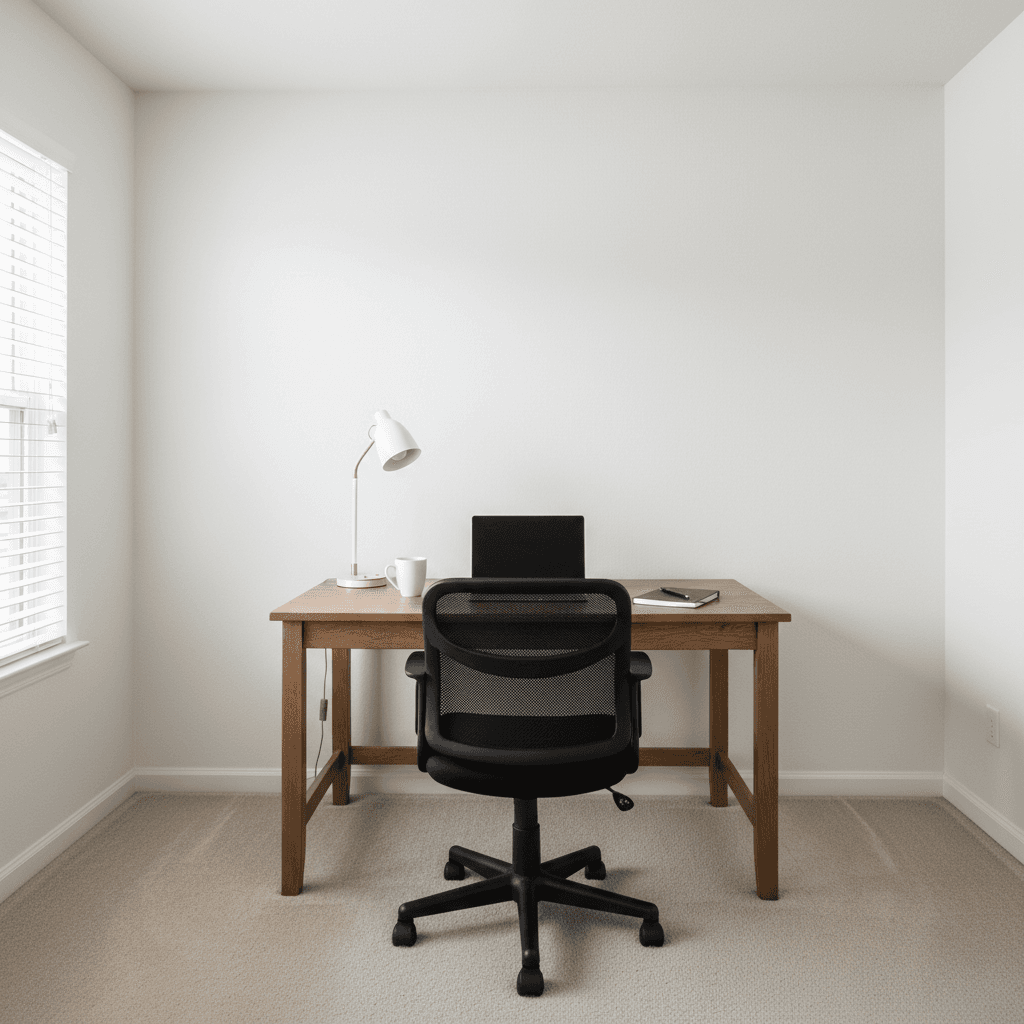
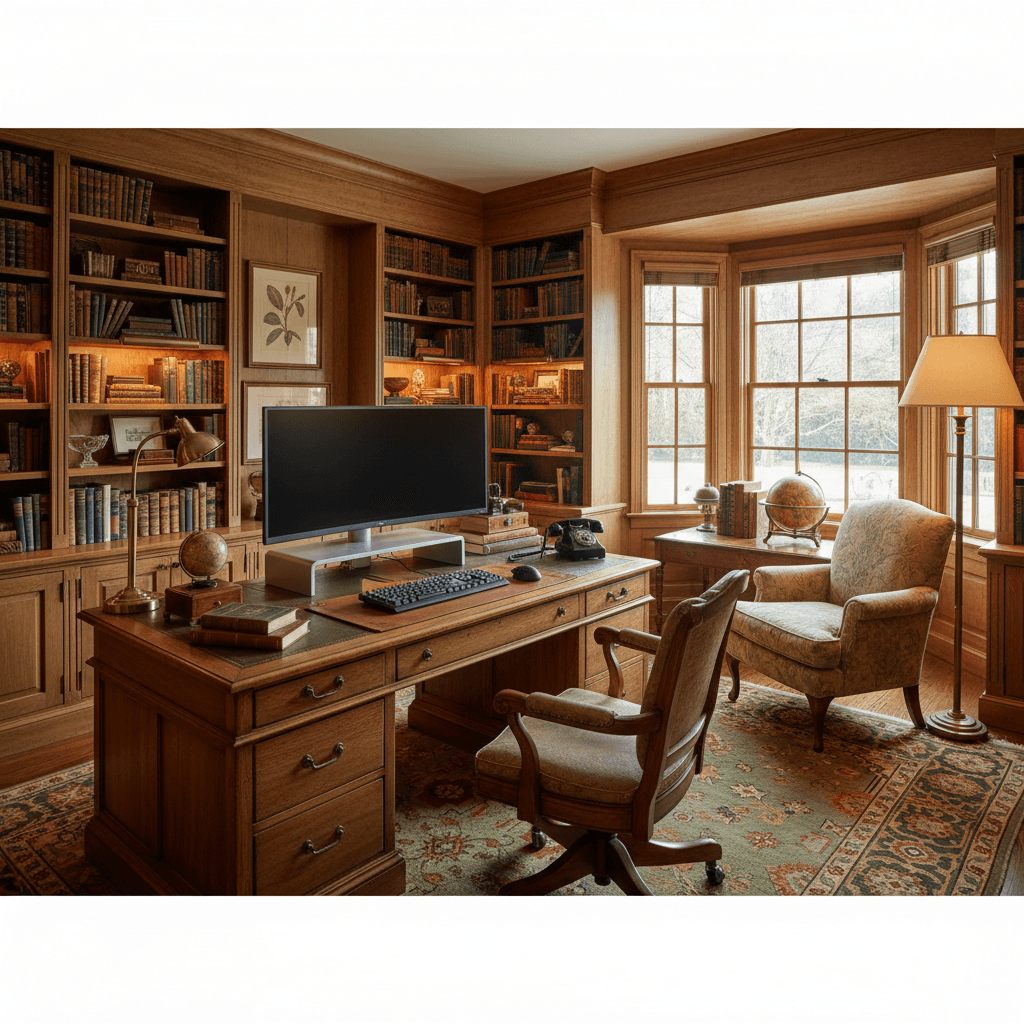
AI-generated vintage office redesign from a single photo
How to get Vintage Office designs
1. Upload your photo
Take a photo of your room in good daylight and upload it directly from your phone or computer. No account required to try.
2. Select style and room type
Choose your design theme and confirm the room type. Add any specific details or requirements in the optional text field.
3. Download your designs
The AI generates your redesigned room in 30 to 60 seconds. Review the result, and download or share as needed.
Vintage design principles
Vintage design does not recreate a specific historical period faithfully — that is the territory of period restoration. Instead it draws selectively from the past, mixing mid-century furniture with art deco lighting or Victorian ironwork with 1970s ceramics, to create rooms that feel richly layered rather than museum-like.
Anchor the room with one strong period piece
Rather than filling a room with many small vintage items, choose one dominant piece from a particular era — a 1950s credenza, a 1930s club sofa, or a set of genuine Victorian dining chairs — and build the rest of the room around it. This approach creates coherence without requiring everything to match.
Mix vintage with new deliberately
A room furnished entirely with antiques can feel heavy and inaccessible. Pairing a period piece with contemporary lighting, a modern paint colour, or new upholstery fabric keeps the space from feeling frozen in time. The contrast makes both the old and the new feel more intentional.
Restore rather than disguise patina
The marks that age leaves on furniture — worn leather, faded gilding, paint layers showing through — are the qualities that make vintage pieces valuable. Cleaning and stabilising is appropriate; painting everything white or reupholstering in trendy fabric often destroys what made the piece interesting.
Source from estate sales and specialist dealers
Charity shops and general second-hand markets yield occasional finds, but estate sales of properties from specific decades and dealers who specialise in particular periods offer far better access to quality pieces. The extra effort in sourcing shows in the finished room.
Office design considerations
A home office must deliver sustained functional performance — adequate light, ergonomic comfort, acoustic privacy, and effective storage — while fitting within a domestic environment that usually has competing demands on the same space.
Ergonomics before aesthetics
The desk height, chair adjustability, monitor position, and lighting quality in a home office have direct effects on physical health and cognitive performance across a working day. A visually beautiful office that requires a compromised posture or creates eyestrain will affect both wellbeing and productivity. Solve ergonomics first, then design around the correct setup.
Separation from domestic life
Working from home requires some degree of psychological separation between work mode and home mode, even when the physical space is shared. A defined desk position that can be left at the end of the day, a door that closes, or even a screen or curtain that covers work equipment when not in use all help create that boundary in ways that improve work quality and rest quality.
Cable management from the start
Power, monitor cables, network cables, and device charging cables in an unmanaged home office create both visual clutter and practical inconvenience. Planning cable routing before furniture is positioned — including desk grommets, in-desk power units, cable trays, and wall channels — is far more effective than retrofitting solutions around an existing setup.
Frequently asked questions
Vintage Office guides worth reading
Practical write-ups that go deeper than a single office page — how to photograph the room, how to pick a style, and what AI redesign actually changes.
AI Home Office Design: 10 Ideas for 2026 Workspaces
Home offices need to function well for focused work and appear professional in video calls. AI design tools can help you see possi
Virtual Staging for Real Estate: Worth It in 2026?
Traditional staging costs between £1,500 and £5,000 for a mid-size property. AI virtual staging has reduced that cost to a fractio
Modern vs Minimalist Design: 5 Real Differences (2026)
Modern and minimalist are often used interchangeably, but they have different origins, different values, and different practical i
Redesign Your Living Room with AI: 7 Steps (2026 Guide)
AI room design tools have made it practical to visualise a completely different living room before spending anything on furniture
Before you pick an AI interior design tool
Magic Room is not the only way to generate these designs. Here is how it compares to the tools most people evaluate alongside it.
best RoomGPT alternatives for AI interior design
All four tools compared on AI model, photo retention, pricing model and output quality.
DecorAI alternative
Why people switch from DecorAI, and what changes when they do.
Reimagine Home alternative
Why people switch from Reimagine Home, and what changes when they do.
Magic Room vs DecorAI
Side-by-side on AI model, photo privacy, pricing and output quality.