
Transitional Walk-in Closet Design Ideas
By Thanos KazakisMagic Room founderUpdated
Generate transitional walk-in closet design ideas instantly with AI.
See the transformation
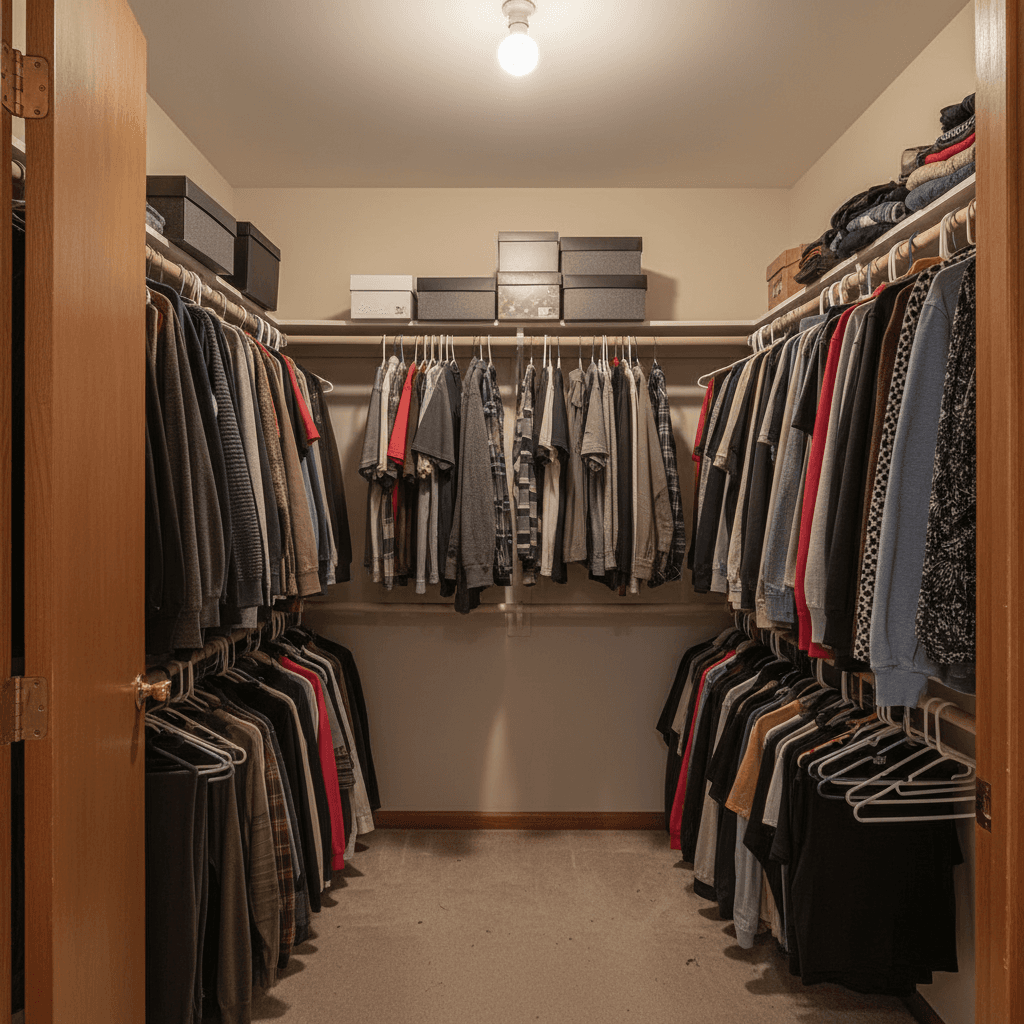
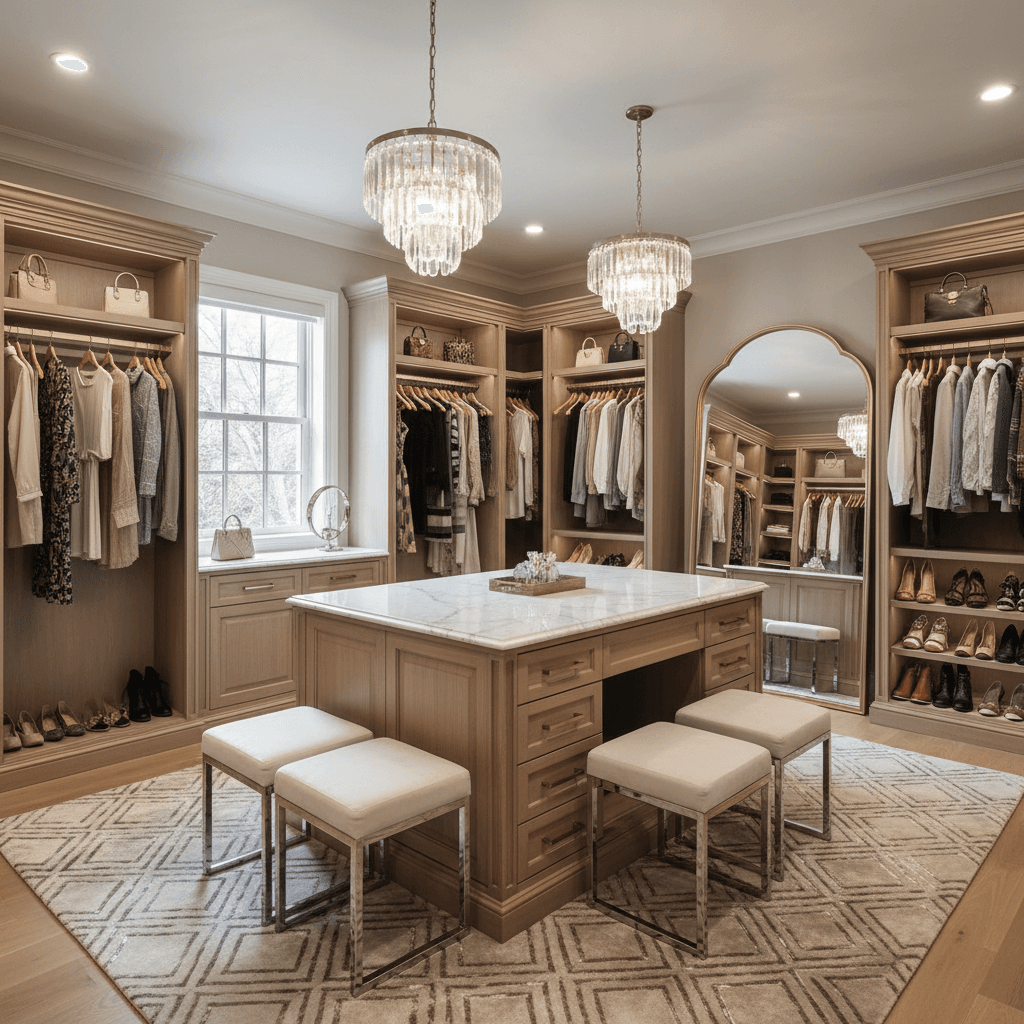
AI-generated transitional walk-in closet redesign from a single photo
How to get Transitional Walk-in Closet designs
1. Upload your photo
Take a photo of your room in good daylight and upload it directly from your phone or computer. No account required to try.
2. Select style and room type
Choose your design theme and confirm the room type. Add any specific details or requirements in the optional text field.
3. Download your designs
The AI generates your redesigned room in 30 to 60 seconds. Review the result, and download or share as needed.
Transitional design principles
Transitional interior design sits in the productive tension between traditional warmth and contemporary clarity. It avoids the formality of classical interiors while retaining their sense of permanence, and avoids the austerity of modern design while adopting its clean geometry and functional approach. The result is rooms that feel neither dated nor aggressively current — permanently liveable rather than momentarily fashionable.
Pair traditional forms with contemporary finishes
Transitional design often places a traditionally-shaped sofa — with rolled arms, turned legs, or a classic Chesterfield profile — in a material that reads as current: performance linen, a muted geometric fabric, or a solid mid-tone neutral. The tension between familiar form and updated finish is the source of the style's appeal. The same principle applies to case furniture, lighting, and architectural elements.
Use a neutral palette with subtle warmth
Transitional interiors avoid both the cool greys of contemporary design and the warm creams of traditional interiors. The sweet spot is a slightly warm neutral — greige, warm white, taupe, soft stone — that reads as neither strictly modern nor period. Introduce depth through texture and tone variation rather than colour contrast. Wood tones should be medium rather than very pale (Scandi) or very dark (traditional).
Mix antique or vintage pieces with new ones deliberately
The most convincing transitional rooms contain at least one piece with genuine age alongside contemporary items. An antique mirror above a modern console, a traditional painting in a slim metal frame, or a vintage rug under a clean-lined sofa all create the temporal layering that distinguishes transitional from either pure contemporary or period design. The key is that each piece should be genuinely well-designed, not just old.
Keep architectural detail moderate
Transitional design uses mouldings, cornices, and panelling where they exist but doesn't add elaborate period detail to contemporary spaces. Simple panel moulding on a door, a restrained cornice, or a classic skirting board profile is enough architectural reference. Avoid reproduced ornate period detailing — it pushes the room into traditional territory — and avoid stripping all detail — it tips it into pure contemporary.
Walk-in Closet design considerations
A walk-in closet is a storage system with an interior design problem: it must organise a wardrobe efficiently while creating an environment where the act of choosing what to wear is genuinely pleasant. The balance between visible organisation, lighting quality, and material finish determines whether a walk-in closet feels like an aspirational dressing room or an overwhelming storage problem.
Map your wardrobe before designing the storage
Every walk-in closet configuration should begin with a wardrobe audit: count the number of full-length hanging items, folded items, shoes, bags, and accessories. The most common error is allocating too much long-hang rail space relative to short-hang and shelving. Most wardrobes are dominated by shirts, jackets, and folded items — not full-length dresses — and a layout that reflects actual wardrobe composition will feel better organised and less cramped than a generic equal-division layout.
Light every zone with dedicated task lighting
A single ceiling light in a walk-in closet is insufficient. Hanging rails require downlighting at 45 degrees to illuminate the garments rather than the tops of hangers. Shoe shelves need light angled at their face, not their top surface. Drawers and lower cabinets benefit from interior lighting triggered by opening. LED strip lighting mounted beneath shelves and inside cabinets is an efficient and cost-effective solution. The goal is to make every item immediately visible without shadows obscuring colour or detail.
Include a full-length mirror with adequate clearance
A walk-in closet without a full-length mirror is functionally incomplete — users will get dressed and leave to check appearance elsewhere, defeating part of the room's purpose. Position the mirror on the end wall or on a door, with at least 60cm of clear floor space in front of it and good light falling on the person rather than from behind them. A second smaller mirror at an angle near the door, positioned to show the back view, is a useful addition in larger closets.
Other styles for your Walk-in Closet
Transitional Walk-in Closet guides worth reading
Practical write-ups that go deeper than a single walk-in closet page — how to photograph the room, how to pick a style, and what AI redesign actually changes.
Interior Design on a Budget: 9 AI Hacks for 2026
The most expensive design mistake is buying things in the wrong order. AI visualisation changes the sequence of decision-making in
Best AI Interior Design Tools 2026: Privacy & Price Compared
There are now dozens of AI tools that claim to redesign rooms from a single photo. They vary significantly in the AI model used, p
AI Home Staging Before Selling: What Works (and Fails)
Traditional home staging is expensive and logistically complex. AI home staging is inexpensive and immediate. Understanding what e
Virtual Staging for Real Estate: Worth It in 2026?
Traditional staging costs between £1,500 and £5,000 for a mid-size property. AI virtual staging has reduced that cost to a fractio
Before you pick an AI interior design tool
Magic Room is not the only way to generate these designs. Here is how it compares to the tools most people evaluate alongside it.
best RoomGPT alternatives for AI interior design
All four tools compared on AI model, photo retention, pricing model and output quality.
Interior AI alternative
Why people switch from Interior AI, and what changes when they do.
RoomGPT alternative
Why people switch from RoomGPT, and what changes when they do.
Magic Room vs Interior AI
Side-by-side on AI model, photo privacy, pricing and output quality.